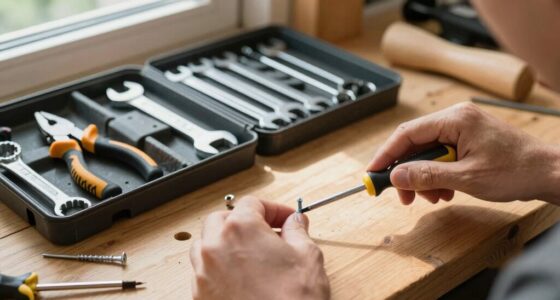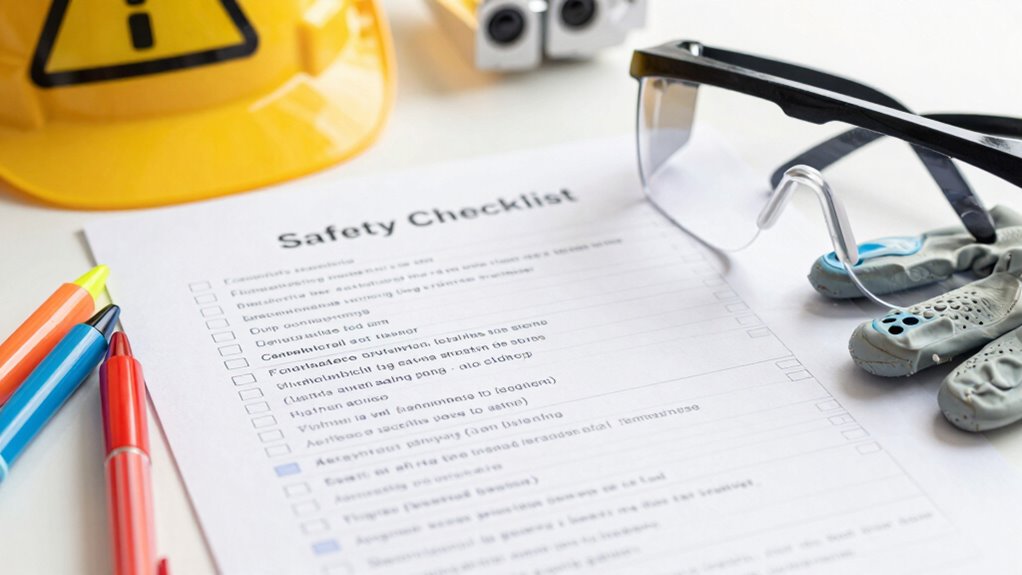

To create a pre-cut safety checklist, start by listing all tools and materials involved, then verify that equipment is in good condition with sharp blades, safety guards, and proper power sources. Inspect your workspace for hazards, ensure proper lighting, and clear clutter. Confirm that all personnel wear PPE like glasses and gloves. Conduct risk assessments, establish emergency procedures, and review safety protocols with your team. Keep these steps in mind to set up a safe work environment; more tips follow to guarantee thorough safety.

Get business pricing on tools and workshop supplies
- Business-only prices and quantity discounts
- Tax-exempt purchasing
- Multiple users, one account, clear invoices
Key Takeaways
- Identify all tools and materials involved, ensuring they are in safe and proper working condition.
- Incorporate safety procedures, including PPE and work environment checks, into the checklist.
- Include risk assessment steps and emergency procedures to address potential hazards.
- Ensure procedures for material handling and equipment operation are clearly outlined.
- Schedule regular safety training and reviews to reinforce safety practices and update the checklist as needed.
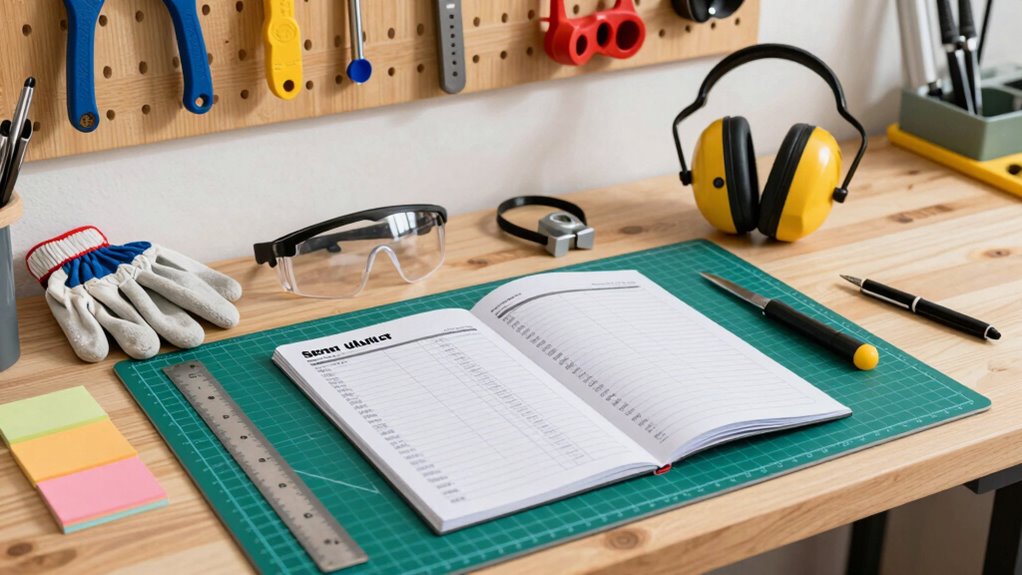
When creating your checklist, start by listing all the tools and materials involved in the pre-cut process. Verify that all equipment is in good condition—blades are sharp, safety guards are in place, and power sources are safe to use. Next, outline the safety procedures necessary before starting the cut. This might include inspecting tools, clearing the work area of unnecessary clutter, and ensuring proper lighting. Always emphasize the importance of PPE, such as safety glasses, gloves, and ear protection, and confirm that these are readily available. Make sure to include steps for safely handling and securing the material to prevent movement during cutting, which reduces the risk of slips or kickbacks. Incorporating safety protocols that align with best practices for sustainable and responsible use of tools, emphasizing the importance of reducing waste and environmental impact. Regular safety training helps reinforce these practices and keeps everyone aware of potential hazards. Additionally, understanding air quality considerations in the workspace can help prevent inhalation of dust or fumes generated during cutting, promoting a healthier environment. Conducting risk assessments prior to work can help identify specific hazards unique to your workspace and equipment, further enhancing safety measures.
Including clear emergency procedures ensures that everyone knows how to respond quickly in case of an incident, minimizing potential harm. Your checklist should also highlight emergency procedures, like knowing how to shut off equipment quickly and where first aid kits are located. Incorporating risk assessment into your process allows you to identify and mitigate hazards proactively. Regular safety training helps reinforce these practices and keeps everyone aware of potential hazards. Remember, a thorough checklist isn’t just about ticking boxes; it’s about fostering a safety-first mindset among everyone involved. Before beginning work, go through the checklist with your team to confirm each item has been addressed. This not only minimizes overlooked hazards but also builds a culture of safety awareness. By systematically applying risk assessment and safety protocols through your pre-cut safety checklist, you create a safer environment that promotes productivity and reduces the likelihood of accidents. Ultimately, investing time in meticulous planning and clear guidelines will save you time, effort, and potential injuries in the long run.
As an affiliate, we earn on qualifying purchases.
Frequently Asked Questions
What Tools Are Essential for Creating a Safety Checklist?
You need essential tools like a clipboard, pens, and a digital device to create a thorough safety checklist. Start with a risk assessment to identify potential hazards, then confirm your checklist aligns with compliance standards. Use templates or specialized software to organize procedures clearly. Regularly update your tools and checklist based on new risks or compliance changes, ensuring safety remains a top priority during the pre-cut process.
How Often Should the Safety Checklist Be Reviewed and Updated?
You should review and update your safety checklist regularly, ideally every three to six months, to maintain safety compliance and address new risks. Conducting routine risk assessments helps identify hazards that may have emerged, making sure your checklist stays current. Consistent updates demonstrate your commitment to safety, reduce accidents, and keep everyone informed. By staying proactive, you guarantee your safety protocols effectively mitigate risks and promote a safer working environment.
Who Should Be Responsible for Implementing the Safety Checklist?
You should assign the implementation of the safety checklist to a supervisor or safety officer who embodies your safety culture and upholds accountability standards. They’re responsible for ensuring staff follow the checklist, conduct regular training, and monitor compliance. By doing so, you foster a safety-focused environment where everyone understands their roles, promoting accountability and continuous improvement in safety procedures. This leadership helps embed safety as a core value across your operations.
Can the Checklist Be Customized for Different Work Environments?
Yes, you can definitely customize the checklist for different work environments. Focus on work environment customization by adjusting safety items to match specific hazards and procedures. Make the checklist adaptable by including flexible sections that can be tailored for various tasks or settings. This way, you guarantee safety protocols are relevant, thorough, and effective, regardless of the work environment, helping your team stay protected and compliant.
How Do You Train Staff to Follow the Safety Checklist Effectively?
Think of training staff on the safety checklist as planting seeds for a safety garden. You boost employee engagement by using interactive training methods like hands-on demonstrations, role-playing, and discussions. Reinforce learning through regular reminders and feedback. Make safety a shared responsibility, encouraging questions and active participation. This approach keeps your team engaged, guarantees they understand the importance, and helps them follow the checklist consistently and confidently.
pre-cut safety checklist printable
As an affiliate, we earn on qualifying purchases.
As an affiliate, we earn on qualifying purchases.
Conclusion
By following these simple steps, you’ll craft a safety checklist that’s as reliable as a lighthouse guiding ships through storms. Regularly updating and reviewing it guarantees your workspace remains a fortress of safety. Remember, a well-prepared checklist isn’t just a list—it’s your ultimate shield against accidents, protecting you and your team like an impenetrable fortress. Stay vigilant, stay safe, and let your checklist be the hero in every workday!
As an affiliate, we earn on qualifying purchases.
workplace safety inspection tools
As an affiliate, we earn on qualifying purchases.
As an affiliate, we earn on qualifying purchases.
Fall yard work Picks
leaf blowers
As an affiliate, we earn on qualifying purchases.