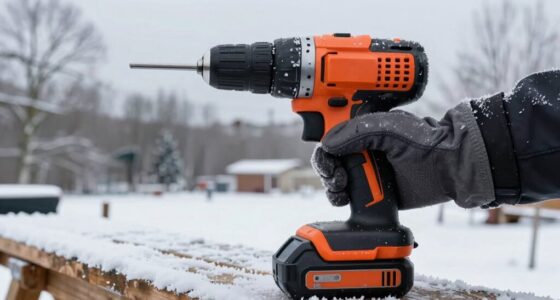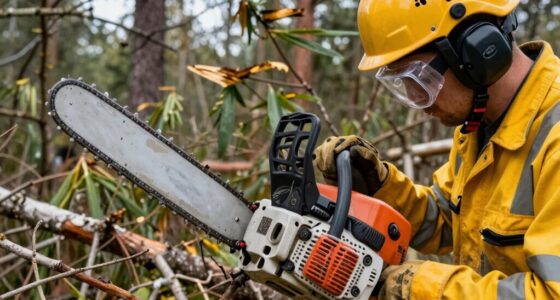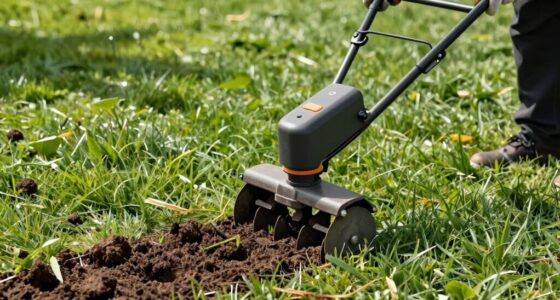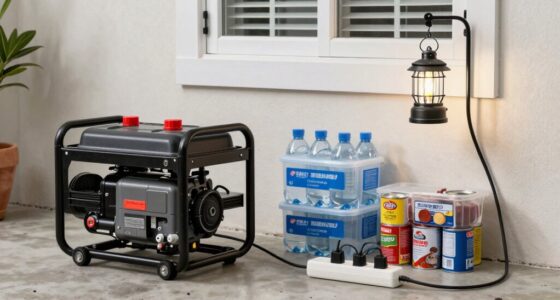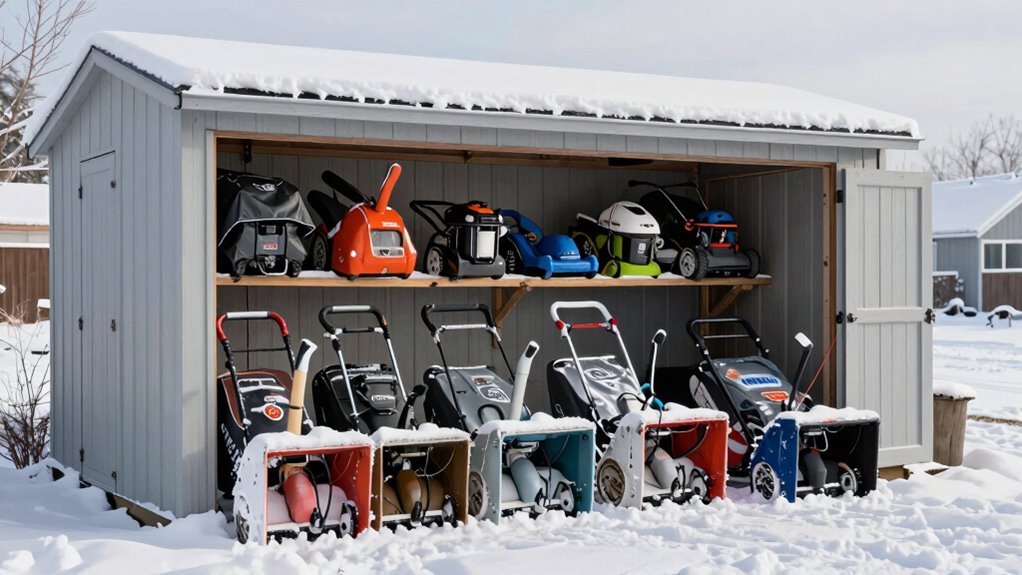

To store your outdoor power equipment for winter, thoroughly clean and dry each piece to prevent rust and corrosion. Inspect for damage and make minor repairs now, and remove batteries to store separately in a cool, dry place, fully charged. Stabilize fuel or drain it completely, then run your engine briefly to circulate stabilizer, before storing in a sheltered spot. Cover your equipment to protect it from dust and moisture. If you want to guarantee your tools stay in top shape, keep exploring these practices.

Get business pricing on tools and workshop supplies
- Business-only prices and quantity discounts
- Tax-exempt purchasing
- Multiple users, one account, clear invoices
Key Takeaways
- Thoroughly clean equipment and remove debris before storage to prevent rust and corrosion.
- Drain or stabilize fuel to avoid engine damage and clogs during winter storage.
- Remove and fully charge batteries, storing them in a cool, dry place to preserve capacity.
- Inspect and repair minor damages, then store equipment in a dry, sheltered location.
- Cover equipment with protective tarps or covers to shield from dust, moisture, and pests.
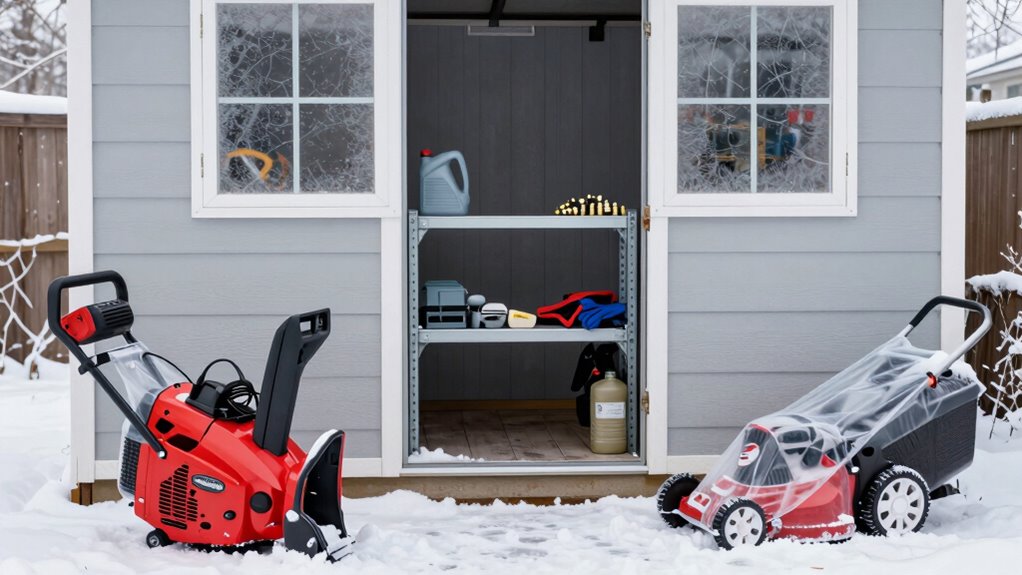
As winter approaches, it’s essential to properly store your outdoor power equipment to keep it in good condition for the next season. Taking the time to prepare your tools now can save you time and money when spring arrives. Start by inspecting each piece of equipment thoroughly. Check for any signs of wear or damage and address minor repairs before storing them away. Proper storage helps prevent rust, corrosion, and other issues that could shorten their lifespan.
One of the most important steps is to focus on battery maintenance. If your equipment has batteries, like cordless trimmers or snow blowers, make sure you remove them and store them separately in a cool, dry place. Fully charge the batteries before storage, as this helps maintain their capacity and prolongs their life. If you’re storing equipment with lead-acid batteries, check the electrolyte levels and top them off with distilled water if needed. Keep an eye on the batteries during the off-season, and recharge them periodically to prevent them from losing their ability to hold a charge. This simple step can make a big difference when you’re ready to use your equipment again.
Fuel stabilization is equally crucial. If your equipment runs on gasoline, you shouldn’t just drain the tank and forget about it. Instead, add a fuel stabilizer to the remaining fuel in the tank. This prevents the fuel from breaking down and forming varnish or gum deposits that could clog your engine. Run the engine for a few minutes after adding the stabilizer so it circulates through the system. Once the engine cools, shut it off and store the equipment in a dry, sheltered location. If you prefer, you can also drain the fuel completely, but using a stabilizer is often easier and more effective, especially if you plan to store the equipment for several months. Proper storage also involves preventing fuel deterioration, which can help extend the lifespan of your machinery. Additionally, understanding the importance of fuel stability can help you make better decisions about storage practices. Remember that proper storage techniques are essential for maintaining the functionality and longevity of your equipment.
Finally, make sure your equipment is clean and dry before storing. Remove dirt, grass, and debris to prevent rust and corrosion. Store everything in a dry, protected space, ideally off the ground on shelves or hooks. Cover your equipment with a tarp or dedicated cover to keep dust and moisture away. Additionally, biodiversity can be supported by choosing storage solutions that minimize environmental impact. By following these steps—focusing on battery maintenance, fuel stabilization, and general cleaning—you set yourself up for a smooth transition into winter and a quick start when spring rolls around. Proper storage now means your outdoor power equipment will be ready to go when you need it again.
outdoor power equipment storage cover
As an affiliate, we earn on qualifying purchases.
As an affiliate, we earn on qualifying purchases.
Frequently Asked Questions
Should I Drain the Fuel Before Storing Outdoor Power Equipment?
Yes, you should drain or use fuel stabilization before storing outdoor power equipment. Storing with old fuel can cause gumming and clogging, making your equipment hard to start later. Drain the fuel or add a stabilizer to keep it fresh during storage. Additionally, make sure you lubricate moving parts to prevent rust and corrosion. Properly stabilized fuel and lubrication help your equipment stay in good shape until you’re ready to use it again.
How Can I Prevent Rust During Winter Storage?
Imagine your outdoor equipment as a knight in shining armor, vulnerable to rust’s creeping claws. To prevent corrosion, you guard it with moisture control—use silica gel packs or a dehumidifier in the storage area. Regularly inspect and clean the equipment, applying a light coat of oil to metal surfaces. These steps form a protective shield, keeping your tools battle-ready and free from rust’s damaging touch during winter’s hibernation.
Is It Necessary to Remove Batteries From Equipment?
Yes, you should remove batteries from your equipment for winter storage. Battery maintenance is essential to prevent corrosion and guarantee your batteries stay in good condition. Store the batteries in a cool, dry place and keep them on a trickle charger if possible. Additionally, insulate the equipment itself to protect it from cold damage. Removing batteries and insulating your equipment helps prolong its lifespan and readiness for spring.
What Tools Are Best for Cleaning Outdoor Power Equipment?
You should use cleaning brushes and degreasing agents to effectively clean outdoor power equipment. Cleaning brushes help remove dirt and debris from hard-to-reach areas, while degreasing agents break down oil and grease buildup. Always choose brushes that suit the equipment’s surface to avoid damage. Apply degreasing agents carefully, then scrub with the brushes, and rinse thoroughly for a clean, well-maintained machine ready for winter storage.
How Often Should I Check Stored Equipment During Winter?
You should check your stored equipment at least once every month during winter. Follow a regular maintenance schedule, inspecting for any signs of moisture or corrosion. Keep your equipment in a dry, sheltered storage location to prevent damage. Regular checks help you catch issues early, ensuring your outdoor power tools stay in good condition and are ready to use when spring arrives. Consistent care preserves your equipment’s lifespan and performance.
battery charger for outdoor power tools
As an affiliate, we earn on qualifying purchases.
As an affiliate, we earn on qualifying purchases.
Conclusion
Properly storing your outdoor power equipment for winter guarantees it stays in top shape and is ready to use when spring arrives. Did you know that neglecting winter storage can lead to costly repairs, with some equipment losing up to 50% of its lifespan? Take the time now to clean, drain, and protect your tools. A little effort today saves you time and money tomorrow, keeping your equipment ready for next season’s tasks.
fuel stabilizer for gasoline engines
As an affiliate, we earn on qualifying purchases.
As an affiliate, we earn on qualifying purchases.
As an affiliate, we earn on qualifying purchases.
Halloween Picks
halloween
As an affiliate, we earn on qualifying purchases.