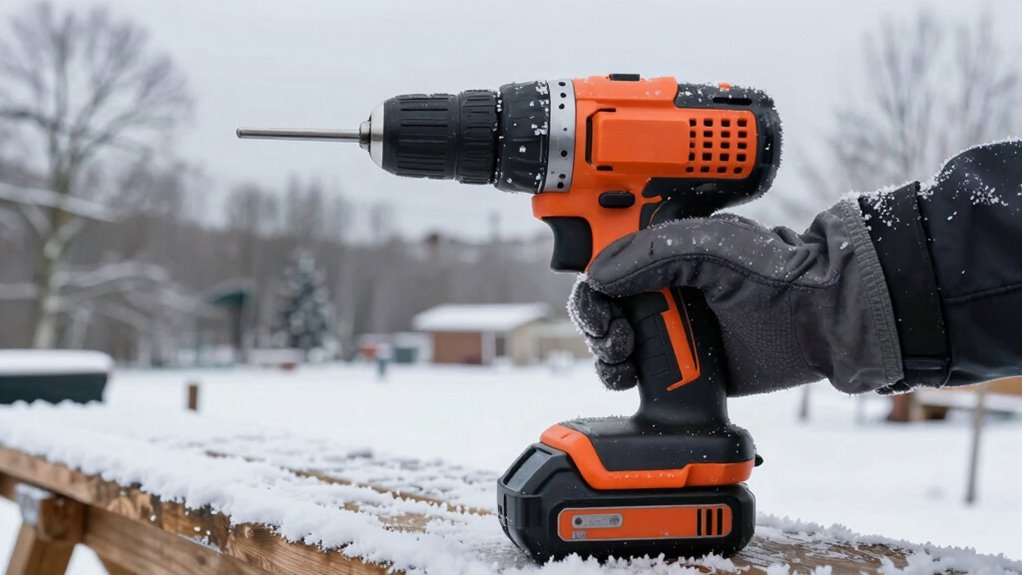

To keep your tool batteries working in cold weather, store them in a warmer environment and use insulated or thermal covers outdoors. When in use, hold the batteries close to your body or keep them in your pocket to retain heat. Follow proper charging practices, such as extending charging times and avoiding charging in freezing temperatures. Proper handling can prevent capacity loss and extend battery life—discover more tips to keep your batteries performing at their best.
Listen free for 30 days with Audible
Thousands of audiobooks and originals — cancel anytime.
As an affiliate, we earn on qualifying purchases.
Key Takeaways
- Store batteries in a warm, insulated environment when not in use.
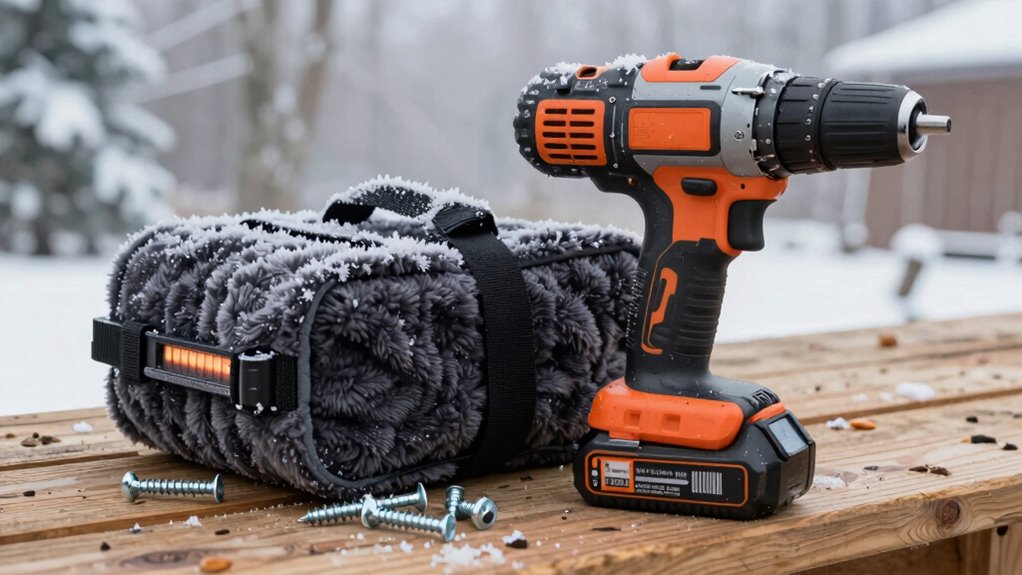
- Use thermal covers or wraps to retain heat during outdoor work.
- Keep batteries warm before use by slowly warming them indoors.
- Charge batteries at room temperature to avoid capacity loss.
- Avoid prolonged exposure to freezing temperatures to prevent damage.
When temperatures drop, your power tool batteries can struggle to perform, often losing their charge faster or failing to start altogether. Cold weather impact on batteries is significant, especially because of how battery chemistry reacts to low temperatures. Most power tool batteries are lithium-ion, which rely on chemical reactions to produce electricity. When it’s cold, these chemical reactions slow down dramatically, reducing the battery’s capacity and efficiency. As a result, your tools won’t run as long or may not turn on at all. Understanding how temperature affects battery chemistry is key to maintaining their performance during winter.
Cold temperatures slow battery chemistry, reducing capacity and performance of lithium-ion power tool batteries in winter.
The cold causes the electrolyte inside the battery to become less conductive, which hampers the flow of ions necessary for power. This slowdown means less energy is transferred within the battery, leading to diminished power output. You might notice your battery’s indicator showing a lower charge level even if it was fully charged just hours before. Not only does the cold impact the battery’s ability to deliver power, but it also accelerates capacity loss over time if you regularly expose batteries to freezing conditions. This is why many batteries tend to die faster in winter, and why they often need longer charging times to reach full capacity. Additionally, battery chemistry is sensitive to temperature fluctuations, making proper storage and handling even more critical. Using insulated storage solutions can help reduce the impact of cold temperatures and preserve battery life. Proper charging practices are also essential to prevent capacity loss caused by cold weather. To further protect your batteries, consider using thermal covers designed specifically for batteries, which can help retain heat during outdoor use.
thermal battery covers for power tools
As an affiliate, we earn on qualifying purchases.
As an affiliate, we earn on qualifying purchases.
Frequently Asked Questions
Can You Use Regular Batteries Instead of Rechargeable in Cold Weather?
You can use regular batteries instead of rechargeable ones in cold weather, but be aware of their limitations. Battery chemistry affects performance; alkaline batteries tend to drain faster in the cold, while lithium ones perform better. To maximize their lifespan, use proper storage techniques like keeping batteries warm and insulated. This helps maintain voltage and prevents rapid discharge, ensuring your tools work longer when temperatures drop.
How Long Do Cold Weather Battery Charges Typically Last?
In cold weather, your battery charges typically last about 20-30% less than in warm conditions. Imagine you’re working outdoors with a power drill; battery insulation and cold charging techniques can extend use. Proper insulation keeps the battery warmer, maintaining efficiency and prolonging charge life. Without these measures, cold drains your battery quickly, forcing you to recharge or replace it sooner. Proper preparation is key to maximizing your battery’s lifespan outdoors.
Are There Specific Brands Better Suited for Cold Conditions?
Yes, some brands are better suited for cold conditions, especially those offering batteries with superior insulation and cold-ready technology. Look for brands that emphasize battery insulation and cold storage features, as these help maintain performance in low temperatures. You’ll find that investing in these brands guarantees your tools stay reliable, even in harsh winter weather. Proper cold storage and insulating your batteries further extend their lifespan and efficiency.
How Do Temperature Fluctuations Affect Battery Lifespan?
Temperature impact profoundly affects your battery lifespan because fluctuating temperatures cause expansion and contraction in battery chemistry, which can damage internal components. Cold weather slows chemical reactions, reducing efficiency and capacity, while heat accelerates chemical degradation. When temperatures fluctuate, these effects worsen, shortening your battery’s lifespan over time. To protect your batteries, keep them insulated and store them in a stable environment, minimizing exposure to extreme temperature swings.
Is It Safe to Store Batteries in a Heated Space?
Yes, it’s safe to store batteries in a heated space, but you should prioritize storage safety and proper battery insulation. Keep batteries in a cool, dry area within the heated space to prevent overheating, which can damage them. Make sure they’re stored upright and away from metal objects to avoid short circuits. Proper insulation helps regulate temperature, protecting the batteries from extreme heat or cold, extending their lifespan and maintaining peak performance.
insulated storage for lithium-ion batteries
As an affiliate, we earn on qualifying purchases.
As an affiliate, we earn on qualifying purchases.
Conclusion
To keep your tool batteries performing in cold weather, remember that prevention is key. Keep batteries warm and stored properly, and use insulated bags or pockets when outdoors. Regularly charge and avoid letting batteries fully drain. Think of it like tending a garden—if you nurture and protect your tools during the cold, they’ll be ready when you need them most. After all, a stitch in time saves nine, so safeguard your batteries now to avoid work delays later.
battery warming pouch for power tools
As an affiliate, we earn on qualifying purchases.
As an affiliate, we earn on qualifying purchases.
As an affiliate, we earn on qualifying purchases.
Flea & tick season Picks
flea and tick prevention
As an affiliate, we earn on qualifying purchases.