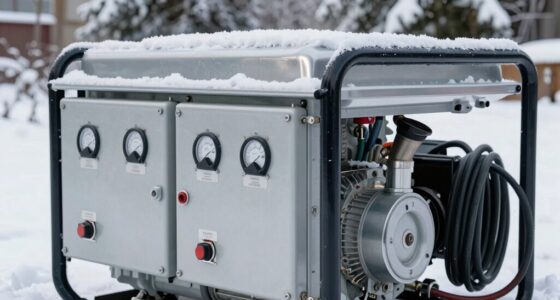
During hurricane and storm months, guarantee your generator is properly maintained, stored in a dry, well-ventilated outdoor area, and operated outdoors away from windows and doors to prevent carbon monoxide poisoning. Keep fuel safely stored, and test your generator regularly before storms hit. Prioritize essential appliances and use solar backup power when possible to reduce fuel reliance. Staying safe and prepared is key—continue exploring for more tips to keep your home protected during storms.
Key Takeaways
- Store fuel safely and ensure regular maintenance checks for reliable operation during storms.
- Operate generators outdoors in well-ventilated areas, away from windows and enclosed spaces.
- Prioritize essential appliances and use integrated solar power to extend backup capabilities.
- Test generators periodically before storm season to confirm proper functioning.
- Keep safety guidelines, emergency contacts, and troubleshooting instructions accessible at all times.

Have you ever wondered how to keep your essential appliances running during a hurricane or storm? During these intense weather events, your home’s power can be knocked out unexpectedly. That’s where generators come into play, but knowing how to use them safely and effectively is paramount. One smart way to enhance your emergency preparedness is by integrating solar power options alongside traditional generators. Solar-powered systems can provide a quiet, renewable energy source that reduces your reliance on fuel and offers a more sustainable backup during prolonged outages.
Integrate solar power with generators for safer, sustainable backup during storms and extended outages.
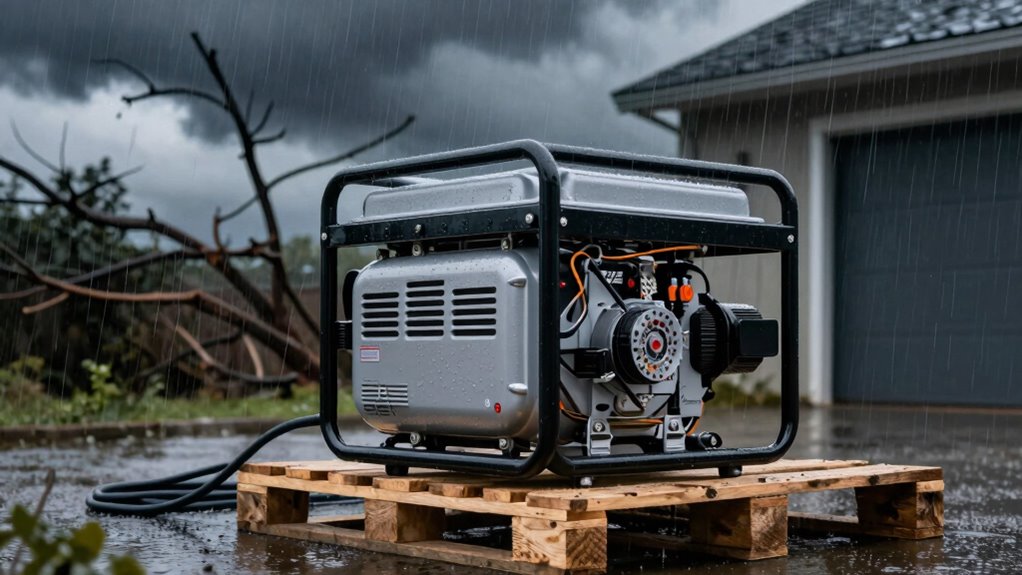
When storms threaten, it’s important to prepare your generator in advance. Make certain you have enough fuel stored safely, and regularly check your generator’s maintenance schedule. Keep it in a well-ventilated area away from windows and doors to prevent the risk of carbon monoxide poisoning. During a storm, never run a generator indoors or in enclosed spaces—this can be deadly. Instead, position it outside, on a dry, level surface, and connect appliances using heavy-duty extension cords rated for outdoor use.
In terms of emergency preparedness, it’s wise to establish a clear plan for power outages. Know which appliances are essential—like refrigerators, medical devices, and communication equipment—and prioritize their use. If you have a solar power system integrated with your backup plan, it can help reduce your fuel dependency and keep critical devices running longer. Solar panels can be particularly useful if you experience extended outages, as they can recharge batteries or power small appliances directly, reducing your reliance on fossil fuels. Additionally, having a properly maintained generator ensures it will perform reliably when needed most. Regularly updating your knowledge about emergency power safety can further prevent accidents and improve response times.
It’s also imperative to test your generator periodically, especially before storm season begins. Regular testing ensures it will operate smoothly when needed most. During a storm, don’t overload your generator; stick to the manufacturer’s capacity limits to prevent damage. Keep a supply of basic tools, spare parts, and instructions nearby so you can troubleshoot if necessary.
Finally, stay informed about weather updates and safety guidelines. Keep emergency contact numbers handy. While the storm rages, your generator can be a lifeline, providing power to essential appliances and helping you stay safe and comfortable. Combining traditional generators with renewable options like solar power enhances your emergency preparedness, making certain you’re ready for whatever nature throws your way. Proper planning, maintenance, and safety precautions allow you to maximize your generator’s effectiveness and protect your household during hurricane and storm months.
As an affiliate, we earn on qualifying purchases.
Frequently Asked Questions
Can I Run My Generator Indoors Safely?
You shouldn’t run your generator indoors because of serious risks. Indoor ventilation is inadequate, and it can quickly lead to dangerous carbon monoxide buildup. Carbon monoxide is a colorless, odorless gas that can cause poisoning or death in minutes. Always operate your generator outside, at least 20 feet away from windows and doors, to guarantee proper ventilation and safety during storms or hurricanes.
How Long Can I Operate a Generator Continuously?
Think of your generator as a marathon runner—pushing it too hard risks overheating. You should operate it for no more than 8-10 hours continuously, allowing it to rest and cool down. Prioritize fuel efficiency and noise reduction during extended runs to prevent overheating, conserve fuel, and keep your neighborhood peaceful. Always follow manufacturer guidelines, and make certain proper maintenance to keep it running smoothly through storm season.
What Maintenance Is Needed Before a Hurricane Hits?
Before a hurricane hits, you should check your generator’s fuel stabilization to prevent fuel degradation and guarantee smooth operation. Also, inspect and charge the battery, replacing it if needed, to confirm it’s ready when power is needed. Clean the generator, check oil levels, and test run it to identify any issues. Proper maintenance now helps ensure your generator functions reliably during the storm and recovery period.
Can I Connect Multiple Generators Together?
You shouldn’t connect multiple generators together unless you use a proper transfer switch designed for that purpose. This setup, called parallel wiring, can be dangerous if done incorrectly, risking generator safety and electrical hazards. Always consult manufacturer instructions and a licensed electrician. Proper power transfer methods guarantee reliable power supply and prevent backfeeding, which can harm utility workers and damage your equipment. Never compromise safety for extra power.
How Do I Store My Generator Long-Term?
To store your generator long-term, you should first empty the fuel tank or add a fuel stabilizer to prevent varnish buildup. Store fuel safely in approved containers away from heat or flames. Additionally, perform battery maintenance by disconnecting the battery, cleaning terminals, and storing it in a cool, dry place. Regularly check on your generator, ensuring it’s clean and protected from moisture, to keep it ready for emergencies.
solar backup power system for home
As an affiliate, we earn on qualifying purchases.
As an affiliate, we earn on qualifying purchases.
Conclusion
As the storm clouds gather and the wind howls outside, your generator stands as both protector and reminder of vulnerability. It’s a symbol of preparedness amid chaos, offering power when everything else falters. Yet, it’s also a stark reminder that even the strongest equipment needs care and caution. Embrace your generator not just as a tool for survival, but as a beacon of resilience—ready to restore your home, even when nature’s fury seems unstoppable.
heavy-duty outdoor extension cords
As an affiliate, we earn on qualifying purchases.
As an affiliate, we earn on qualifying purchases.
portable generator maintenance kit
As an affiliate, we earn on qualifying purchases.
As an affiliate, we earn on qualifying purchases.