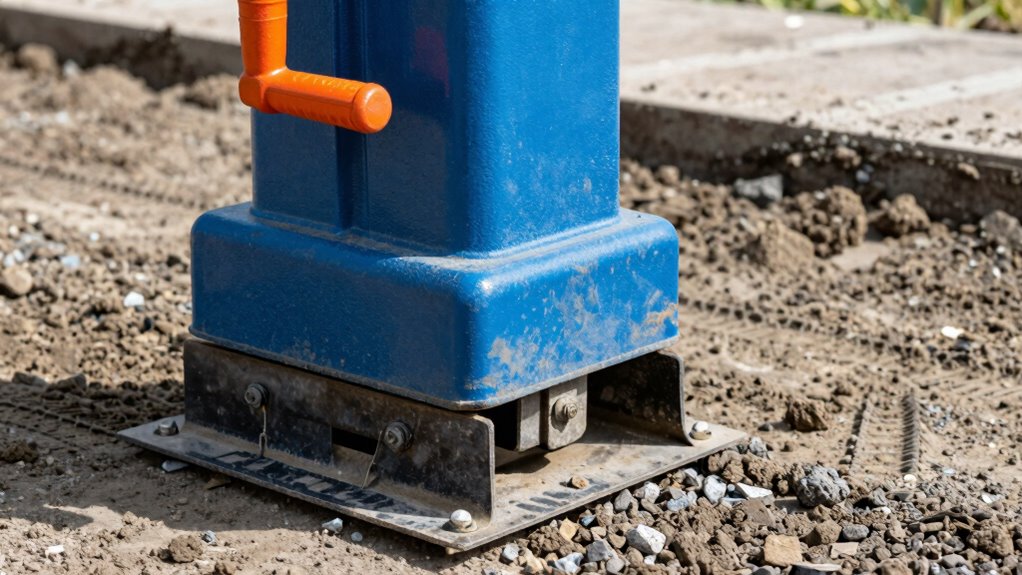

Plate compactors improve your outdoor project results by ensuring the soil and asphalt are tightly compressed, creating a stable, long-lasting foundation. This prevents uneven settling, cracking, and shifting over time. Proper compaction enhances durability, safety, and appearance, saving you money on repairs later. When you use the right equipment with proper technique, your project stays resilient against weather and traffic. Want to find out how specific techniques can boost your project’s success? Keep exploring to learn more.
Key Takeaways
- They create a stable, dense foundation that prevents settling and cracking over time.
- Proper compaction enhances asphalt adhesion, leading to smoother, longer-lasting pavements.
- Consistent vibration ensures uniform pressure, reducing the need for future repairs.
- Using a plate compactor improves overall project durability and safety.
- It increases efficiency, saving time and costs by minimizing rework and maintenance.

When tackling outdoor projects like paving, landscaping, or driveway installation, a plate compactor becomes an essential tool. It’s the secret weapon that transforms rough, loose soil into a solid, stable foundation. Without it, your project risks uneven settling, cracks, or even failure over time. Plate compactors are especially vital for soil stabilization, as they compress and firm the ground, reducing the chance of future shifting or erosion. This process guarantees that your base is dense enough to support whatever you plan to build on top, whether that’s a driveway, walkway, or garden bed. When you use a plate compactor properly, you’re not just compacting dirt—you’re creating a reliable foundation that improves the longevity of your project. Proper soil stabilization with a plate compactor ensures your outdoor space remains durable and safe for years to come.
A plate compactor creates a stable foundation, preventing future cracks and ensuring long-lasting outdoor projects.
In asphalt paving, a plate compactor plays a vital role in achieving a smooth, durable surface. Before pouring asphalt, you need a firm, well-compacted sub-base to prevent potholes or cracks down the line. A plate compactator helps to eliminate air pockets and loose particles, ensuring the asphalt adheres evenly and remains stable for years to come. Proper compaction reduces the risk of future deterioration and enhances the overall quality of the finished surface. Using a plate compactator in this stage makes a noticeable difference—you’ll see a smoother, more professional-looking pavement that withstands traffic and weather better than one laid on poorly compacted ground. Additionally, consistent vibration from the compactor ensures every layer is uniformly compressed, which is crucial for long-lasting results. Employing the correct compaction techniques further maximizes the effectiveness of your project. Investing in the right equipment also ensures that your project adheres to industry standards, leading to better results and fewer rework issues. Choosing the appropriate equipment also benefits from understanding machine maintenance, which helps extend the lifespan of your compactor and maintain consistent performance.
The difference a plate compactor makes isn’t just about initial appearance. It’s about long-term results. When you skip or rush through soil stabilization or asphalt paving, you invite problems that can be costly and time-consuming to fix later. A well-compacted base prevents shifting, settling, and cracking, saving you from repairs and maintenance down the line. The right equipment ensures consistent pressure and vibration, which leads to uniform compaction—something you can’t easily achieve with manual labor alone. This consistency is key for projects that demand precise results, such as driveways or patios. By investing in a quality plate compactor, you’re actively improving your project’s durability, safety, and aesthetic appeal.
Ultimately, a plate compactor isn’t just a tool—it’s your partner for creating stable, long-lasting outdoor spaces. It guarantees that your soil stabilization efforts are effective and that your asphalt paving is solid and even. When you prioritize proper compaction, you’re setting your project up for success, saving time, money, and frustration. The right use of a plate compactor elevates your work from amateur to professional, ensuring your outdoor projects not only look great but also stand the test of time.

VEVOR Plate Compactor, 6.5 HP 196cc Gas Engine, 2360 lbs Compaction Force
- Engine Power: 6.5 HP gasoline engine with 5600 vibrations/min
- Compaction Depth: 12-inch maximum depth for optimal results
- Work Efficiency: Up to 7300 sq ft/hour with large stamped plate
As an affiliate, we earn on qualifying purchases.
As an affiliate, we earn on qualifying purchases.
Frequently Asked Questions
How Often Should I Service My Plate Compactor?
You should service your plate compactor every 25 to 50 hours of use or at least once a season. Regular maintenance tips, like checking oil levels, cleaning the air filter, and inspecting for wear, help guarantee equipment durability. By staying on top of these tasks, you prevent breakdowns and extend your compactor’s lifespan, making your outdoor projects smoother and more efficient. Proper care keeps your equipment running reliably when you need it most.
Can Plate Compactors Be Used on Uneven Surfaces?
Think of your plate compactor as a skilled dancer on uneven surfaces; it can adapt but needs proper guidance. Yes, you can use it on uneven terrain, but for best results, focus on surface preparation to create a stable base. Regular equipment maintenance guarantees your compactor remains effective, handling rough patches with ease. Proper technique and care help you achieve solid compaction, regardless of the terrain’s irregularity.
What Safety Gear Is Recommended When Operating a Plate Compactor?
When operating a plate compactor, you should wear protective gear like ear protection, safety goggles, gloves, and sturdy footwear to guarantee safety. Always follow safety precautions, such as inspecting the equipment before use and maintaining a safe distance from others. Wearing the right protective gear minimizes risks of injury from noise, debris, or accidental contact. Prioritize safety to keep your outdoor project running smoothly and prevent accidents.
Are There Eco-Friendly Options for Plate Compactors?
You’ll be amazed—eco-friendly options for plate compactors are transforming outdoor projects! You can choose models that run on eco-friendly fuels like biodiesel or electricity, drastically reducing emissions. Additionally, look for compactors made from sustainable materials, which minimize environmental impact. These innovations help you complete your project efficiently while protecting the planet, making your work eco-conscious and responsible. It’s a game-changer for sustainable outdoor construction.
How Long Does It Take to Learn Proper Compactor Operation?
Learning proper compactor operation usually takes a few hours of hands-on practice, but mastering it can take days or weeks, depending on your experience. You’ll want to focus on machine maintenance and safety protocols during operator training to guarantee effective use. Regularly practicing and asking questions help you become confident, reduce mistakes, and improve project results. Remember, patience and proper training are key to becoming proficient with the compactor.
VEVOR Plate Compactor, 6.5 HP 196cc Gas Engine, 2360 lbs Compaction Force
- Engine Power: 6.5 HP gasoline engine with 5600 vibrations/min
- Compaction Depth: 12-inch maximum depth for optimal results
- Work Efficiency: Up to 7300 sq ft/hour with large stamped plate
As an affiliate, we earn on qualifying purchases.
As an affiliate, we earn on qualifying purchases.
Conclusion
In the end, using the right plate compactor truly transforms your outdoor projects, ensuring a solid foundation and lasting results. Many believe a heavier machine always delivers better compaction, but it’s more about matching the compactor to your specific task. When you select the proper equipment, you’ll see improved durability and fewer costly repairs. So, don’t just go for the biggest—choose wisely, and watch your outdoor projects reach new heights of quality and success.
VEVOR Plate Compactor, 6.5 HP 196cc Gas Engine, 2360 lbs Compaction Force
- Engine Power: 6.5 HP gasoline engine with 5600 vibrations/min
- Compaction Depth: 12-inch maximum depth for optimal results
- Work Efficiency: Up to 7300 sq ft/hour with large stamped plate
As an affiliate, we earn on qualifying purchases.
As an affiliate, we earn on qualifying purchases.
VEVOR Plate Compactor, 6.5 HP 196cc Gas Engine, 2360 lbs Compaction Force
- Engine Power: 6.5 HP gasoline engine with 5600 vibrations/min
- Compaction Depth: 12-inch maximum depth for optimal results
- Work Efficiency: Up to 7300 sq ft/hour with large stamped plate
As an affiliate, we earn on qualifying purchases.
As an affiliate, we earn on qualifying purchases.