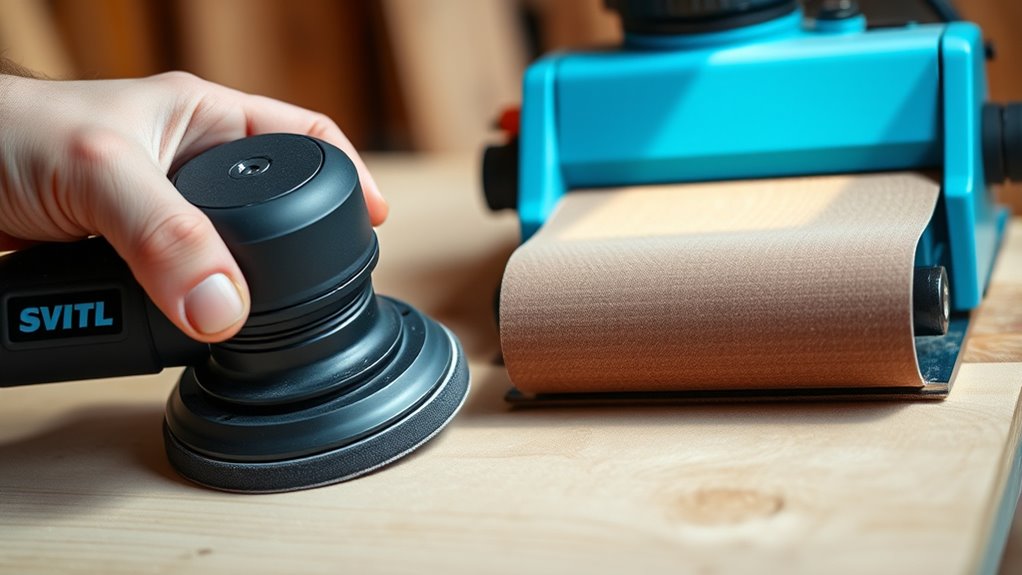

If you’re trying to decide between orbital and belt sanders, understand that orbital sanders are best for fine finishes, detailed work, and smooth surfaces, thanks to their gentle, circular motion. Belt sanders are more aggressive, ideal for rapid material removal on large or rough surfaces. Choosing the right tool depends on your project needs, surface material, and desired outcome. Keep exploring to learn tips on making the best choice and handling each sander effectively.
Key Takeaways
- Choose orbital sanders for fine finishes and detailed woodworking projects for smoother, swirl-free surfaces.
- Use belt sanders for aggressive material removal, rough shaping, and large surface prep tasks.
- Match abrasive grit and type to surface material and project speed requirements for optimal results.
- Prioritize dust collection and safety measures, especially when using belt sanders due to higher dust production.
- Regular maintenance of sanding pads and proper ergonomics extend tool life and improve sanding efficiency.
Understanding the Basic Design of Orbital and Belt Sanders

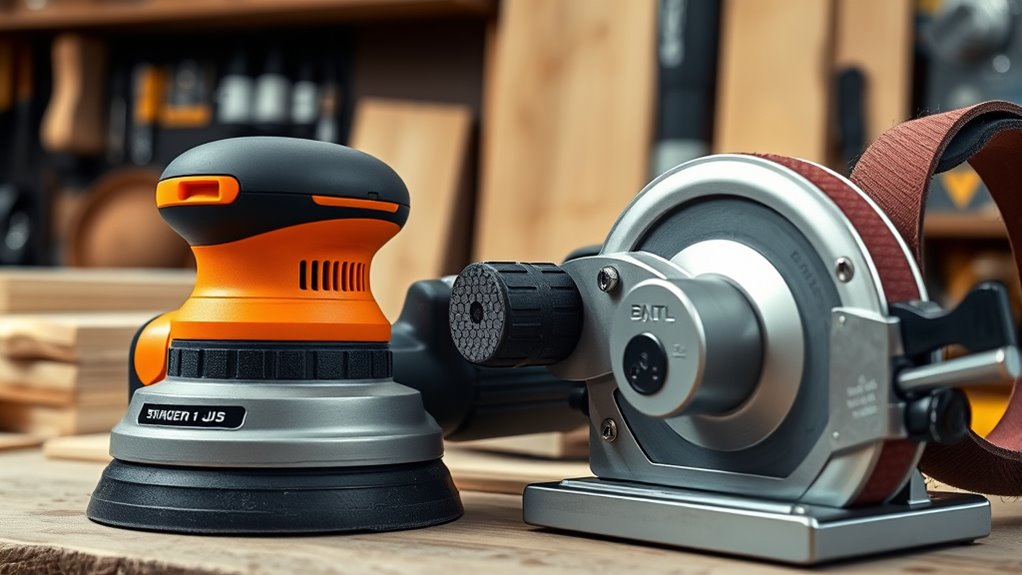
Have you ever wondered how orbital and belt sanders differ in their design? The key lies in their structure and dust collection systems. Orbital sanders feature a compact, palm-sized body with a round sanding pad that moves in small, circular motions, making them easier to handle. Their ergonomic design reduces fatigue during extended use, and many models incorporate dust collection ports to keep your workspace cleaner. Additionally, the energy-efficient design of modern orbital sanders aligns with sustainable practices, making them an environmentally friendly choice. This focus on sustainable practices is increasingly important as consumers seek eco-friendly tools. The motor power of orbital sanders also influences their performance, allowing for smoother operation on various materials. Belt sanders, on the other hand, have a larger, rectangular body with a continuous loop of abrasive belt. They’re built for aggressive material removal and typically lack the same ergonomic features, but they often include dust collection systems to manage debris effectively. Understanding these basic design differences helps you choose the right tool for your project, especially when considering dust management and overall efficiency. Furthermore, some models incorporate quiet operation features, enhancing user comfort during prolonged use.
Key Differences in Power and Performance
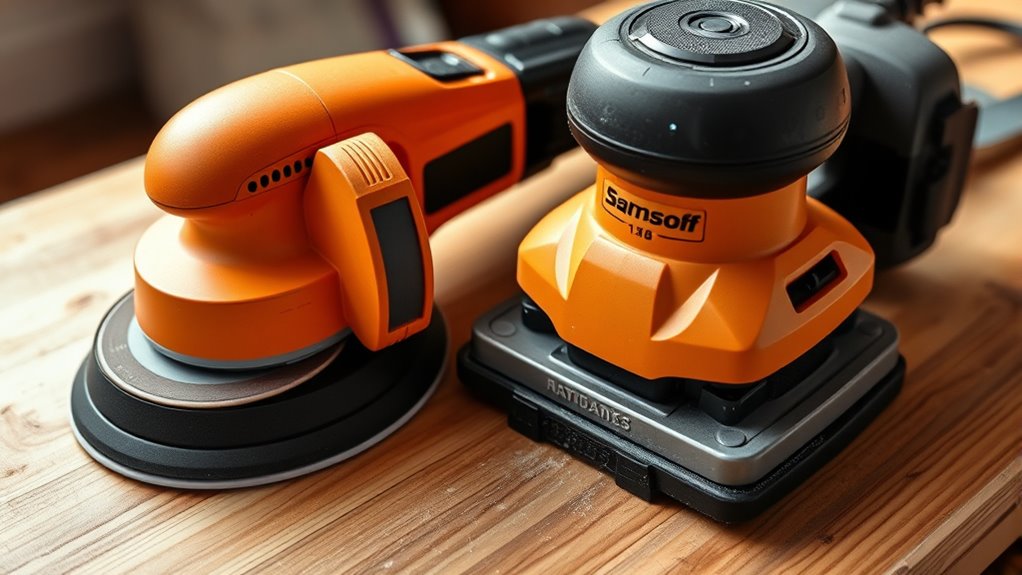
When comparing orbital and belt sanders, their power and performance capabilities often stand out as the most significant differences. Belt sanders typically have higher power output, allowing them to remove material faster and handle tougher surfaces. Their performance metrics, such as motor wattage and speed, reflect this strength, making them ideal for heavy-duty tasks. Orbital sanders, on the other hand, usually have lower power output but excel in finishing work, providing smoother surfaces with less risk of gouging. Their performance metrics focus more on orbital action and vibration control. Understanding these differences helps you choose the right tool for your project, ensuring you get the desired results efficiently and effectively. Additionally, recognizing the performance metrics can guide you in selecting a sander that aligns with your specific needs. To optimize your work, considering ergonomic design can also improve comfort during extended use. Incorporating user-friendly features can enhance precision and reduce fatigue during prolonged projects. Being aware of tool maintenance practices can also extend the lifespan and maintain optimal performance of your sander. Moreover, understanding the noise levels of different sanders can help you choose a model that minimizes fatigue and discomfort during extended use.
Ideal Applications for Orbital Sanders

Orbital sanders are best suited for projects that require a smooth, polished finish rather than rapid material removal. They excel at fine sanding tasks like finishing furniture, refinishing surfaces, or preparing wood for staining. Their dust collection systems help keep your workspace cleaner, reducing airborne particles and making cleanup easier. Thanks to their ergonomic design, you can work comfortably for extended periods without fatigue, ensuring precise control and even results. These sanders are ideal for delicate surfaces where you want to avoid gouging or uneven spots. Use an orbital sander when detail and a flawless finish matter most, especially on flat or curved surfaces that need a gentle touch. This makes them perfect for detailed woodworking, cabinetry, or finishing projects. Understanding the risks and rewards of different sanding techniques can help you choose the most suitable tool for your project. Additionally, knowing how to select the appropriate sanding grit can significantly influence your results. Being aware of the safety considerations associated with orbital sanding can also help prevent accidents and ensure a safer working environment. Familiarizing yourself with proper technique can further enhance your sanding efficiency and finish quality. Moreover, understanding market trends and insights can guide you in choosing the right tools and techniques for your projects.
When to Choose a Belt Sander for Your Project

When deciding to use a belt sander, consider the surface material you’re working with and whether it can handle aggressive sanding. If your project demands quick material removal and a rougher finish, a belt sander is often the best choice. However, if you need a smooth, fine finish, you might want to opt for a different tool. Additionally, be mindful of the material’s sensitivity to prevent damage or excessive wear.
Surface Material Compatibility
Considering the surface material is vital when selecting a belt sander, as this tool excels with certain types of materials and can cause damage if used improperly. For hardwoods or rough surfaces, a belt sander with aggressive abrasive types works best, quickly removing material and smoothing uneven areas. However, softer materials like veneer or delicate woods risk gouging or burning if you choose the wrong abrasive. Dust collection is also essential; belt sanders generate significant debris, and effective dust management helps protect your work surface and your health. If your project involves sensitive or finished surfaces, a belt sander might be too aggressive. Always match the abrasive type and dust collection capabilities to your material to guarantee a smooth, damage-free finish. Additionally, understanding the popular dog sweaters can help if you’re working on a pet-related project or need inspiration for a cozy, pet-friendly workspace. Selecting the right sander based on surface material compatibility will ensure efficient work and a professional-quality result. Being aware of abrasive types and their suitability for different surfaces can further improve your sanding outcomes and prevent costly mistakes. Moreover, considering the abrasive grit sizes can help you achieve the desired smoothness and finish for your project. Proper knowledge of consecration in the Bible can also inspire a mindful approach to your craftsmanship, emphasizing dedication and purpose in your work.
Project Speed Requirements
If your project requires removing large amounts of material quickly, a belt sander is the ideal choice. Its high abrasion resistance allows it to handle heavy-duty sanding with efficiency, saving you time and effort. Belt sanders operate at faster speeds, making them suitable for rapid material removal, especially on rough surfaces. Keep in mind, though, that their noise levels tend to be higher than orbital sanders, which can be a consideration if you’re working in noise-sensitive environments. Choose a belt sander when your priority is speed and aggressive material removal rather than fine finishing. This tool excels at tackling large projects where efficiency outweighs the need for precision. Use it for stripping paint, leveling surfaces, or preparing wood for finishing. Free Floating mechanisms help the belt sander maintain consistent contact with surfaces, improving efficiency during heavy-duty tasks. Additionally, understanding sound vibrations can help operators work more comfortably by minimizing fatigue and discomfort during extended use. Moreover, being aware of seasonal power needs can ensure your equipment functions reliably during different weather conditions.
Finish Quality Expectations
A belt sander is generally not the best choice when your project demands a high-quality, smooth finish. Its aggressive abrasion resistance can leave deep scratches, making it difficult to achieve a flawless surface. If you need a fine, even finish, an orbital sander is preferable. However, belt sanders excel at removing material quickly and can handle rough surfaces efficiently. When using a belt sander, guarantee your dust collection system is effective, as they produce a significant amount of dust and debris. This helps maintain a cleaner workspace and reduces airborne particles. For projects requiring smooth, professional finishes, reserve the belt sander for initial shaping and rough sanding, switching to finer tools later for the final touch. Additionally, proper ventilation considerations are essential to ensure safety and comfort during sanding projects. Incorporating dust control techniques can further enhance safety and result in a cleaner work environment. Understanding the different sanding types can help you choose the right tool for each stage of your project.
Surface Finish: Achieving Smooth Results With Each Tool
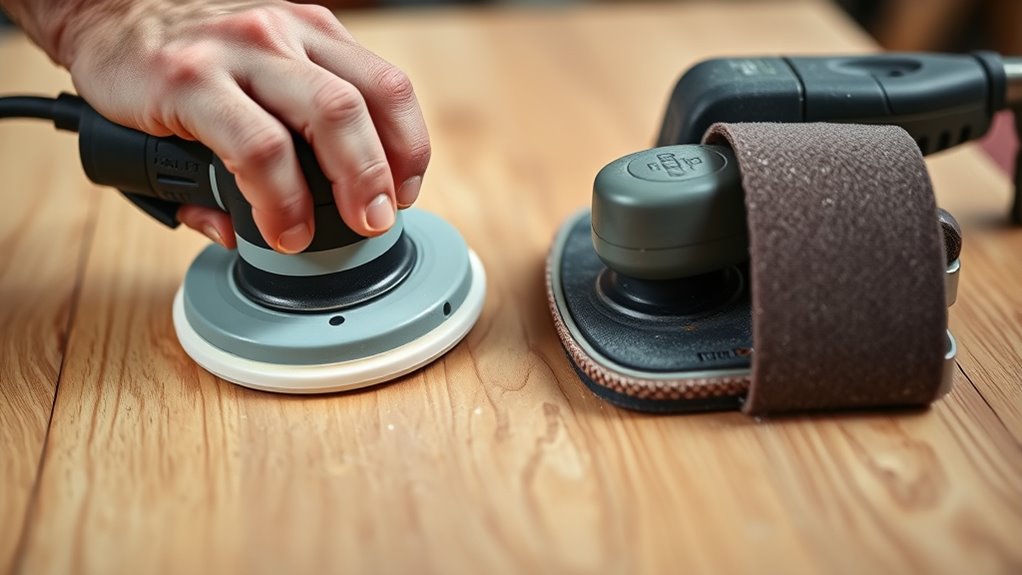
Achieving a smooth surface finish depends largely on choosing the right sanding tool and technique. With orbital sanders, you’ll notice finer abrasion patterns that produce a consistent, uniform finish. They excel at creating a smooth, swirl-free surface, especially on delicate or finished woods. Belt sanders, on the other hand, remove material quickly but can leave more noticeable scratch marks if not used carefully. To guarantee finish uniformity, you should start with coarse grit and gradually move to finer grits, regardless of the tool. Orbital sanders are ideal for final smoothing, while belt sanders are better for rapid material removal. Paying attention to your technique and the abrasion patterns will help you achieve a professional, smooth surface with each tool.
Speed and Efficiency: How Each Sander Handles Different Tasks

When choosing between orbital and belt sanders, you’ll notice differences in material compatibility and speed that affect how quickly tasks get done. Orbital sanders excel at surface preparation with gentle, controlled motion, while belt sanders handle heavy-duty material removal more efficiently. Your choice depends on balancing precision and control versus overall speed and efficiency for each task.
Material Compatibility and Speed
While both orbital and belt sanders excel in material removal, their speed and efficiency depend heavily on the type of material you’re working with. For dense, abrasion-resistant woods like hardwood, belt sanders can quickly smooth large surfaces, but may generate more dust and require better dust management. Softer woods, such as pine, respond well to orbital sanders, offering a fine finish without excessive abrasion. Here’s what to weigh:
- Hardwoods demand high abrasion resistance, favoring belt sanders for rapid material removal.
- Soft woods benefit from orbital sanders that provide a smooth finish with less dust.
- Delicate materials require gentle, precise sanding, better suited to orbital tools.
- Dust management is essential; belt sanders produce more debris, so dust collection systems are indispensable.
Choose based on material hardness and your dust control needs.
Surface Preparation Efficiency
Surface preparation efficiency varies markedly between orbital and belt sanders, depending on the task at hand. Belt sanders excel at removing material quickly, making them ideal for heavy-duty tasks like stripping paint or leveling large surfaces. Orbital sanders, however, are better suited for finer finishing work, providing a smoother surface with less effort. Dust management plays a vital role in efficiency; belt sanders tend to produce more dust, so good dust collection systems are essential to maintain visibility and reduce cleanup time. Ergonomics also matter—belts can be heavier and harder to maneuver for extended periods, while orbital sanders generally offer better comfort and control. Choosing the right sander depends on balancing speed, dust control, and ergonomic comfort for your specific surface preparation needs.
Precision and Control Dynamics
Orbital and belt sanders differ markedly in how they deliver speed and control for various tasks. With orbital sanders, you experience smooth, even finishes thanks to their random motion, offering better grip ergonomics and less noise, ideal for fine detail work. Belt sanders, on the other hand, provide rapid material removal suited for heavy-duty tasks, giving you aggressive control over larger surfaces. Imagine:
- Precision shaping with orbital sander’s gentle, controlled strokes
- Rapid stripping using belt sander’s high-speed, continuous belt action
- Comfort from lighter grip ergonomics during extended use
- Quieter operation, reducing fatigue during delicate tasks
These differences influence your workflow: orbital sanders excel in finesse, while belt sanders prioritize speed. Your choice depends on the balance of control and efficiency needed for each job.
Tips for Proper Usage and Safety Precautions
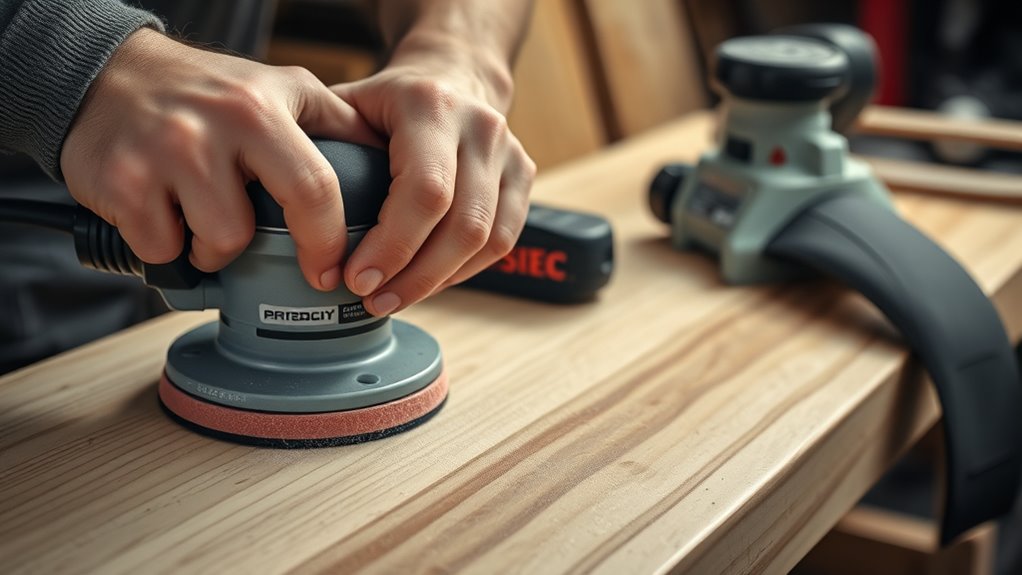
To guarantee safe and effective sanding, you need to understand how to use orbital and belt sanders properly. Prioritize sanding safety by wearing protective gear like goggles and masks. Maintain proper tool ergonomics by gripping the sander firmly and keeping a steady stance to avoid fatigue. Always check the power cord for damage before use. Keep the work area clean to prevent accidents. Use the correct sanding attachment for your project. Here’s a quick guide:
| Tip | Why It Matters | Best Practice |
|---|---|---|
| Wear protective gear | Prevent injuries and dust inhalation | Goggles, mask, gloves |
| Check tool ergonomics | Reduces fatigue and improves control | Adjust grip and stance |
| Inspect equipment | Ensures safe operation | Look for damage before use |
| Keep workspace tidy | Prevents accidents | Clear debris and clutter |
| Use correct attachment | Ensures ideal sanding results | Match pad to material |
Maintenance and Troubleshooting Common Issues
You’ll want to regularly check your sanding pad for wear, as a worn pad can reduce sanding effectiveness. If your sander’s motor gets unusually hot, it’s likely overheating, and you should pause to let it cool down. Addressing these issues promptly helps keep your sander running smoothly and extends its lifespan.
Sanding Pad Wear
Sanding pad wear can substantially impact the efficiency of your orbital or belt sander, making maintenance essential for ideal performance. Over time, the abrasive durability decreases, leading to uneven sanding and reduced pad longevity. To keep your sander in top shape, check for:
- Cracks or tears in the pad surface, which can cause uneven abrasion.
- Excessive buildup of dust or debris that hampers abrasive contact.
- Worn-out hook-and-loop backing losing its grip on abrasives.
- Warped or deformed pads, reducing contact area and sanding effectiveness.
Regular inspection and timely replacement of worn pads help maintain abrasive durability and extend pad longevity. Proper maintenance ensures your sander functions smoothly, delivers consistent results, and saves you money in the long run.
Motor Overheating Problems
Worn-out sanding pads can lead to uneven sanding and increased strain on your sander’s motor, which in turn may cause it to overheat. To prevent motor overheating, guarantee proper motor cooling by regularly inspecting vents and cleaning dust buildup. Overheating prevention also involves avoiding prolonged use without breaks and using the correct sanding pad for your tool.
| Issue | Solution |
|---|---|
| Dust clogging vents | Clean vents regularly |
| Excessive use without breaks | Allow the motor to cool down periodically |
| Wrong pad or pressure | Use appropriate pad and avoid excessive pressure |
Cost Considerations and Value for Money

When comparing orbital and belt sanders, considering the cost and overall value for money is essential to making an informed decision. Your cost analysis should include not just the initial purchase price but also maintenance, replacement parts, and longevity. Think about these factors:
- The upfront cost, ranging from budget-friendly to professional-grade models
- Replacement abrasive belts or pads, which can add up over time
- Durability and how long the sander will last with regular use
- Additional accessories or features that could save you money in the long run
Selecting the Right Sander for Your DIY or Professional Needs
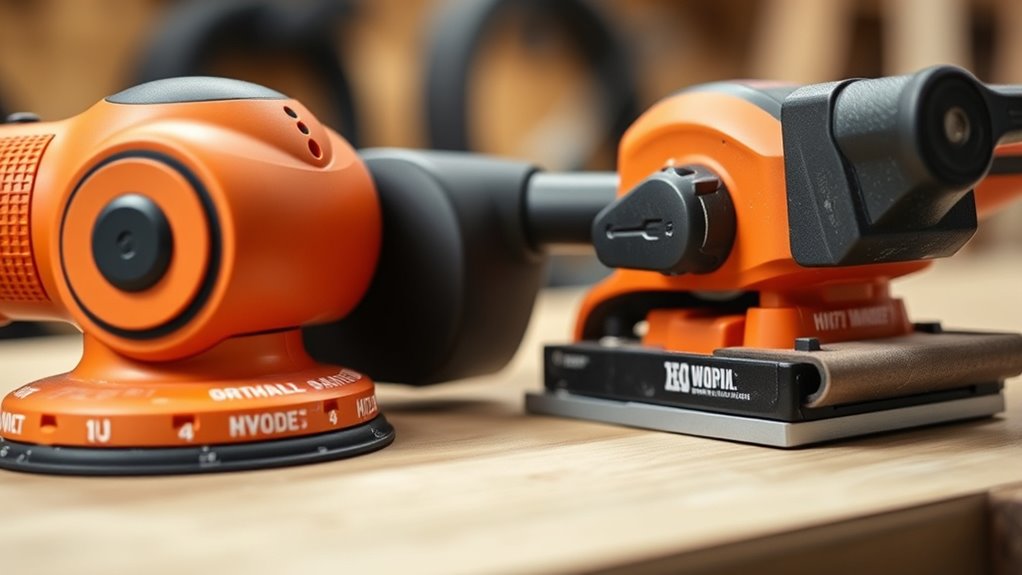
Choosing the right sander depends on your specific project needs and experience level. First, consider abrasive selection—coarser grits are better for heavy material removal, while finer grits provide smoother finishes. Orbital sanders excel for finishing, whereas belt sanders handle rapid stock removal. Also, think about dust collection; models with efficient dust extraction systems keep your workspace cleaner and improve visibility. If you’re working on detailed or delicate projects, an orbital sander with good dust collection is ideal. For large, rough surfaces, a belt sander offers power and speed. Matching your project’s scope with these features ensures you get the best results. Remember, selecting the right sander enhances efficiency, reduces frustration, and delivers professional-quality finishes.
Frequently Asked Questions
How Do Orbital and Belt Sanders Impact Dust Collection Efficiency?
Orbital sanders generally produce less dust, making dust capture easier and more efficient, while belt sanders generate more debris, requiring better filtration. To maintain ideal filter performance, you should regularly clean or replace filters, especially when working with belt sanders. Effective dust collection depends on your ability to keep filters clean and ensure your dust collection system is properly set up, improving safety and reducing cleanup time.
Can I Use Belt Sanders on Delicate Wood Surfaces?
Using a belt sander on delicate wood surfaces is like walking a tightrope without a net—it’s risky for gentle sanding. Belt sanders are powerful and can remove material quickly, but they often leave marks or uneven surface finishes. For delicate woods, stick to orbital sanders, which offer a gentler touch and help you achieve a smooth, polished surface without damage. Always prioritize control to protect fragile materials.
What Are the Noise Level Differences Between Orbital and Belt Sanders?
You’ll find that orbital sanders generally have a lower noise comparison compared to belt sanders, making them quieter and easier on your ears. Orbital sanders often feature sound level reduction technology, which minimizes noise, while belt sanders tend to produce louder, more aggressive sounds. If you’re working in a noise-sensitive environment, opting for an orbital sander helps reduce sound levels and provides a more comfortable experience.
How Do I Select the Correct Abrasive Belt or Pad for Each Sander?
Choosing the right abrasive belt or pad is like picking the perfect wardrobe for an event. You need to contemplate abrasive grit selection—coarser grits for heavy material removal, finer grits for polishing. Check the adhesive types; hook-and-loop is versatile, while glued abrasives suit specific tasks. Match the grit and adhesive to your sander’s specifications and your project’s needs, ensuring smooth, efficient results every time.
Are There Eco-Friendly Options for Sanding Tools and Accessories?
Yes, you can find eco-friendly sanding tools and accessories. Look for biodegradable abrasives that break down naturally, reducing environmental impact. Recycled sanding accessories, made from repurposed materials, also help minimize waste. These options are available for both orbital and belt sanders. By choosing biodegradable abrasives and recycled accessories, you’re making a sustainable choice that’s better for the environment without compromising on performance.
Conclusion
Choosing between orbital and belt sanders is like selecting the right brush for a masterpiece—you need the right tool to bring your vision to life. Both tools serve as your trusted brushes, shaping and refining your project’s surface. By understanding their strengths, you’ll wield each sander with confidence, turning rough ideas into smooth realities. Remember, the right sander is your key to *discovering* craftsmanship—your project’s true masterpiece waiting to be revealed.