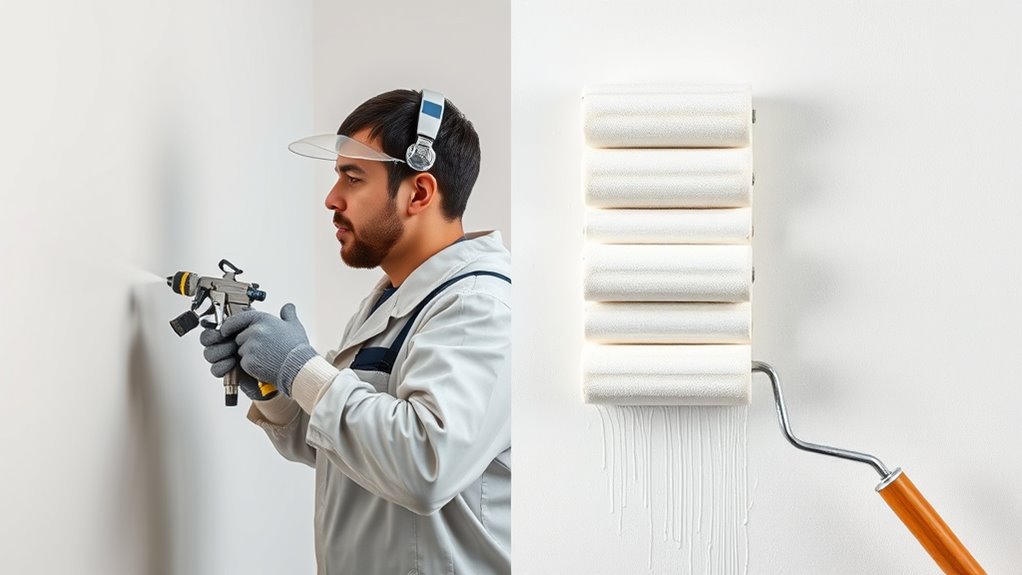

Choosing between a sprayer and rollers depends on your surface and finish goals. Sprayers provide a smooth, even coat quickly, ideal for large areas and hard-to-reach spots, but they need proper technique and paint thinning. Rollers control application, are great for flat surfaces, and reduce mess. Both tools can deliver a professional look if you master the right techniques and consistent paint consistency. Keep going and you’ll discover how to optimize each method for a flawless finish.

Get business pricing on tools and workshop supplies
- Business-only prices and quantity discounts
- Tax-exempt purchasing
- Multiple users, one account, clear invoices
Key Takeaways
- Select sprayers for speed and flawless finishes on large surfaces; choose rollers for control on flat, detailed areas.
- Proper paint thinning enhances flow and prevents issues like streaks with both sprayers and rollers.
- Use consistent techniques such as “W” or “M” patterns with rollers, and maintain steady pressure with sprayers for even coverage.
- Sprayers deliver seamless, spray-like finishes efficiently, while rollers offer rapid coverage with high control.
- Mastering application techniques and adjusting paint viscosity are essential for achieving a professional finish with either tool.
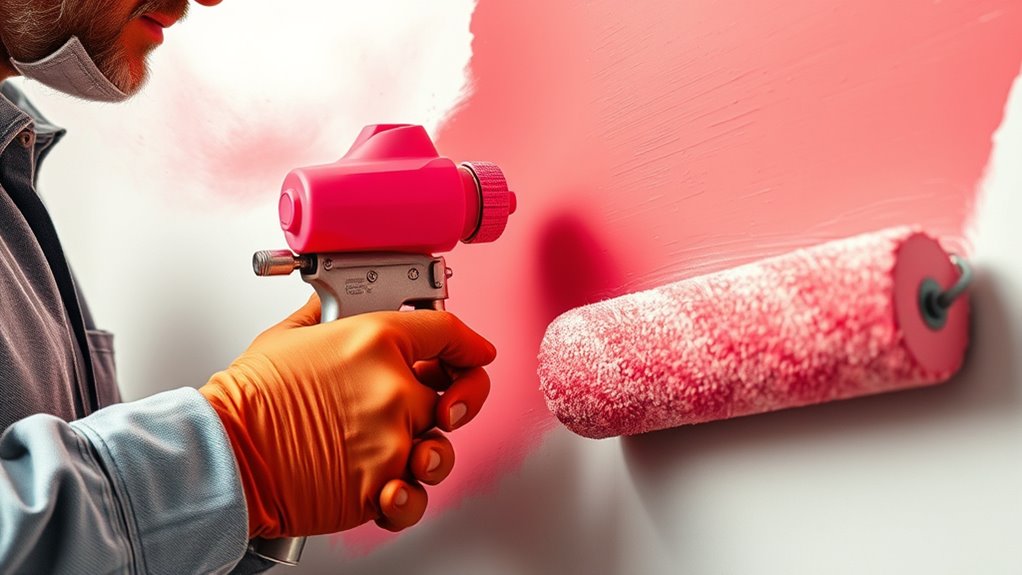
When deciding how to tackle your painting project, understanding the differences between using a sprayer and rollers can make a big impact on your results. While both tools aim to provide a smooth, professional finish, they each have unique advantages and challenges, especially when it comes to brush techniques and paint consistency. If you prefer a high level of control, rollers might be your go-to, but if you want speed and a flawless finish on large surfaces, a sprayer could be more suitable. Knowing when and how to adjust your approach can dramatically improve your outcome.
Choosing between a sprayer and rollers depends on your desired control, speed, and surface area for a professional finish.
Brush techniques are critical, particularly when working with rollers. Rollers excel at covering large, flat surfaces quickly, but they require careful application to avoid streaks and uneven textures. To achieve a smooth look, you want to use a “W” or “M” pattern, then fill in the gaps with even, overlapping strokes. Proper brush techniques matter less with a sprayer, as it atomizes paint into a fine mist, creating an even coat without brush marks. However, when using brushes or rollers, maintaining consistent brush strokes and pressure ensures uniform coverage. This consistency depends heavily on your paint’s viscosity—too thick, and you’ll struggle to spread it smoothly; too thin, and it may run or drip. Adjusting paint consistency before application is essential. Thin your paint slightly if you’re using a roller or brush to improve flow and reduce streaking, but be careful not to dilute it too much, which can lead to uneven color or texture.
Using a sprayer demands attention to paint consistency as well. Since spray guns rely on a fine, even spray of paint, the mixture must be just right—neither too thick nor too watery. Typically, thinning paint with the recommended amount of water or solvent ensures a smooth, consistent spray pattern. If the paint is too thick, it can clog the nozzle or produce uneven coverage. Conversely, excessively thin paint might cause overspray and loss of control. Experimenting with small batches helps you find the perfect consistency for your sprayer, ensuring a professional finish without waste or mess. Additionally, understanding the thermal behavior of your paint and equipment can help prevent problems like clogging or uneven application during high-heat or outdoor conditions.
Ultimately, mastering brush techniques and managing paint consistency are key to getting ideal results, regardless of whether you choose a sprayer or rollers. Rollers provide speed and simplicity for large areas but require attention to even application and proper paint thickness. Sprayers, on the other hand, demand precision in thinning paint and controlling spray patterns but can deliver a seamless, spray-like finish quickly. Understanding these nuances allows you to select the right tool and technique for your project, bringing professional-quality results within reach.
As an affiliate, we earn on qualifying purchases.
Frequently Asked Questions
Which Method Is Faster for Large Surface Areas?
Using a sprayer is faster for large surface areas because it covers more ground quickly. You should focus on proper surface preparation beforehand to guarantee an even finish, and remember that equipment maintenance is key to keeping the sprayer operating smoothly. While rollers may take longer, they require less cleanup. For speed, a sprayer is your best choice, but always balance it with quality and ease of maintenance.
Can Both Tools Be Used Outdoors Effectively?
Like a seasoned artist facing the elements, you can use both tools outdoors effectively if you prepare the surface well and consider weather conditions. Surface preparation ensures paint adheres properly, while checking weather considerations prevents issues like drips or uneven drying. A sprayer can cover large areas quickly in good weather, while rollers work well in moderate conditions, providing control and minimizing overspray. Adapt your approach for the best outdoor finish.
What Are the Cleanup Differences Between Sprayers and Rollers?
You’ll find cleaning sprayers more involved because of disposal challenges and the need for thorough rinsing of nozzles and hoses after each use. You should clean rollers more frequently, typically right after painting, to prevent paint from drying and hardening in the fibers. While rollers are easier to clean, sprayers demand careful disassembly and multiple rinses to guarantee all paint is removed, making the cleanup process more time-consuming.
How Do Costs Compare for Professional-Grade Equipment?
Like investing in a finely-tuned instrument, your equipment investment impacts your budget. Professional-grade sprayers tend to have a higher cost comparison upfront but can save you time and effort. Rollers are generally more affordable initially but may require additional tools or more labor. Consider your project scope and long-term needs to balance the costs, ensuring you choose equipment that delivers a professional finish without breaking the bank.
Are There Specific Paints Better Suited for Sprayers or Rollers?
You should choose paints with good compatibility for your tool to guarantee the best finish quality. For sprayers, thinned or fluid paints work best, providing smooth, even coverage and a professional look. Rollers excel with thicker paints that don’t drip easily, creating a textured or smooth finish depending on the nap. Always check manufacturer recommendations for paint compatibility to achieve the best finish quality, whether using a sprayer or rollers.
paint roller kit for smooth finish
As an affiliate, we earn on qualifying purchases.
As an affiliate, we earn on qualifying purchases.
Conclusion
Whether you choose a sprayer or rollers, think of your tools as the brushes of a master artist. A sprayer dances across surfaces with swift, even strokes, while rollers lay down a textured, cozy blanket of paint. Your choice paints the story of your project—so pick the tool that matches your vision. With the right instrument in hand, you’ll turn blank walls into a masterpiece, leaving your space transformed and alive with color.
As an affiliate, we earn on qualifying purchases.
As an affiliate, we earn on qualifying purchases.
Fall yard work Picks
leaf blowers
As an affiliate, we earn on qualifying purchases.