TL;DR
YouTuber Ed Bryan of Krucial Info built a 10-by-12-foot floating deck from 12 reclaimed pallets and placed a premade gazebo on top. He said the plywood and stain cost $258; the gazebo, furniture and other project costs were additional.
YouTuber Ed Bryan of Krucial Info has demonstrated a budget backyard project that uses 12 reclaimed wood pallets as the base for a 10-by-12-foot deck, then places a premade gazebo on top. Bryan said the plywood and stain for the deck cost $258; that figure does not include the gazebo, furniture or other project expenses.

Get business pricing on tools and workshop supplies
- Business-only prices and quantity discounts
- Tax-exempt purchasing
- Multiple users, one account, clear invoices
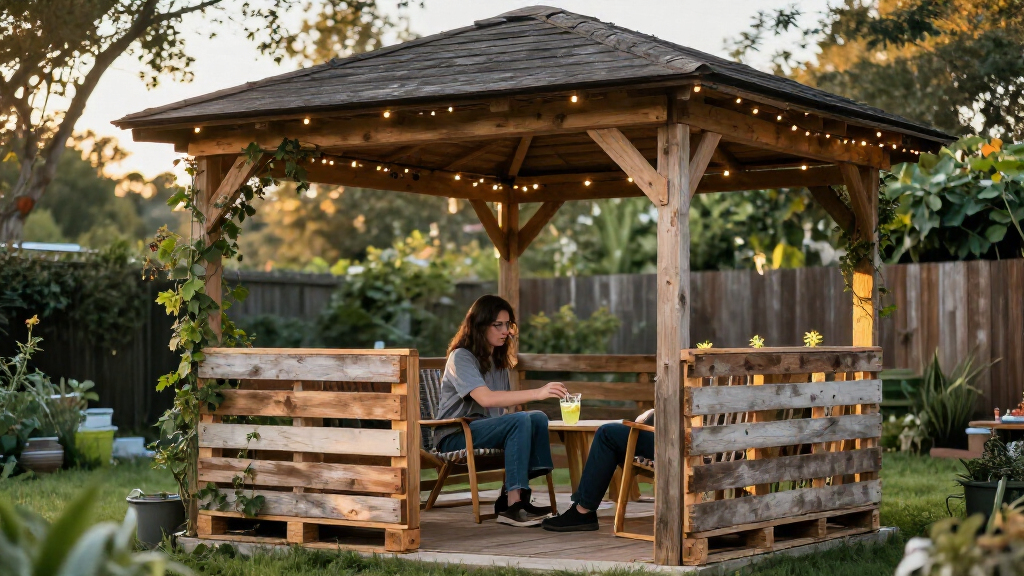
In the video, Bryan lays out the pallets over concrete pavers, frames them with 2-by-4 lumber and secures treated plywood on top. He stains the platform and assembles a premade gazebo above it, rather than building the entire structure from reclaimed wood. The approach uses salvaged materials for the deck while simplifying the gazebo portion of the project.
The reported $258 total covers plywood and stain only. The price of the gazebo and furniture is not given, nor are costs for pavers, framing lumber, fasteners or tools. Angi is cited as estimating gazebo installation at roughly $1,500 to $7,800, but that range is not directly comparable to Bryan’s partial materials cost or a complete DIY project budget.
For a deck built this way, the article recommends sturdy pallets of roughly uniform size, with no broken slats. It also warns readers to inspect used wood for signs of mold, including splitting or flaking. The pallets in Bryan’s deck were not taken apart before use; they were arranged as whole units and covered with plywood.
A pallet deck adds charm beneath a premade gazebo
Ed Bryan used reclaimed pallets to build a backyard platform. The reported materials cost covers only plywood and stain, not the full project.
How the platform came together
Whole pallets formed the base for a plywood deck and premade gazebo.
Level pavers support the pallet layout; sand or gravel beneath may help reduce settling.
A 2-by-4 frame holds the pallets together, with treated plywood fastened on top.
Trim and stain finish the deck before a premade gazebo is assembled above it.
What the reported cost means
The figure is a partial materials cost, not a finished-project budget.
- Plywood
- Stain
- Gazebo and furniture
- Pavers, framing lumber, fasteners and other expenses
Check before reusing pallets
Material condition and site safety matter as much as the low-cost approach.
- Choose sturdy pallets of similar size and avoid broken slats.
- Inspect for mold signs such as splitting or flaking; consider the wood’s treatment history.
- Confirm the base is stable and check local permit and code requirements.
A Lower-Cost Route to a Gazebo
The project offers homeowners an example of separating a backyard build into two parts: a reused-material deck and a commercially made gazebo. That can reduce the amount of new lumber needed for the platform and may make the work more approachable than constructing a complete gazebo from scratch. It does not establish the total savings, however, because the gazebo price and other expenses are not reported.
The example also puts an often-missed distinction in focus: a low quoted cost for selected materials is not the same as a finished-project price. Anyone comparing the project with professional installation would need to account for all materials, labor, site preparation and any required approvals, as well as whether the structure suits local conditions.
Products Worth Considering

Sonos Roam (Gen 1) Portable Smart Speaker, White

Levoit Vital 100S-P Air Purifier with Washable Pre-Filter

Sonos Arc Ultra Dolby Atmos Soundbar, Black
As an affiliate, we earn on qualifying purchases.
How Bryan Built the Platform
The project begins with ground preparation. Pavers support the pallets, and the article recommends using sand or gravel beneath them to help reduce the risk of settling. The pavers need to be level before the pallets are placed. A frame made from 2-by-4s holds the pallet layout together and provides a perimeter for fastening the plywood.
After the plywood is secured, trim is added around the platform and the surface is stained. The trim is left short of the corners to allow room to bolt down the gazebo posts. Bryan then assembles a premade gazebo, avoiding the more involved task of designing and building its roof and frame from raw materials.
For people considering a fully homemade gazebo, the article points to instructions by Vincent Andrew of Garden Patch and a separate demonstration by Wineberry Hill. It describes post anchoring, roof framing, shingles and a wind skirt as possible parts of that work. These are separate examples, not steps shown as completed in Bryan’s video.
“The deck’s plywood and stain cost $258.”
— Ed Bryan, Krucial Info
The Full Project Cost Is Unknown
The report does not give the gazebo’s purchase price, the cost of the furniture, or a complete tally of lumber, pavers, fasteners and any other supplies. It also does not state whether Bryan’s $258 figure includes every item used to finish the deck beyond plywood and stain. The final cost therefore cannot be determined from the reported amount.
Other details are missing, including how the deck and gazebo perform over time, the condition and treatment history of the pallets, and the local rules that may apply to a raised platform or permanent structure. The article’s description of the project as suitable for beginners is not a substitute for checking structural requirements or assessing whether a particular site and materials are safe.
Check Materials and Local Rules
Readers interested in adapting the idea can first inspect pallets for damage or suspected mold, confirm that the pavers and platform are stable, and price the gazebo and remaining supplies before estimating savings. Pallet wood should not be assumed suitable just because it is reclaimed; its condition and prior treatment matter.
Before building, homeowners should check applicable local permit and code requirements and use appropriate protective equipment when cutting or fastening materials. The report does not announce a follow-up cost breakdown or further testing of Bryan’s structure, so its long-term performance and final price remain unreported.
Source: rss
Key Questions
How much did the pallet deck cost?
Bryan reported spending $258 on plywood and stain. The figure does not include the gazebo, furniture or all other possible project costs.
How many pallets did Bryan use?
He used 12 pallets for a deck measuring 10 by 12 feet. The report says additional pallets would be needed for a gazebo built from pallet wood, but Bryan used a premade gazebo.
What should readers check before reusing pallets?
Choose sturdy pallets of similar size and avoid broken slats. Inspect the wood for signs of mold, including splitting or flaking, and consider its condition and treatment history before using it.
Does the $258 include the gazebo?
No. The reported amount covers plywood and stain only. The gazebo’s price and other expenses are not specified.
Can the project be built without a premade gazebo?
The article describes separate guidance for building a gazebo, including anchoring posts and constructing the roof. Those steps are not the project Bryan demonstrates, and a complete DIY build would require additional materials and attention to stability and local requirements.
Source: hunker.com