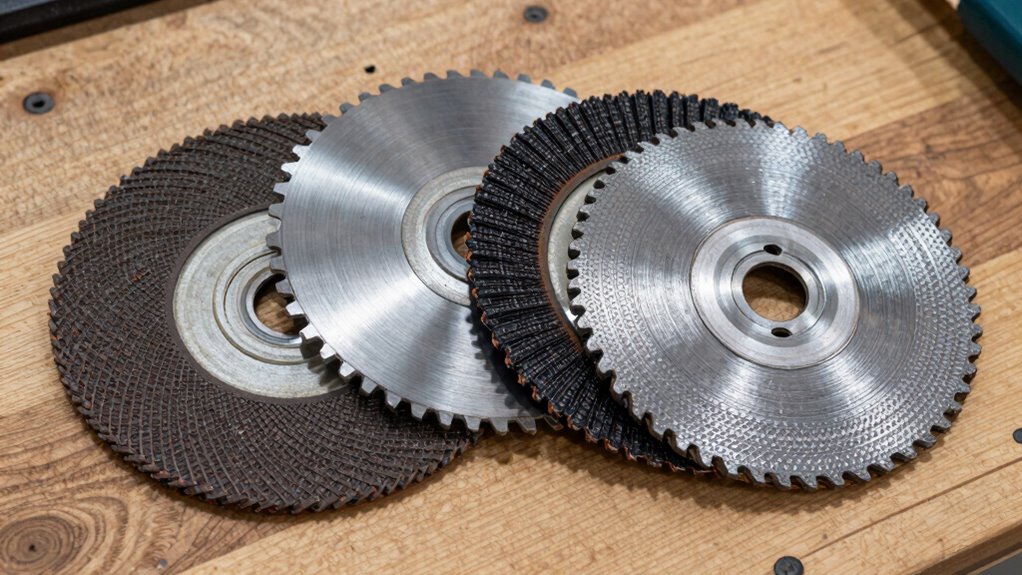

As a DIYer, you should know about different angle grinder discs like grinding discs for smoothing surfaces, cutting discs for slicing metal or tiles, flap discs for finishing, and wire brush discs for rust removal. Choosing the right disc for each task guarantees safety, efficiency, and a professional look. Understanding their functions helps prevent accidents and prolong the tool’s life. Keep exploring this guide to discover more about selecting and using discs correctly.
Listen free for 30 days with Audible
Thousands of audiobooks and originals — cancel anytime.
As an affiliate, we earn on qualifying purchases.
Key Takeaways
- Understand the different disc types: grinding, cutting, flap, wire brush, and their specific applications.
- Choose discs based on material compatibility like metal, tile, or wood for optimal results.
- Learn safety precautions: proper mounting, protective gear, and inspection before use.
- Recognize signs of disc wear or damage to prevent accidents and ensure safety.
- Store and maintain discs properly to prolong lifespan and maintain performance.
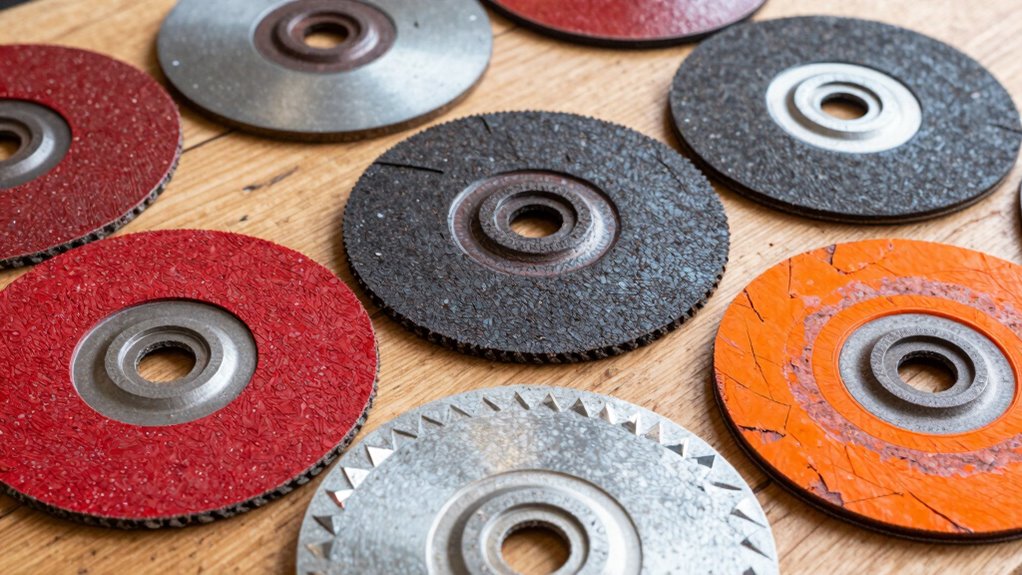
When choosing an angle grinder disc, understanding the different types available can markedly improve your project’s efficiency and safety. With the right disc, you’ll get cleaner cuts, smoother finishes, and reduced risk of accidents. It’s essential to recognize that not all discs are suitable for every task, so selecting the appropriate one requires some knowledge about their specific functions and limitations. Safety precautions should always be your top priority. Always wear proper eye protection, gloves, and a dust mask when working with different discs, especially when grinding or cutting hard materials. Make sure to inspect the disc before use, checking for cracks or damage, as a compromised disc can shatter during operation, posing serious safety risks. Properly mounting the disc onto your grinder is equally important; ensure it’s securely attached and that you’re using the correct flange to prevent wobbling or dislodgement during use. Additionally, understanding Safety precautions and proper handling techniques can significantly reduce the risk of injury or equipment failure. There are several common types of discs, each designed for particular applications. Grinding discs are your go-to for smoothing rough surfaces or removing excess material. They’re made of abrasive particles bonded together and are ideal for metal, stone, or concrete. Cutting discs, on the other hand, are thinner and sharper, meant for slicing through materials like metal pipes or tiles. When using these, maintain a steady hand and avoid excessive pressure to prevent kickback or disc breakage. For finishing work, flap discs are excellent—they combine abrasive cloth flaps that conform to the workpiece, giving you a polished surface. Wire brush discs are perfect for removing rust, paint, or corrosion, but keep in mind they can sometimes throw off small wire bristles, so safety precautions like eye protection are essential. Additionally, selecting the right disc material for your specific project can improve your results and prolong the lifespan of your tools. Regular maintenance and proper storage are crucial, as storing discs in a humid environment can lead to weakening or warping of the bonding material, reducing their effectiveness. Maintenance tips are fundamental to prolong the life of your discs and ensure safe operation. Store discs in a dry, cool place, away from humidity and direct sunlight, which can weaken their bonding or cause warping. Always clean dust and debris off the discs before storing or reuse, and replace them at the first sign of wear or damage. Using the wrong disc for a specific job not only risks damaging your workpiece but also increases the chance of disc failure. Regularly check your grinder’s speed settings and ensure they match the disc’s maximum RPM, as exceeding this limit can cause catastrophic failure. By following these safety precautions and maintenance tips, you’ll not only extend the lifespan of your discs but also keep your workspace safe and efficient.
angle grinder cutting discs for metal
As an affiliate, we earn on qualifying purchases.
As an affiliate, we earn on qualifying purchases.
Frequently Asked Questions
How Do I Choose the Right Disc for My Project?
To select the appropriate disc for your project, first verify disc compatibility with your angle grinder. Consider the abrasive types suited for your task—metal, stone, or wood. For metal, use a grinding or cutting disc; for stone, opt for diamond-tipped or abrasive discs; and for wood, a sanding or flap disc works best. Matching the disc type to your material guarantees safety and efficiency in your DIY project.
Are There Safety Concerns With Specific Disc Types?
Think of angle grinder discs as tools with a wild side—they can be powerful but dangerous. Safety concerns are real; some discs produce sparks or debris that could harm you. Always wear protective gear like goggles and gloves, and follow storage guidelines to keep discs in good condition. Handling each disc with respect minimizes risks, letting you tame the beast safely and confidently for your projects.
Can I Use One Disc for Multiple Materials?
You shouldn’t use one disc for multiple materials because of material compatibility and disc versatility issues. Different discs are designed for specific materials like metal, stone, or concrete, and using the wrong one can be unsafe and ineffective. Always check the disc’s labeling and choose the right type for each job. This guarantees safety, peak performance, and a cleaner, more precise cut for each material you work with.
How Often Should I Replace My Grinder Discs?
You should replace your grinder discs when they show signs of wear, damage, or reduced effectiveness, typically after several uses depending on disc lifespan. Regularly inspect for cracks or excessive wear. Proper storage tips, like keeping discs in a dry, cool place and avoiding extreme temperatures, help prolong their life. Always follow the manufacturer’s recommendations for replacement to guarantee safe and efficient grinding performance.
What Is the Maximum RPM for Each Disc Type?
Imagine you’re working on a metal project, and you choose a disc rated for 10,000 RPM. You should always check the disc compatibility and RPM limitations before use. For example, a standard abrasive disc might have a max of 12,000 RPM, while a diamond blade may be limited to 6,600 RPM. Exceeding these limits risks disc failure, so always match your disc to your grinder’s RPM to stay safe.
angle grinder grinding discs for concrete
As an affiliate, we earn on qualifying purchases.
As an affiliate, we earn on qualifying purchases.
Conclusion
By now, you’ve learned the essential angle grinder disc types and their specific uses. Remember, choosing the right disc is key to a successful project and safety. Don’t forget the old saying, “A stitch in time saves nine”—taking the time to pick the right disc now prevents mistakes and accidents later. So, equip yourself with the right tools, stay cautious, and enjoy your DIY projects with confidence!
angle grinder flap discs for polishing
As an affiliate, we earn on qualifying purchases.
As an affiliate, we earn on qualifying purchases.
wire brush discs for rust removal
As an affiliate, we earn on qualifying purchases.
As an affiliate, we earn on qualifying purchases.
Evergreen bestsellers Picks
bestsellers
As an affiliate, we earn on qualifying purchases.