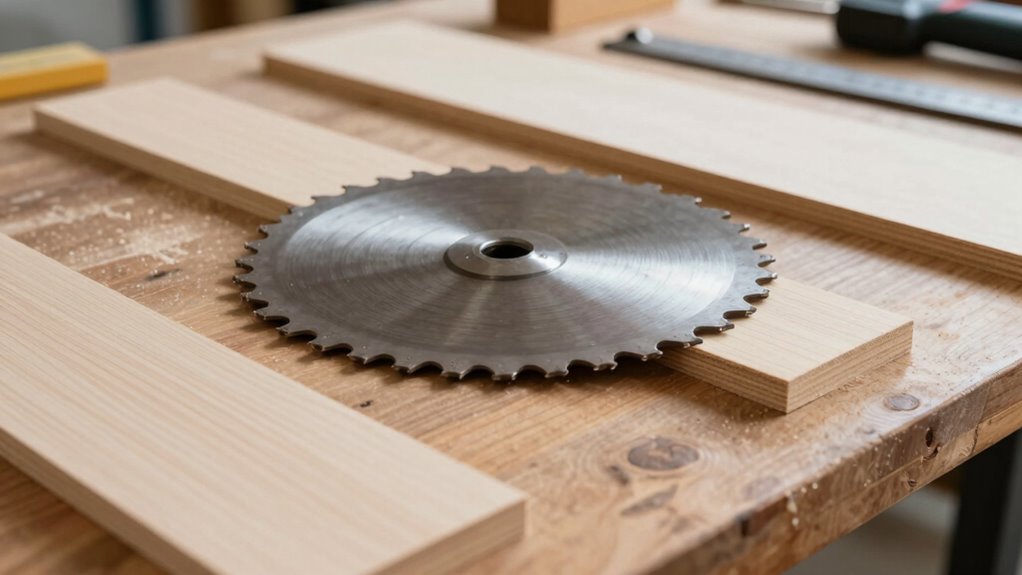

To get clean plywood cuts, choose a blade with high tooth count (60+ teeth) and alternate top bevel (ATB) teeth for smooth, splinter-free edges. Opt for a carbide-tipped blade for durability and better grain handling. Make certain the blade size matches your saw’s specifications to guarantee safety and efficiency. Finer teeth and specific tooth arrangements improve the cut quality, and the right blade size helps achieve professional results. Keep exploring to learn even more tips.

Get tools and workshop supplies delivered free — and shop member deals
- Fast, free delivery on millions of items
- Access to Prime Big Deal Days deals on October 6–7
- Prime Video, Amazon Music and more included
Key Takeaways
- Select a blade with a high tooth count (60+ teeth) for smoother, splinter-free cuts in plywood.
- Use a carbide-tipped blade for durability and cleaner cuts on layered or grainy plywood.
- Opt for blades with alternate top bevel (ATB) teeth to achieve cleaner, more precise edges.
- Ensure the blade size matches your saw’s specifications for safe and optimal performance.
- Choose a fine-tooth or combination blade for a balance of speed and a high-quality finish.
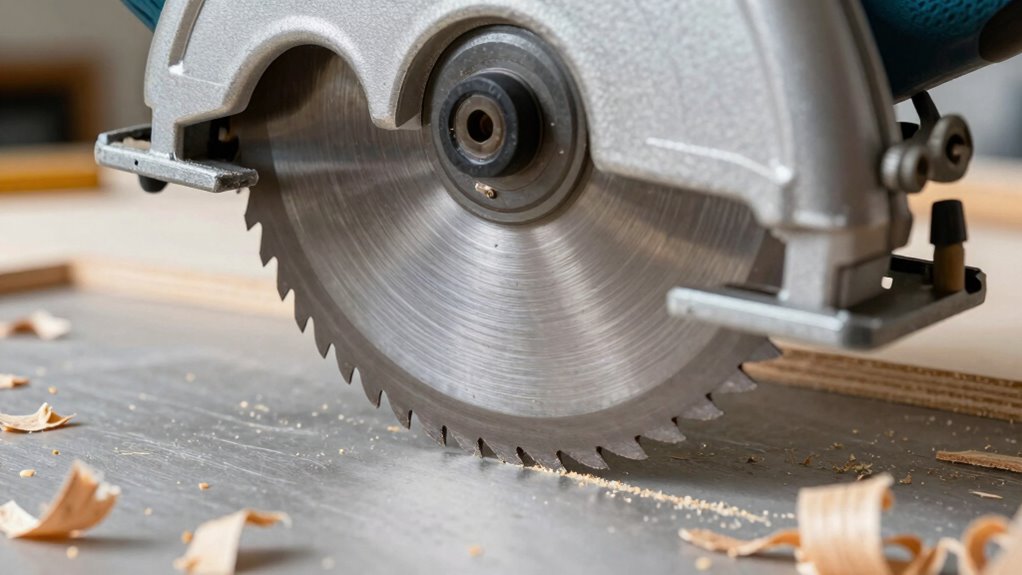
Are you unsure how to pick the right circular saw blade for your project? It’s a common concern, especially when your goal is to make clean, precise cuts in plywood. The key is understanding how blade material and tooth design influence your cuts. These factors determine the quality of your work, the efficiency of your saw, and the overall finish.
Start by considering the blade material. For cutting plywood, you’ll want a blade that’s durable yet gentle enough to prevent splintering. High-speed steel (HSS) blades are good for softer materials, but for plywood, carbide-tipped blades are often the best choice. Carbide teeth stay sharper longer and resist wear, which means cleaner cuts over multiple uses. They also handle the grain and layered structure of plywood better, reducing tear-out and splintering. If you’re working on a larger project or need frequent cuts, investing in a carbide-tipped blade pays off in the long run because it maintains its sharpness and quality.
Carbide-tipped blades offer durability and cleaner cuts, making them ideal for plywood and frequent use.
Next, pay attention to the tooth design. The teeth shape and arrangement directly impact how clean your cut will be. For smooth, splinter-free edges, look for blades with a high tooth count—generally 60 or more teeth. These blades have finer teeth that produce a smoother finish but cut more slowly. Conversely, blades with fewer teeth cut faster but might leave rougher edges, which isn’t ideal for fine woodworking or finishing. If you’re aiming for clean cuts in plywood, a blade with alternate top bevel (ATB) tooth design is highly effective. These teeth are beveled in alternating directions, which helps slice through the material cleanly and minimizes splintering on the top surface. Additionally, selecting appropriate tooth geometry can further enhance cut quality and reduce splintering in delicate workpieces. Using blades with optimized tooth set configuration can improve the cut’s smoothness and durability, especially for detailed work.
Furthermore, consider the tooth configuration—such as a combination of ATB and flat-top grind (FTG)—to balance speed and cut quality. For example, a blade with ATB teeth and a few flat-top teeth can deliver smooth cuts while also providing durability for thicker plywood. The tooth height and pitch also matter; smaller, closely spaced teeth produce finer cuts, while larger teeth are suited for rougher cuts or thicker panels. Moreover, choosing a blade with specialized tooth geometry can further enhance cut quality and reduce splintering in delicate workpieces. A well-chosen blade will also have proper blade diameter to ensure compatibility with your saw and project requirements.
carbide-tipped circular saw blade for plywood
As an affiliate, we earn on qualifying purchases.
As an affiliate, we earn on qualifying purchases.
Frequently Asked Questions
What Blade Material Is Best for Plywood Cuts?
For clean plywood cuts, carbide-tipped blades are your best choice because they stay sharp longer, reducing blade sharpening needs. These blades cut smoothly and maintain high cutting speed, making your work easier and cleaner. Avoid inferior materials that dull quickly, which can slow you down. By choosing a carbide blade, you guarantee consistent, precise cuts while saving time and effort, especially when working on larger projects.
How Does Blade Tooth Count Affect Cut Quality?
A higher tooth count improves cut quality by providing a smoother finish, while a lower count speeds up cutting but may roughen the surface. Blade durability depends on tooth geometry; finer teeth tend to last longer because they distribute wear evenly. For clean plywood cuts, opt for blades with a higher tooth count and precise tooth geometry, ensuring smooth, accurate results without sacrificing durability.
Can Different Blade Types Be Used Interchangeably?
Imagine your saw as a versatile artist’s brush, ready to create. Different blade types aren’t always interchangeable due to blade compatibility, which affects safety and performance. Using the right blade guarantees smooth cuts and tool longevity. While some blades can serve multiple purposes, check your saw’s specifications to maximize tool versatility. Always select blades designed for your specific task to avoid damage and achieve professional-quality results.
How Often Should I Replace My Circular Saw Blade?
You should replace your circular saw blade when you notice dull cuts, increased burning, or excessive vibration, which indicate blade wear. Regular blade maintenance, like cleaning and checking for damage, helps extend its life. Using proper cutting techniques also reduces strain on the blade, slowing wear. Typically, blades last several dozen cuts depending on material and use, but substituting them promptly ensures clean cuts and safe operation.
Are There Specific Safety Tips for Using a Circular Saw Blade?
In the age of the Renaissance, safety first still rules. When operating a circular saw, always wear safety gear like goggles and hearing protection. Keep the blade guard in place and functioning properly to prevent accidents. Make certain your work surface is stable, and don’t force the saw through the material. Check the blade for damage before use, and unplug the saw when changing blades or making adjustments. These precautions keep you safe and the project smooth.
high tooth count circular saw blade
As an affiliate, we earn on qualifying purchases.
As an affiliate, we earn on qualifying purchases.
Conclusion
Now that you know what to look for, selecting the right circular saw blade becomes a breeze. Remember, the devil is in the details, so pay attention to blade type, tooth count, and material compatibility. When you choose wisely, clean plywood cuts will be second nature, saving you time and frustration. Keep your eyes peeled and don’t rush the process—after all, a stitch in time saves nine, and a good blade makes all the difference.
ATB tooth design circular saw blade
As an affiliate, we earn on qualifying purchases.
As an affiliate, we earn on qualifying purchases.
6-1/2 inch plywood cutting saw blade
As an affiliate, we earn on qualifying purchases.
As an affiliate, we earn on qualifying purchases.
Fall yard work Picks
leaf blowers
As an affiliate, we earn on qualifying purchases.