
Your choice of table saw blade directly impacts cut quality because factors like blade speed, tooth design, and configuration work together. Using an incompatible blade or dull teeth can cause burns, rough edges, and uneven cuts. If the blade isn’t suited to your material or is worn out, your results will decline quickly. Understanding how these elements interact helps you maintain better cuts—and there’s more to discover to keep your projects precise and safe.

Get business pricing on tools and workshop supplies
- Business-only prices and quantity discounts
- Tax-exempt purchasing
- Multiple users, one account, clear invoices
Key Takeaways
- Using the wrong blade type or tooth design can cause rough cuts and poor finish quality.
- Incompatible blade speed with the material or blade can lead to burning, chipping, or uneven edges.
- Dull or damaged blades reduce cutting efficiency, resulting in faster degradation of cut quality.
- Variations in blade quality and construction influence how well the blade handles different materials.
- Incorrect blade choice for specific projects can increase stress on the saw, affecting cut precision and safety.
Choosing the right table saw blade is essential for achieving clean cuts and guaranteeing safety during your woodworking projects. One of the most overlooked factors that influence cut quality is blade speed. When you operate the saw at the correct RPM, the blade cuts smoothly, reducing vibrations and preventing rough edges. If the blade spins too fast, you risk burning the wood or causing kickback. Conversely, if it’s too slow, the cut might be jagged or uneven. Adjusting the blade speed to match the material and blade type helps you maintain control and produce precise results. Always check the manufacturer’s recommended speed and fine-tune your saw accordingly. Proper blade speed is crucial for balancing efficiency and safety in your cuts. Additionally, maintaining a consistent blade speed helps prolong the lifespan of your blade and prevents unnecessary wear.
Choosing the right blade speed ensures smooth cuts, safety, and professional results in your woodworking projects.
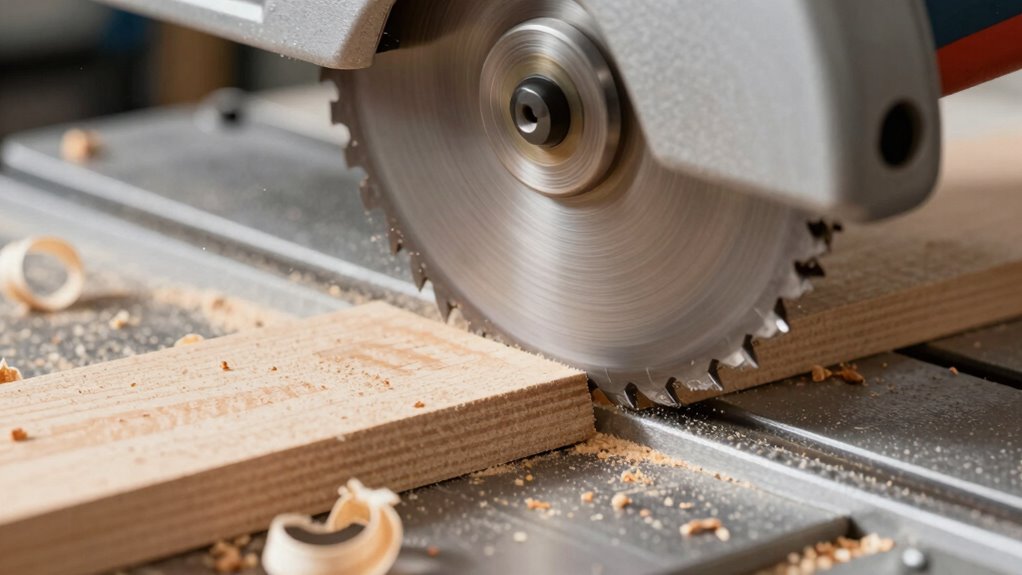
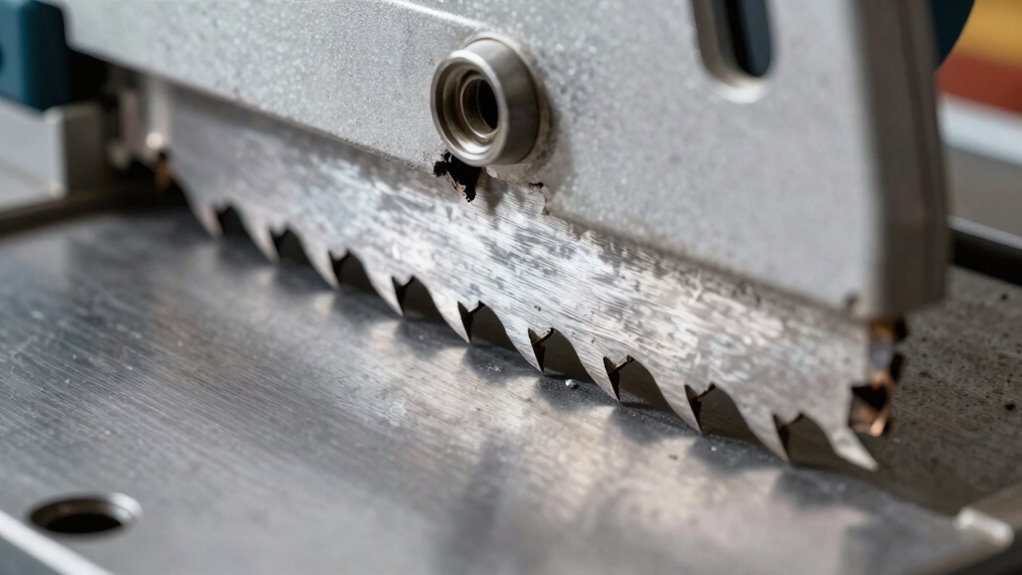
Another critical element that impacts cut quality is tooth design. The shape, size, and arrangement of the teeth determine how efficiently the blade removes material and how clean the cut appears. Fine-tooth blades with closely spaced teeth are ideal for making smooth, detailed cuts in veneer or plywood, while larger, coarser teeth excel at ripping through thicker, tougher wood. The tooth design also affects chip removal; well-designed teeth with proper gullets prevent clogging and ensure smoother operation. When you select a blade with the appropriate tooth geometry, you minimize splintering and achieve a cleaner finish. Additionally, the tooth configuration influences the speed and quality of material removal, making it an important aspect to consider. Understanding how tooth design and arrangement work together can help you optimize your cuts for different projects.
The combination of blade speed and tooth design is what truly influences the consistency and quality of your cuts. If either factor is off, you’ll notice a decline in the finish, increased roughness, or even potential safety hazards. For example, a blade with aggressive teeth running at an incorrect speed can cause excessive heat buildup, leading to warping or burning the wood. On the other hand, a blade with the wrong tooth design for your project might struggle to clear sawdust, resulting in rough cuts and increased effort. Paying close attention to both aspects allows you to adapt to different materials and project requirements, giving you better control over your work. Regularly inspecting your blades for dullness or damage also plays a vital role in maintaining cut quality.
In the end, understanding how blade speed and tooth design interact means you can make smarter choices when selecting your blades. Don’t just settle for a one-size-fits-all approach; instead, match your blade specifications to your specific project needs. Doing so ensures your cuts are cleaner, safer, and more precise, helping you achieve professional-quality results every time.
table saw blade for fine woodworking
As an affiliate, we earn on qualifying purchases.
As an affiliate, we earn on qualifying purchases.
Frequently Asked Questions
How Does Blade Material Affect Cutting Performance Over Time?
Blade material greatly impacts your cutting performance over time. Durable materials like carbide resist wear longer, maintaining sharpness and cut quality. Cheaper materials wear faster, leading to dull blades that produce rough cuts. As blade durability decreases, material wear accelerates, causing uneven cuts and potential damage to your workpiece. Selecting the right blade material guarantees consistent performance and extends the blade’s lifespan, saving you time and money on replacements.
Can Blade Brand Influence Cut Quality Consistency?
You’ll notice that blade brand can influence cut quality consistency, thanks to perceived blade durability and brand reputation. A well-known brand often invests in quality materials, ensuring a sharper, more stable cut over time. While lesser-known brands might seem tempting, they can sometimes falter in maintaining consistent performance. Choosing a reputable brand helps you achieve smoother cuts and reduces the need for frequent blade changes, ultimately enhancing your woodworking experience.
What Role Does Blade Sharpening Play in Maintaining Cut Quality?
Blade sharpening is essential for maintaining cut quality because it keeps the blade clean and sharp, guaranteeing smooth cuts. When your blade is sharp, cutting speed stays consistent, reducing rough edges and splintering. Regular sharpening also prevents buildup of debris, which can dull the blade quickly. By keeping your blade clean and sharp, you guarantee precise cuts and extend the life of your saw, saving you time and effort.
How Does Blade Alignment Impact Cut Precision?
Blade alignment directly impacts cut precision because misalignment causes blade wobble, leading to uneven cuts. When your blade isn’t properly aligned, it wobbles during operation, reducing the accuracy of your cuts. Ensuring alignment accuracy minimizes wobble, resulting in cleaner, more precise cuts. Regularly check and adjust your blade’s alignment to maintain peak performance, especially when working with different materials or after moving the saw, to prevent compromised cut quality.
Are There Specific Blades for Different Wood Types?
Did you know that using the right blade for different woods can improve cut quality by up to 25%? Yes, there are specific blades designed for various wood types. For softwoods, blades with fine tooth configurations deliver smoother cuts, while hardwoods benefit from blades with more aggressive tooth configurations. Additionally, blade coatings reduce friction and heat, helping these blades last longer and perform better on different wood types.
As an affiliate, we earn on qualifying purchases.
Conclusion
Just like Hercules faced his labors with the right tools, choosing the proper table saw blade guarantees your cuts stay sharp and precise. When you select the right blade for your material, you’re wielding the Excalibur of woodworking—cutting effortlessly and maintaining quality. Remember, a wise craftsman knows that the blade is as essential as the sword in battle. Keep your blades sharp and your cuts flawless, and you’ll conquer every project with the confidence of a hero.
adjustable blade speed for table saw
As an affiliate, we earn on qualifying purchases.
As an affiliate, we earn on qualifying purchases.
tooth design for plywood cutting
As an affiliate, we earn on qualifying purchases.
As an affiliate, we earn on qualifying purchases.
Fall yard work Picks
leaf blowers
As an affiliate, we earn on qualifying purchases.