For heavy prep work, a belt sander quickly removes material thanks to its aggressive action and higher motor power, but it can gouge surfaces if not careful. A random orbital sander is better for finishing and finer work, with less dust and swirl marks, though it’s slower at removing thick material. To decide which suits your project best, consider the balance between rapid removal and smooth finish. Keep exploring to find out more!
Open a free Amazon Business account
Business pricing, bulk buying and tax-exempt orders.
As an affiliate, we earn on qualifying purchases.
Key Takeaways
- Belt sanders are more suitable for rapid material removal on large, flat surfaces during heavy prep work.
- Random orbital sanders offer better control and finish quality, reducing the risk of gouges and surface imperfections.
- For heavy-duty tasks, belt sanders typically have higher motor power (7-12 amps) compared to random orbital models.
- Dust collection systems are crucial; belt sanders produce more dust, requiring robust dust management setups.
- Choose based on project scope: use belt sanders for aggressive removal, random orbital for detailed and finishing work.
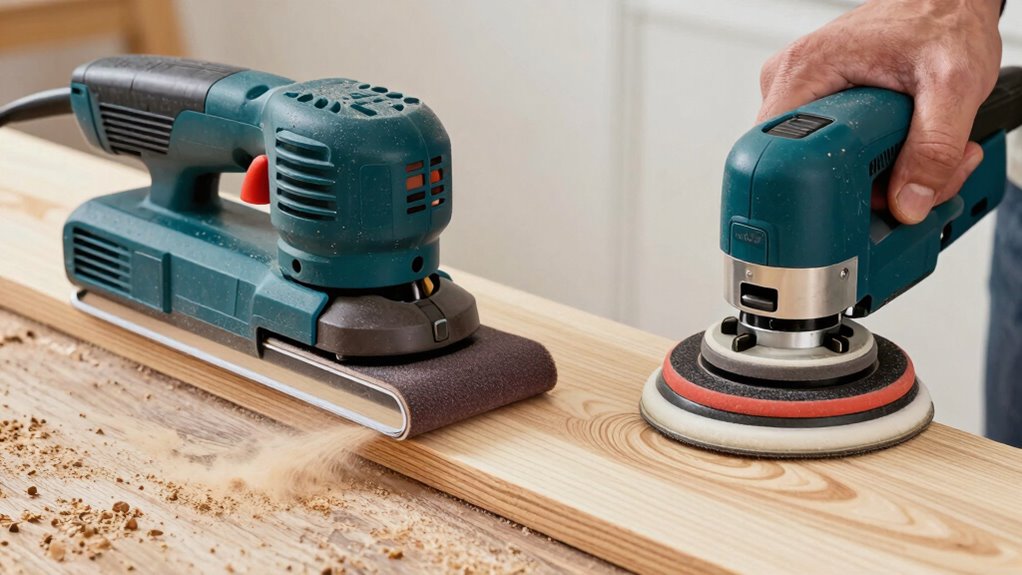
When it comes to heavy prep work, choosing the right sander can make all the difference. Whether you’re sanding down rough surfaces or removing stubborn paint and varnish, your choice between a random orbital sander and a belt sander impacts your efficiency and the quality of your finish. One of the first considerations is dust collection. Heavy prep work generates a lot of dust, so a sander with a good dust collection system is essential to keep your workspace cleaner and your air safer. Random orbital sanders often come with built-in dust bags or vacuum ports that connect to a shop vac, helping you minimize airborne debris. Belt sanders, on the other hand, tend to produce more dust and usually require a more robust dust management setup because they’re more aggressive and produce larger particles. Additionally, the type of abrasive material used can influence the sanding efficiency and finish quality.
Motor power is another critical factor. Heavy prep work demands a sander with enough motor strength to handle tough surfaces without bogging down. Belt sanders generally have higher motor power, often ranging from 7 to 12 amps, which makes them excellent for aggressive material removal. They’re designed to strip away layers quickly, saving you time on large projects. Random orbital sanders usually have less powerful motors, around 2 to 5 amps, which makes them better suited for finishing or light to medium sanding. However, some models are built for heavy-duty tasks and can handle more demanding jobs, but they might not match the raw material removal speed of a belt sander. Choosing the right sander can significantly impact your project’s efficiency and the outcome. It’s also important to consider abrasive material compatibility to ensure optimal results and prevent premature wear.
Your project scope also influences your choice. If you need rapid material removal on large, flat surfaces, a belt sander’s aggressive action and higher motor power give you an advantage. But if you’re working on more detailed areas or finishing touches, a random orbital sander offers control and a smoother finish, thanks to its orbital motion that prevents swirl marks. Keep in mind that belt sanders are less precise and more aggressive, which can sometimes lead to gouges if not handled carefully. Random orbital sanders, with their balanced motor power and dust collection, are more forgiving and versatile for a variety of heavy prep tasks, especially when you need to balance speed with control. For optimal results, understanding the abrasive material compatibility with each sander type is also beneficial. Additionally, considering the dust management features can help reduce health risks associated with heavy dust exposure. Being aware of the sanding technique can also improve your efficiency and prevent damage to your workpiece.
Ultimately, your decision should consider the nature of your project, the importance of dust collection, and the power needed to get the job done efficiently. Both types have their strengths for heavy prep work, but understanding these differences ensures you choose the right tool for the task at hand.
As an affiliate, we earn on qualifying purchases.
Frequently Asked Questions
Which Sander Is Better for Removing Paint Quickly?
For quick paint removal, a belt sander is your best choice because it offers aggressive material removal, making surface preparation faster. You’ll find it especially effective on large, flat surfaces needing heavy prep work. Just be cautious—its power can be tough on delicate areas. A random orbital sander is gentler and better for finish sanding, but for rapid paint removal, the belt sander wins.
Can Both Sanders Handle Rough, Uneven Surfaces Effectively?
Can both sanders handle rough, uneven surfaces effectively? Yes, but their surface texture and sanding speed vary. A belt sander excels at removing material quickly on rough surfaces due to its aggressive sanding power, making it ideal for heavy prep work. A random orbital sander offers better control and finishes smoother surfaces, but may struggle with very uneven textures. Choose based on your project’s specific needs for best results.
Which Tool Produces Less Dust During Heavy Sanding?
A random orbital sander generally produces less dust during heavy sanding because it has better dust containment features like dust collection bags or ports. Additionally, it operates at lower noise levels, making it more comfortable for prolonged use. Belt sanders tend to generate more dust and noise due to their aggressive sanding action. If minimizing dust and noise is your goal, the random orbital sander is the better choice for heavy prep work.
Are There Safety Concerns Unique to Each Sander Type?
Think of each sander as a different knight in your workshop. The belt sander’s aggressive power demands careful handling to prevent muscle strain, thanks to its ergonomic design. Meanwhile, the random orbital’s dust containment can sometimes be less effective, risking inhalation if not properly managed. Both require safety gear, but understanding their unique risks helps you wield them safely, keeping you protected on your heavy prep quest.
How Do Maintenance Needs Differ Between Orbital and Belt Sanders?
You’ll find that belt sanders need more frequent maintenance to address their abrasion patterns and motor durability. They often require belt replacements and motor checks due to intense use, leading to quicker wear. In contrast, orbital sanders have gentler abrasion patterns, resulting in less wear and tear. Their motors tend to last longer with less frequent maintenance, making them easier to keep in good shape over time.
random orbital sander with dust collection
As an affiliate, we earn on qualifying purchases.
As an affiliate, we earn on qualifying purchases.
Conclusion
Choosing between an orbital and belt sander is like selecting the right tool to tame a wild jungle of wood. For heavy prep work, a belt sander is your bulldozer, bulldozing through rough surfaces with brute strength. Meanwhile, an orbital sander is your gentle breeze, perfect for finishing touches. Decide what terrain you’re tackling, and let your choice be the sturdy bridge that guides you smoothly through the project. Happy sanding!
corded belt sander for woodworking
As an affiliate, we earn on qualifying purchases.
As an affiliate, we earn on qualifying purchases.
As an affiliate, we earn on qualifying purchases.
Fall Picks
fall essentials
As an affiliate, we earn on qualifying purchases.