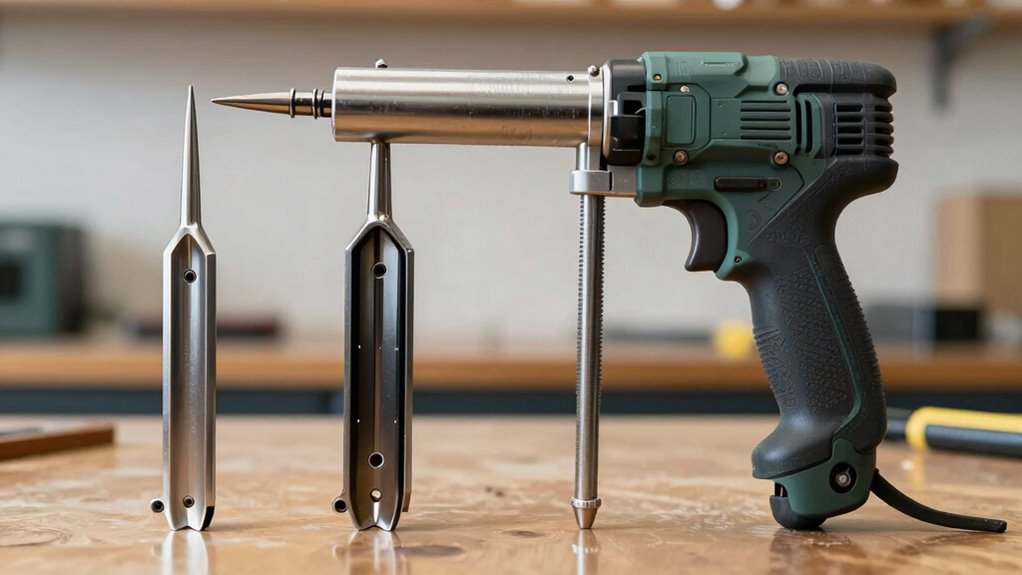
Brad, finish, and framing nailers each serve different tasks based on nail gauge, size, and power. Brad nailers use thinner nails (18-16 gauge), ideal for delicate trim work, while finish nailers shoot slightly thicker nails (15-16 gauge) for a good balance of strength and finesse, perfect for door casings or furniture. Framing nailers, with larger, 21-22 gauge nails, provide maximum strength for structural projects like walls and decks. If you want to know more about choosing the right tool, keep exploring.
Listen free for 30 days with Audible
Thousands of audiobooks and originals — cancel anytime.
As an affiliate, we earn on qualifying purchases.
Key Takeaways
- Brad nailers use thinner, 18-gauge nails ideal for delicate trim and detailed work.
- Finish nailers shoot thicker, 15- or 16-gauge nails suitable for finishing carpentry and furniture.
- Framing nailers fire large, 21- or 22-gauge nails designed for structural framing and heavy-duty support.
- Gauge size determines strength, with brads being for light work, and framing nails for load-bearing tasks.
- Safety precautions increase with nailer size and power, especially for framing nailers due to their larger size.

Finish nailers are a bit more robust and versatile. They typically shoot 15- or 16-gauge nails, which are thicker and stronger than brads. This makes them perfect for finishing carpentry, such as door casings, window trim, and furniture assembly. Finish nailers strike a balance between finesse and strength; they hold pieces firmly without the large holes that bigger nails create. When you’re working on projects where appearance matters, but durability is also critical, a finish nailer is your best choice. They’re slightly heavier and more powerful, but still manageable for most woodworking tasks. Proper safety precautions are crucial when operating framing nailers due to their power and size.
Framing nailers are the heavy-duty workhorses of the woodworking tools family. They fire large, 21- or 22-gauge nails designed to hold together structural components like wall frames, roof trusses, and decks. These nailers are built for strength and speed, allowing you to quickly assemble large sections of a project. Because they use bigger nails, you’ll need to fill and sand more after firing, but for load-bearing structures, that’s an acceptable trade-off. Framing nailers are much larger and more powerful than brad or finish nailers, and they’re generally used on construction sites or for large-scale projects. Proper safety precautions are crucial when operating framing nailers due to their power and size. Understanding the different gauge sizes helps in selecting the right nailer for your project.
best brad nailer for delicate trim
As an affiliate, we earn on qualifying purchases.
As an affiliate, we earn on qualifying purchases.
Frequently Asked Questions
Which Nailer Is Best for Outdoor Projects?
For outdoor projects, a framing nailer is your best choice because it handles heavy-duty tasks and withstands weather conditions. To guarantee longevity, perform regular tool maintenance and use nail compatibility guidelines to select the right nails. This keeps your tool functioning smoothly and prevents jamming. A framing nailer’s durability and suitability for outdoor conditions make it ideal, especially when you’re building decks, fences, or large structures.
Can These Nailers Be Used Interchangeably?
Think of nailers as specialized tools in your toolbox, each with a unique purpose. They aren’t truly interchangeable because nailer compatibility is key; using the wrong one can weaken your project. For example, a framing nailer isn’t suited for delicate finishing tasks. Always select your project-specific tools carefully, matching nailers to the job at hand. This guarantees your work stays sturdy, precise, and professional-looking.
What Safety Precautions Are Necessary?
To stay safe when using nailers, always wear appropriate safety gear like eye protection and hearing muffs. Make certain proper handling by reading the manufacturer’s instructions and maintaining a steady grip. Keep your fingers clear of the trigger until you’re ready to shoot, and never point the nailer at yourself or others. Regularly inspect the tool for damage, and disconnect it from power when not in use to prevent accidental firing.
How Long Do the Nails Typically Last?
They say, “You get what you pay for,” and that’s true for nail longevity. Typically, nails last decades if made with corrosion-resistant materials like stainless steel or galvanized coatings. These qualities help prevent rust and decay, especially in outdoor or humid environments. Proper installation and quality nails can guarantee your project stands the test of time, so investing in durable nails pays off in the long run.
Are There Specific Brands Recommended for Durability?
When choosing a nailer for durability, you should consider brand comparisons and durability factors. Brands like DeWalt, Milwaukee, and Hitachi are known for quality and long-lasting tools, making them reliable choices. These brands often use high-grade materials and advanced manufacturing processes, which enhance durability. You’ll find that investing in these reputable brands guarantees your nailer withstands heavy use, reducing the need for repairs or replacements over time.
finish nailer for furniture assembly
As an affiliate, we earn on qualifying purchases.
As an affiliate, we earn on qualifying purchases.
Conclusion
Now that you know the key differences between brad, finish, and framing nailers, you’re practically a power tool wizard! Just remember, choosing the right nailer is like finding the secret weapon for your project—without it, your work might feel like fighting a dragon with a toothpick. So pick wisely, and your craftsmanship will be unstoppable, turning your projects into legendary masterpieces. Happy nailing!
heavy-duty framing nailer for construction
As an affiliate, we earn on qualifying purchases.
As an affiliate, we earn on qualifying purchases.
As an affiliate, we earn on qualifying purchases.
NFL season / tailgating Picks
team gear
As an affiliate, we earn on qualifying purchases.