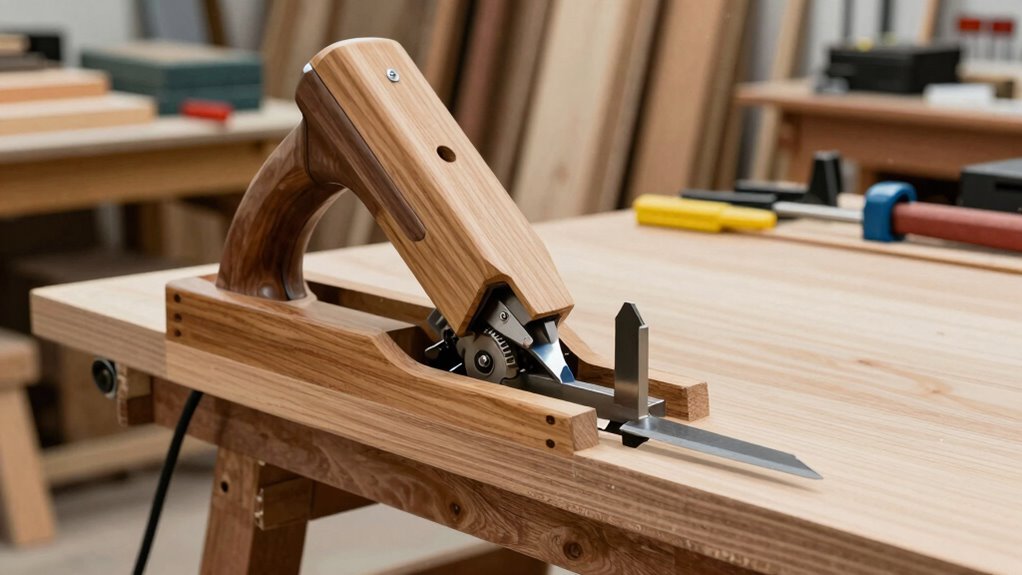

In your growing wood shop, start with a jointer if you need flat, straight edges for precise joinery. If smooth, consistent thickness is more urgent, a planer should come first. Both tools are essential, but your immediate project demands will guide your choice. Proper maintenance and organization support their performance, ensuring your shop develops smoothly. For more insights on prioritizing your tools, keep exploring how each impacts your workflow and future expansion.
Open a free Amazon Business account
Business pricing, bulk buying and tax-exempt orders.
As an affiliate, we earn on qualifying purchases.
Key Takeaways
- Start with a jointer to straighten and flatten edges for accurate measurements and joinery.
- Use a planer first if rough lumber needs thicknessing before edge preparation.
- Consider current project needs; prioritize based on whether surface flattening or thicknessing is more urgent.
- Both tools benefit from regular maintenance and organized storage to ensure reliable operation.
- Plan for future growth by investing in tools that support expanded projects and workflow efficiency.

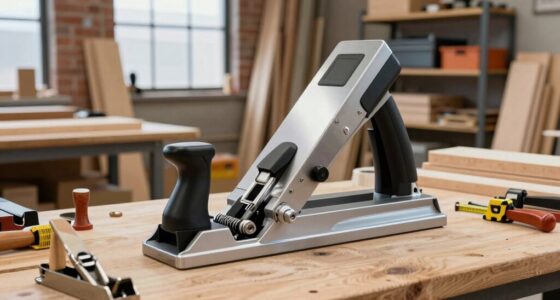
Deciding whether to start with a jointer or a planer in a growing wood shop depends on your specific workflow and the types of projects you undertake. Both tools play essential roles, but understanding their functions helps prioritize which to acquire first. A jointer is fundamental for flattening and straightening edges, making sure boards are true before further processing. Without a properly jointed edge, your measurements and cuts may be inaccurate, leading to gaps or misaligned joints. On the other hand, a planer smooths and thicknesses boards to a consistent dimension, which is critical when preparing stock for assembly or finishing. If you frequently work with rough lumber, a planer might seem more pressing, but if your projects demand precise joinery, a jointer could be the better initial investment. Ensuring your tools are well-maintained is essential for achieving high-quality results and prolonging their lifespan.
Choosing between a jointer and a planer depends on your projects—both are essential for precise, quality woodworking.
As your shop expands, maintaining your tools becomes increasingly important. Tool maintenance isn’t just about cleaning or sharpening—it’s about guaranteeing your equipment performs reliably and safely. Regularly check the blades and knives of both your jointer and planer, replacing them when they become dull. Proper blade alignment is equally essential; misaligned blades lead to poor cuts and uneven surfaces, which can compromise your project quality. Keep an eye on belts, pulleys, and motor brushes, replacing or repairing parts as needed. Consistent maintenance prolongs the lifespan of your tools, saves money, and keeps your workflow smooth. Additionally, understanding blade alignment, sharpening techniques, and proper maintenance practices can significantly impact the quality of your work. Incorporating preventive maintenance into your routine helps avoid costly repairs and downtime. Staying informed about tool upgrades can help you keep your equipment up-to-date with the latest safety and efficiency features. Moreover, investing in proper lubrication can prevent mechanical issues and ensure smooth operation over time.
Storage solutions also play a significant role as your collection of woodworking machinery grows. Efficient storage not only protects your investment but also maximizes your workspace. Consider installing dedicated shelves or cabinets for your jointer and planer, ensuring they’re easily accessible yet out of the way when not in use. Use dust collection systems and appropriate coverings to prevent dust buildup, which can impair tool performance. Implementing organized storage for blades, spare parts, and accessories also keeps your shop safe and clutter-free. Smart storage encourages regular tool maintenance, as you’re more likely to inspect and care for your equipment when everything has a designated place. Proper storage and dust control are critical components of a well-functioning woodworking shop.
Ultimately, your choice between a jointer or planer first hinges on your project needs, but both tools demand ongoing tool maintenance and thoughtful storage solutions. Prioritize what aligns with your immediate workflow, but plan for a system that supports your shop’s growth. Proper care and organization will ensure your tools remain reliable, your projects stay on track, and your woodworking journey continues smoothly.
As an affiliate, we earn on qualifying purchases.
Frequently Asked Questions
What Is the Typical Price Range for Beginner Jointers and Planers?
For beginner jointers and planers, expect prices between $200 and $600, depending on features and brand. As you plan your budget, prioritize woodworking safety by choosing machines with proper guards and reliable construction. Budget planning should also consider future upgrades. Start with a dependable, entry-level model, and as your skills grow, invest in more advanced equipment to make certain safety and quality in your woodworking projects.
Can I Use a Planer as a Jointer in a Small Shop?
Using a planer as a jointer is like trying to tame a wild beast—it’s possible but not ideal. You can, but only for small, simple tasks; it’s not designed for jointing edges. Always follow safety precautions, like wearing eye and ear protection, and keep your blades sharp. Regular maintenance tips include checking alignment and cleaning dust. For best results, invest in a dedicated jointer for precise, safer edge jointing in your small shop.
How Much Space Is Needed to Accommodate Both Machines?
To accommodate both machines comfortably, you’ll need around 8 to 10 feet of space for machine placement and safe operation. Make sure there’s enough room for material handling and safety considerations, like clear pathways and proper lighting. Keep machines spaced out to prevent accidents and allow easy access for maintenance. Prioritize safety and workflow efficiency, so your shop stays organized and safe as it grows.
Are There Combined Machines That Serve as Both a Jointer and Planer?
Did you know dual function machines can save you nearly 30% of space in your shop? Yes, combined woodworking tools do exist, offering both jointer and planer functions in one unit. These versatile machines streamline your workflow, reduce clutter, and are perfect for a growing shop. While they might not match dedicated machines in power, they’re an efficient, space-saving choice for hobbyists and small workshops.
Which Machine Is Safer for Beginners: Jointer or Planer?
A jointer is generally safer for beginners because it has more safety features and is easier to control. With proper safety considerations, you can avoid accidents by using push blocks and wearing safety gear. Beginner tips include starting with small, manageable projects and practicing proper hand placement. Always read the manufacturer’s safety instructions and take your time, ensuring you’re comfortable with the machine before working on larger pieces.
As an affiliate, we earn on qualifying purchases.
Conclusion
So, which should you choose first—the jointer or the planer? Picture your shop coming alive with perfectly aligned boards, each edge crisp and smooth. The decision isn’t just about tools; it’s about shaping your woodworking future. Will you start with a jointer to tame the edges, or plunge into the planer for that flawless thickness? Whichever you pick, the next step is clear — your craftsmanship is about to reach new heights. The journey begins now.
As an affiliate, we earn on qualifying purchases.
As an affiliate, we earn on qualifying purchases.
Fall Picks
fall essentials
As an affiliate, we earn on qualifying purchases.