You need different blades for metal cut-off saws because each blade is designed for specific materials and cutting goals. Using the wrong blade can lead to poor cuts, faster wear, or safety issues. For softer metals like aluminum, high-speed steel blades work well, while tougher steels require carbide-tipped blades. Knowing how to match blades to your project improves performance, safety, and durability. Keep exploring to discover how selecting the right blade makes your cuts cleaner and more efficient.

Get business pricing on tools and workshop supplies
- Business-only prices and quantity discounts
- Tax-exempt purchasing
- Multiple users, one account, clear invoices
Key Takeaways
- Different blades are designed to handle specific metal types, ensuring efficient cutting and blade longevity.
- Material differences in blades affect cutting speed, heat dissipation, and safety during operation.
- Varying project requirements, such as precision or speed, demand specific blade designs and tooth configurations.
- Proper blade selection minimizes heat buildup, reduces wear, and extends the lifespan of the cut-off saw.
- Matching blades to metal types and expectations enhances safety, cut quality, and overall efficiency.
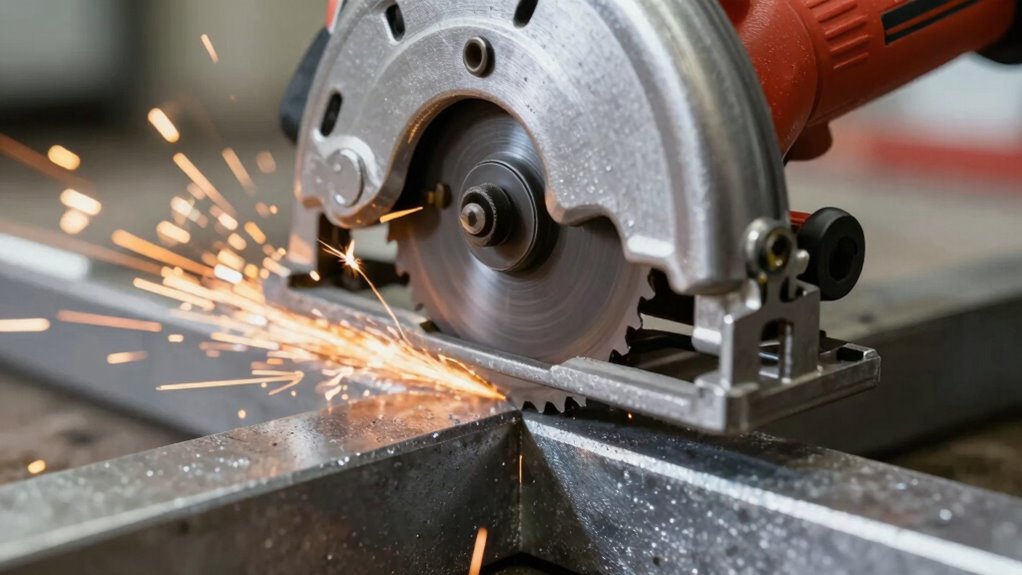
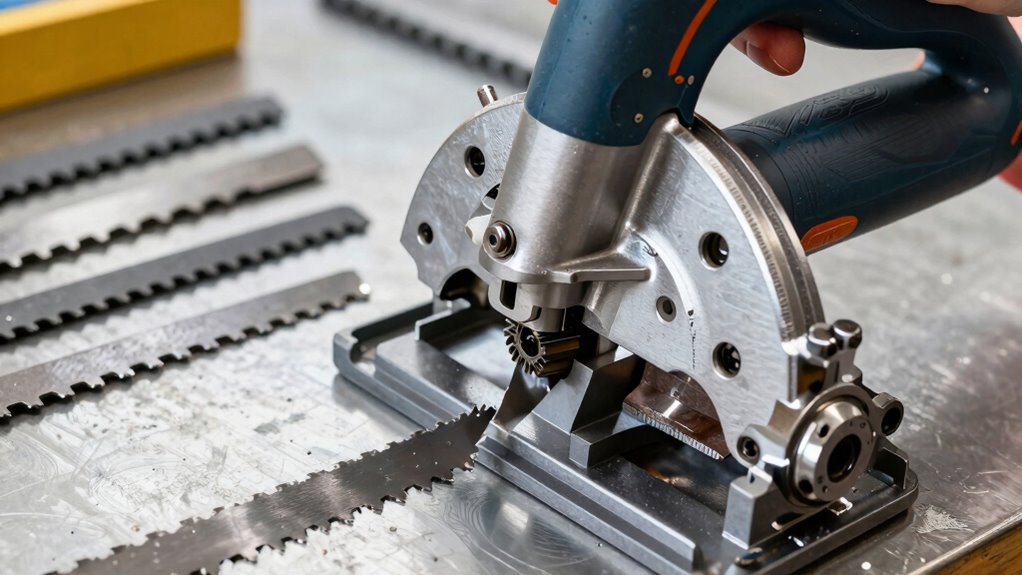
When it comes to cutting metal, choosing the right saw and blade can make all the difference in achieving clean, precise cuts efficiently. The type of blade you select depends heavily on blade materials, which determine the blade’s durability, cutting speed, and suitability for different metals. For example, high-speed steel blades excel at cutting softer metals like aluminum, while carbide-tipped blades are better suited for tougher materials such as steel or stainless steel. Understanding these distinctions helps you match the blade to your project, guaranteeing peak performance and longer blade life. Additionally, safety precautions are vital when working with metal cut-off saws. Always wear appropriate personal protective equipment, including safety goggles, gloves, and hearing protection, to guard against flying debris and loud noise. Confirming the work area is clear and stable prevents accidents, especially since cutting metal can produce sparks and hot fragments. You should also double-check that the blade is properly installed and securely tightened before operating the saw. A loose blade can lead to dangerous kickbacks or blade failure, which can result in injury or damage to your equipment.
Another safety consideration involves understanding the expected performance of different blades. For example, some blades are designed for quick, rough cuts, while others prioritize precision and finish quality. If you’re working on a project that demands tight tolerances, you’ll need a blade engineered for accuracy, which may have finer teeth or specific coatings to reduce heat buildup and burr formation. Conversely, if speed and efficiency are your main goals, a more aggressive blade with larger teeth will cut faster but may sacrifice some finish quality. It’s essential to set realistic expectations based on the blade’s capabilities and the material you’re working with. Additionally, selecting the appropriate blade material can significantly impact your cutting results and safety standards. It’s also wise to consider the blade’s design and how it influences cutting efficiency and heat dissipation, which can extend the lifespan of your blades. Regularly inspecting your blades for signs of wear, such as missing or chipped teeth, helps prevent accidents and guarantees consistent cuts. Understanding the blade’s heat management properties can help prevent overheating and prolong blade life. Using the right cutting techniques can also reduce unnecessary stress on the blade and ensure safer operation. Moreover, choosing blades with effective heat dissipation features can be crucial when working on longer or more demanding cuts. Remember, maintaining safety precautions throughout your cutting process isn’t just about avoiding injuries; it’s about guaranteeing that your cuts are clean, precise, and safe for everyone involved. When you select the right blade for your material and adhere to safety protocols, you’ll find that your metal cutting tasks become more predictable, efficient, and ultimately successful.
metal cut-off saw blades for aluminum
As an affiliate, we earn on qualifying purchases.
As an affiliate, we earn on qualifying purchases.
Frequently Asked Questions
How Often Should I Replace My Metal Cut-Off Saw Blade?
You should replace your metal cut-off saw blade when you notice a decline in blade longevity or cutting precision. Typically, blades last for several uses, but heavy or frequent cutting can wear them out faster. Keep an eye on signs like increased sparks, rough cuts, or overheating. Replacing the blade promptly guarantees your saw performs at its best, maintains safety, and delivers precise cuts every time.
Can I Use a Concrete Blade on Metal?
Using a concrete blade on metal is like trying to fit a square peg into a round hole. Concrete blades aren’t designed for metal, so blade compatibility is compromised, risking damage or safety hazards. Concrete blades lack the material versatility needed for metal cutting, which can lead to inefficient cuts or blade failure. Stick to blades suited for your material to guarantee safety, efficiency, and a smooth cut every time.
What Safety Gear Is Essential When Using Different Blades?
When using different blades on a metal cut-off saw, you need essential safety gear. Always wear protective eyewear to shield your eyes from sparks, debris, or fragments. Hearing protection is equally important, as saws can be loud and damage your hearing over time. Additionally, consider gloves and a dust mask for added safety. Proper safety gear keeps you protected while handling various blades, ensuring safe and efficient work.
Are There Blades Suitable for Cutting Stainless Steel?
Yes, there are blades specifically designed for cutting stainless steel. Think of it as fitting the right key to open a stubborn lock—blade compatibility is essential. These blades are made from materials like carbide or diamond-tipped edges, ensuring cutting precision and durability. Using the correct blade prevents damage to your saw and provides a cleaner, safer cut, making your work smoother and more efficient.
How Do Blade Sizes Affect Cutting Performance?
Blade sizes directly impact cutting performance by influencing blade compatibility and cutting precision. A larger blade generally offers better stability, allowing for smoother cuts on thicker materials, but may reduce maneuverability. Smaller blades excel in precision and tight spaces, but might struggle with heavy-duty tasks. Choosing the right size guarantees your saw operates efficiently, maintains blade compatibility, and delivers the desired cutting precision for your specific project needs.
carbide-tipped metal cutting blades
As an affiliate, we earn on qualifying purchases.
As an affiliate, we earn on qualifying purchases.
Conclusion
Choosing the right blade for your metal cut-off saw isn’t just about cutting efficiency—it impacts safety and blade lifespan too. Did you know that using the wrong blade can reduce its lifespan by up to 50%? By understanding different blade types and setting realistic expectations, you’ll not only improve your cuts but also save money and avoid accidents. So, invest in the proper blades, and your projects will run smoother, safer, and more cost-effective.
high-speed steel saw blades for metal
As an affiliate, we earn on qualifying purchases.
As an affiliate, we earn on qualifying purchases.
precision metal cutting saw blades
As an affiliate, we earn on qualifying purchases.
As an affiliate, we earn on qualifying purchases.
Fall yard work Picks
leaf blowers
As an affiliate, we earn on qualifying purchases.