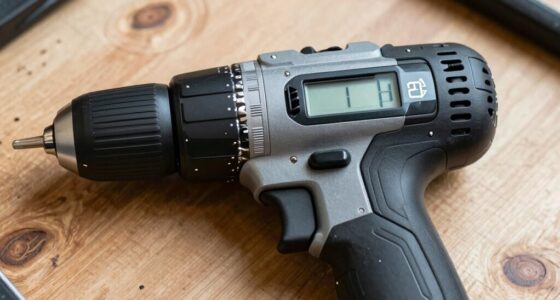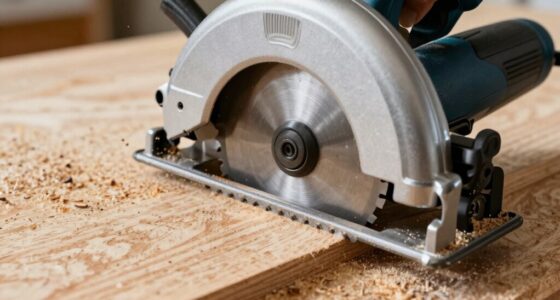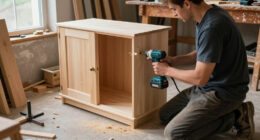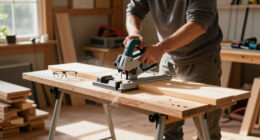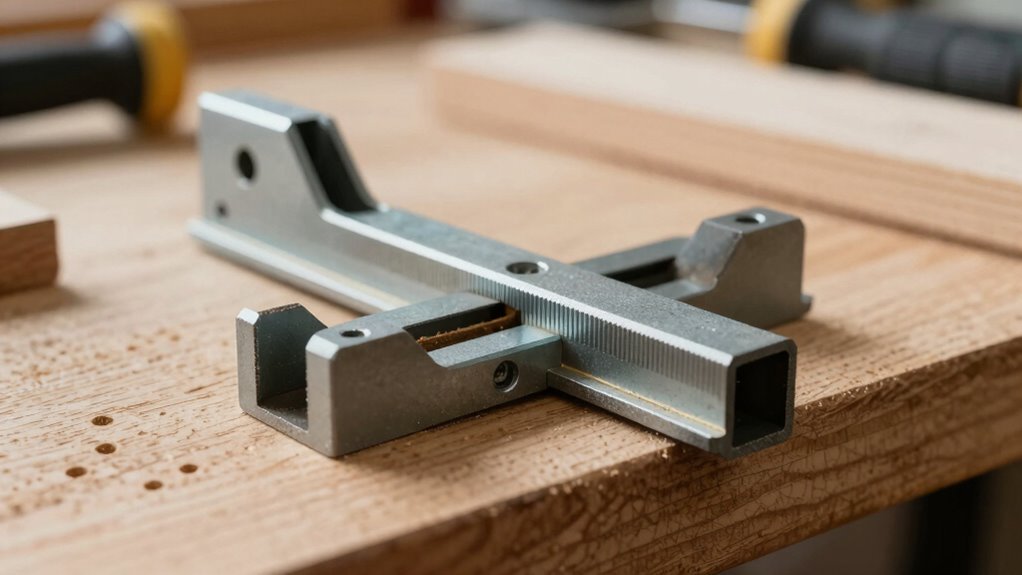
To create stronger utility builds with a pocket hole jig, guarantee you select the right drill bit and screw size for your material, adjusting the jig to match thickness. Drill at about a 15-degree angle with proper depth to avoid splitting the wood. Always clamp your workpiece securely and wear safety glasses. Proper technique and safety habits lead to tight, durable joints that can withstand stress. Keep exploring to discover even more tips for mastering your projects.

Get tools and workshop supplies delivered free — and shop member deals
- Fast, free delivery on millions of items
- Access to Prime Big Deal Days deals on October 6–7
- Prime Video, Amazon Music and more included
Key Takeaways
- Use the correct screw type and size based on the wood material for maximum joint strength.
- Adjust the jig accurately to match the material thickness to ensure proper screw depth.
- Drill pocket holes at a consistent 15-degree angle for optimal joint stability.
- Clamp workpieces securely to prevent movement and ensure precise drilling.
- Combine pocket hole joints with other joinery methods for enhanced overall strength.
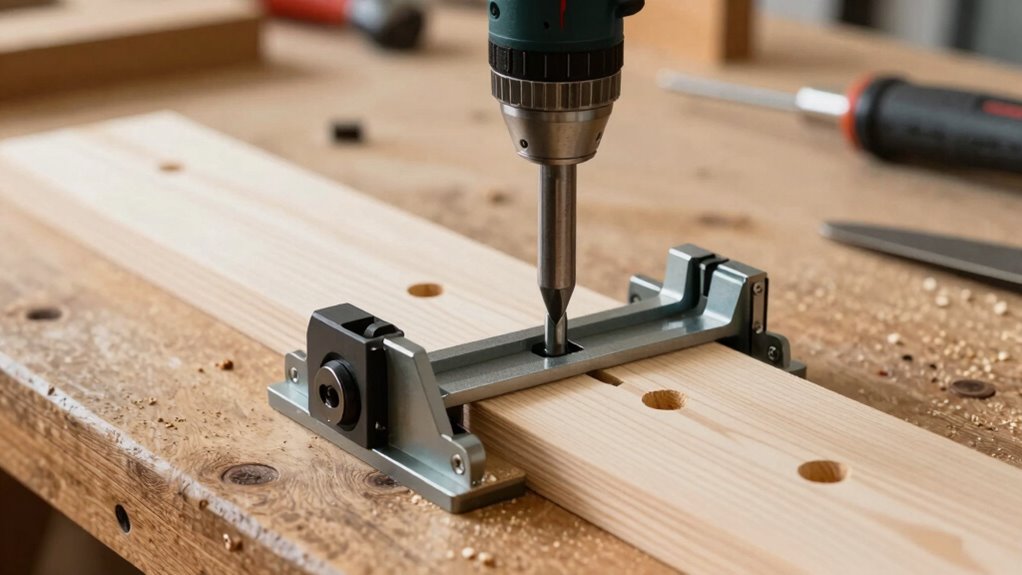
If you’re looking to create strong, concealed joints quickly and easily, a pocket hole jig is an essential tool to have in your woodworking arsenal. This device simplifies the process of joining pieces of wood securely without visible fasteners, making it perfect for furniture projects and other utility builds. When used correctly, a pocket hole jig enhances your craftsmanship, but it’s equally important to prioritize woodworking safety to prevent accidents. Always wear safety glasses and keep your hands clear of the drill bit. Follow the manufacturer’s instructions carefully, and verify your workpiece is stable before drilling. Proper safety habits protect you from potential injuries and help you produce cleaner, more precise joints.
In terms of DIY furniture tips, mastering the use of a pocket hole jig can considerably improve your woodworking projects. It allows you to create tight, durable joints that hold together well under stress, making your furniture not only more attractive but also more functional. When using the jig, select the right drill bit and screw size for your project. Typically, coarse-thread screws are best for softwoods, while fine-thread screws suit hardwoods. Adjust the jig to the thickness of your material to guarantee the pocket hole is drilled at the correct depth, preventing splitting or weak joints. When attaching the pieces, drill the screws in at an angle, usually around 15 degrees, which provides a strong hold while keeping the fasteners hidden from view. Properly setting the drilling depth is crucial to avoid damaging the wood or compromising the joint strength.
Additionally, always prepare your wood properly before drilling. Sand the edges to remove splinters or rough spots that could cause the wood to split. Clamping your workpiece securely minimizes movement and enhances safety during drilling. As you develop your DIY furniture tips, consider how pocket hole joints can be combined with other joinery techniques for added strength. For example, gluing and screwing together pieces can create even more durable structures. Remember that a good joint isn’t just about strength; it’s also about maintaining the aesthetic. Concealed joints achieved via pocket holes help you craft furniture with a clean, professional look. Incorporating sustainable practices into your woodworking can also lead to more environmentally conscious projects, promoting a healthier environment. Understanding the woodworking tools involved in creating these joints can further improve your projects’ quality. Using the right safety procedures ensures that your projects are not only durable but also safe to execute.
As an affiliate, we earn on qualifying purchases.
Frequently Asked Questions
Can Pocket Hole Jigs Be Used on Metal or Plastic?
Pocket hole jigs are primarily designed for wood, so they aren’t suitable for metal drilling or plastic fastening. Attempting to use them on metal or plastic can lead to damage or poor results. For metal, you’d want specialized tools like metal drills or rivet guns. For plastic, use fasteners designed for it, like plastic screws, and consider different fastening methods to guarantee a secure bond.
How Do I Prevent Wood Splitting When Drilling Pocket Holes?
Think of your wood as a delicate dance partner—respect its rhythm to avoid missteps. To prevent splitting, align your pocket holes with the wood grain direction, and choose a sharp, appropriately-sized drill bit. This keeps the wood’s integrity intact, like a dancer maintaining perfect balance. Applying steady pressure and drilling slowly also helps, ensuring your project stays strong without cracks or splits.
What Are the Best Materials for Creating Strong Joints?
To create strong joints, you should choose materials with high joint strength, like plywood, hardwood, or dense softwoods such as oak or maple. These materials resist splitting and provide better adhesive bonding. Always select quality, stable wood to guarantee durability. Proper material selection is key to maximizing joint strength, especially when using a pocket hole jig. This approach results in sturdy, long-lasting connections for your projects.
How Do I Maintain and Clean My Pocket Hole Jig?
Think of your pocket hole jig as a finely tuned instrument that needs regular care. To keep it in top shape, apply lubrication techniques like light oil on moving parts to prevent rust and guarantee smooth operation. After use, clean the jig with a soft cloth to remove dust and debris. Store it in a dedicated storage solution, like a toolbox or wall mount, to protect it from damage and keep it ready for your next project.
Are There Safety Precautions for Using Pocket Hole Jigs?
Yes, you should always follow safety precautions when using a pocket hole jig. Wear safety gear like goggles and ear protection to avoid injuries. Use proper technique by securing your workpiece firmly and guiding the drill steadily to prevent slips. Keep your hands clear of the drill bit’s path, and double-check the jig’s settings before drilling. Staying attentive and cautious guarantees safe, efficient use of your pocket hole jig.
As an affiliate, we earn on qualifying purchases.
Conclusion
Mastering the basics of a pocket hole jig gently guides you toward more refined and sturdy builds. With patience and practice, you’ll find these techniques subtly elevate your craftsmanship, creating pieces that speak of both strength and expertise. Embrace the process, and over time, you’ll discover that the true artistry lies in the details. As your skills deepen, the satisfaction of a well-constructed project quietly becomes your signature, whispering of your growing mastery in woodworking.
As an affiliate, we earn on qualifying purchases.
As an affiliate, we earn on qualifying purchases.
Fall yard work Picks
leaf blowers
As an affiliate, we earn on qualifying purchases.