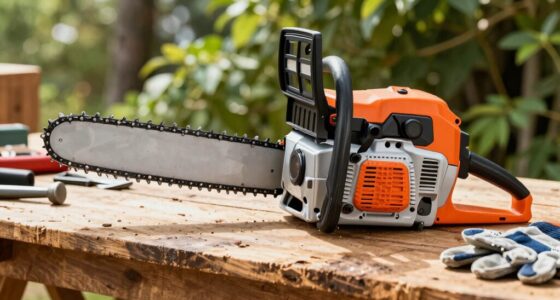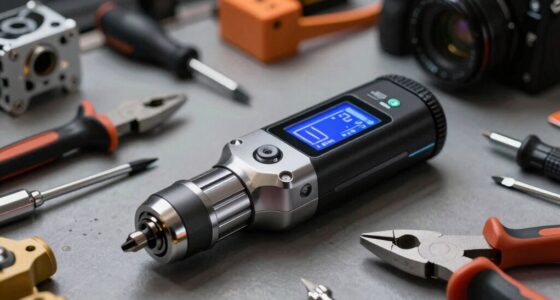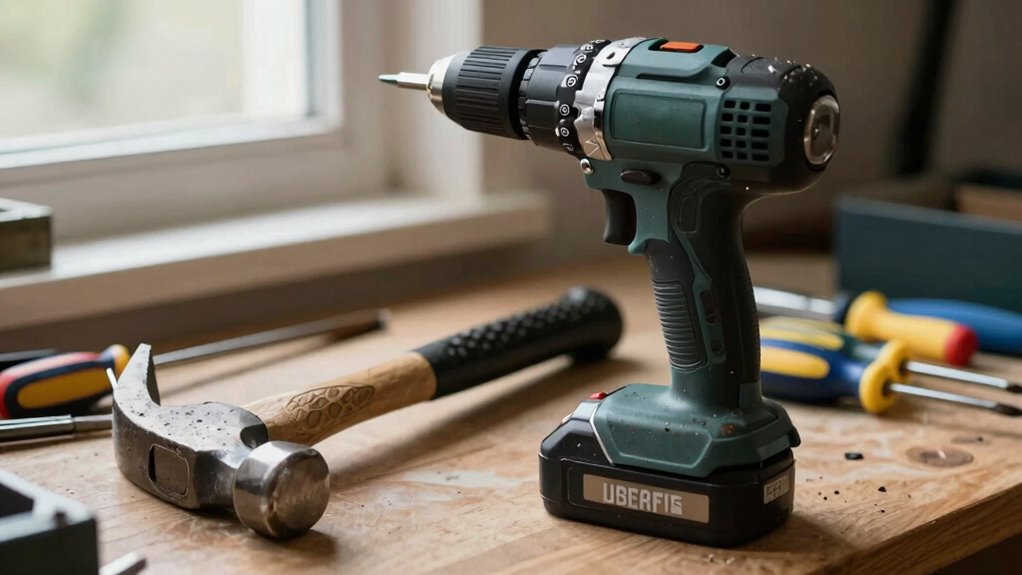

To decide which tool category to upgrade first, begin by evaluating each category’s impact on your workflow and project quality. Focus on tools causing delays or inaccuracies, and consider their importance in your processes. Prioritize upgrades that remove bottlenecks and improve safety or efficiency. Evaluate cost-effectiveness and potential performance gains to ensure maximum value. If you keep these steps in mind, you’ll be able to identify the most critical upgrades and optimize your resources effectively.

Get business pricing on tools and workshop supplies
- Business-only prices and quantity discounts
- Tax-exempt purchasing
- Multiple users, one account, clear invoices
Key Takeaways
- Prioritize tools that cause the most workflow bottlenecks or delays.
- Assess the impact of each category on project quality and safety standards.
- Consider the cost-effectiveness and potential productivity gains of upgrading specific categories.
- Focus on tools critical to current processes and high-frequency use.
- Continuously evaluate performance improvements to adjust upgrade priorities dynamically.

Upgrading the right tool category can considerably boost your efficiency and project quality, but figuring out where to start isn’t always straightforward. To make smart decisions, you need to focus on tool upgrade prioritization, which involves evaluating your current equipment and identifying where improvements will have the most impact. Your first step should be conducting a thorough equipment assessment. This means reviewing how each tool or category performs relative to your project requirements. Are your power drills consistently causing delays? Is your measuring equipment precise enough for the tasks at hand? Pinpointing these pain points helps you decide which upgrades will yield the greatest benefit. Incorporating energy efficiency principles into your evaluation can also help you identify tools that consume excessive power and may benefit from upgrades.
Effective equipment assessment strategies require honest evaluation. You should consider factors like tool age, frequency of use, maintenance costs, and reliability. If a particular tool is outdated or prone to breakdowns, upgrading or replacing it could be a game-changer. Conversely, if a tool is relatively new but doesn’t meet current project demands, it might be worth investing in a higher-quality upgrade. Prioritizing based on these insights ensures you’re not wasting resources on upgrades that won’t significantly improve performance.
When deciding which category to upgrade first, think about how each tool affects your workflow and output quality. For instance, if your cutting tools are limiting your productivity, upgrading them could lead to faster project completion and cleaner results. Alternatively, if your safety equipment is outdated, upgrading it not only reduces risk but also ensures compliance with safety standards. The goal is to identify the bottlenecks or weak links in your process. Upgrading these areas first maximizes the return on investment and propels your project forward more effectively.
Keep in mind that sometimes a phased approach works best. Instead of trying to replace all tools at once, focus on the most critical upgrades first. This way, you can assess the impact before committing additional resources. As you move through the process, keep reviewing your equipment assessment strategies to adapt your priorities. Staying flexible allows you to respond to unforeseen challenges or new project requirements.
As an affiliate, we earn on qualifying purchases.
Frequently Asked Questions
How Do I Assess My Current Tool Usage and Needs?
Start by conducting a tool usage analysis; review how often and effectively you use each tool. Then, perform a needs assessment to identify gaps or inefficiencies. Ask yourself which tools are underperforming or no longer meeting your needs. Track your workflow to see where bottlenecks occur. This combined approach helps you determine which tools require upgrades first, ensuring your investments align with your actual needs and improve productivity.
What Is the Typical Budget Difference Between Categories?
Think of your budget as a map—knowing the terrain helps you navigate wisely. Typically, software tools have a smaller budget difference compared to hardware categories. Budget benchmarks show that hardware upgrades often cost more, reflecting higher spending trends, especially in high-performance equipment. Software upgrades generally require less investment, making them more accessible. Your choice depends on your needs, but understanding these trends helps you allocate resources smartly.
How Often Should I Consider Upgrading My Tools?
You should consider upgrading your tools when their lifespan begins to decline, and they no longer perform efficiently. Typically, upgrade frequency depends on usage and quality, but a general rule is every 3-5 years for power tools and 5-10 years for hand tools. Regularly assess their condition, and if maintenance isn’t enough, it’s time to upgrade to guarantee safety, productivity, and peak performance.
Are There Industry-Specific Tool Upgrade Priorities?
Like a compass guiding your way, industry-specific priorities shape your upgrade choices. You ought to focus on tool categories aligning with current industry trends and surpassing competitor benchmarks. For instance, if automation leads your sector, upgrading your automation tools first makes sense. Keep an eye on emerging tech to stay competitive. Prioritizing tools based on industry needs guarantees you stay ahead, rather than falling behind in the ever-evolving market landscape.
How Do I Evaluate the Impact of an Upgrade on Productivity?
You evaluate the impact of an upgrade on productivity by analyzing how it improves automation efficiency and enhances user experience. Track task completion times before and after the upgrade, and gather user feedback to identify usability improvements. Consider if the upgrade reduces manual work or streamlines workflows, leading to faster results. If it boosts automation and makes tools easier to use, it’s likely to positively influence overall productivity.
As an affiliate, we earn on qualifying purchases.
Conclusion
So, you’ve got your upgrade plan all laid out—just what you needed, right? But here’s the twist: sometimes the biggest upgrade isn’t the most urgent, and the smallest one can turn out to be your secret weapon. Ironically, by obsessing over which tool to upgrade first, you might actually boost your efficiency faster than if you’d gone all-in on the “big” upgrade. Sometimes, less really is more—until you realize you needed the big upgrade all along.
As an affiliate, we earn on qualifying purchases.
As an affiliate, we earn on qualifying purchases.
Fall Picks
fall essentials
As an affiliate, we earn on qualifying purchases.