TL;DR

Get business pricing on tools and workshop supplies
- Business-only prices and quantity discounts
- Tax-exempt purchasing
- Multiple users, one account, clear invoices
A Hunker report describes a portable sharpening puck as an alternative to a bench grinder for maintaining lawn mower blades. The hand tool typically has coarse and medium-grit sides; the report recommends removing and securing the blade, sharpening at a consistent angle, and balancing it before reinstalling.
A Hunker report describes using a pocket-sized sharpening puck to sharpen lawn mower blades without a bench grinder, offering a portable, hand-operated option for routine blade maintenance. The method calls for removing the blade from the mower, securing it in a vice and balancing it before it is put back in service.
A sharpening puck is a small whetstone, generally made of silicon carbide and measuring about 3 inches wide and 1 inch thick, according to the report. Many versions have two grits: a coarse side for removing material and shaping a dull edge, and a medium side for finishing it. The report names the Lansky Puck as one example of a dual-grit product.
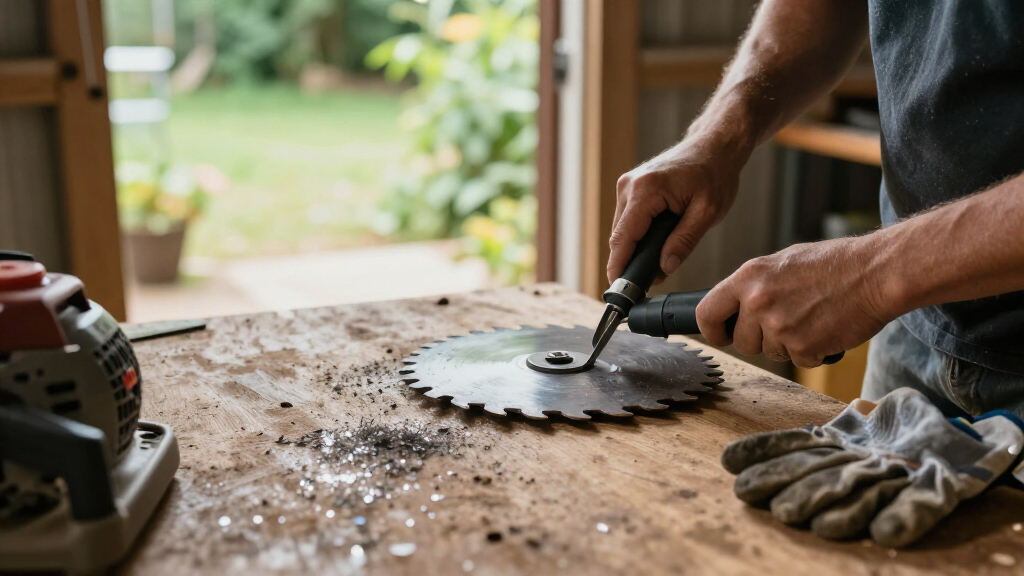
The described process starts with the mower blade removed from its deck and held firmly in a vice so it cannot slip. The report recommends applying honing oil to the puck, using the coarse side if the blade is very dull, and moving the stone over the edge in a circular motion while keeping a consistent angle. The medium-grit face is then used to finish the edge.
Before reinstalling the blade, the report says to balance it. It also advises applying honing oil to the puck after use to help remove metal particles and storing the tool in a toolbox. The source does not provide measurements of sharpening time or a controlled comparison with other methods.
A Portable Option for Blade Care
The puck’s main practical difference from a bench grinder is portability: it is a small hand tool that can be stored with other maintenance equipment and does not rely on a powered grinding wheel. That may suit people who want to sharpen a blade away from a workshop or who do not own a grinder. The report also says the same type of stone can be used on tools such as axes and shovels.
Blade condition can affect how grass is cut. Hunker says a sharp blade produces a cleaner, more even cut, while a dull one can tear grass ends and add stress to the lawn. Those are the report’s maintenance claims; it does not quantify any effect on lawn health or compare outcomes from different sharpening tools.
The approach is still a manual sharpening task, not a substitute for safe handling or proper blade installation. Removing and securing the blade, maintaining a steady angle and checking balance are central parts of the process described. A compact tool may simplify storage, but it does not remove the need to handle a sharp metal edge carefully.
portable lawn mower blade sharpener
As an affiliate, we earn on qualifying purchases.
As an affiliate, we earn on qualifying purchases.
How the Puck Differs From a Grinder
Bench grinders are powered tools that can sharpen metal and perform other jobs, including polishing and rust removal. Hunker contrasts their range and power with their limited portability, then presents the puck as a smaller alternative for sharpening mower blades. The report does not argue that grinders are unsuitable; it frames the puck as a convenient option for this particular maintenance job.
Dual-grit stones combine two stages in one tool: a coarser face removes material more quickly, while a finer face is used to refine the edge. Hunker’s instructions follow that sequence, though the report does not specify a target sharpening angle, an acceptable amount of material to remove or how often a mower blade should be sharpened. Its guidance is therefore a general method, not a model-specific service procedure.
“A sharpening puck is a whetstone made of silicon carbide that’s usually 3 inches wide and 1 inch thick.”
— Hunker report
As an affiliate, we earn on qualifying purchases.
Limits of the Sharpening Guidance
The source does not give a publication date, independent test results or a side-by-side assessment of sharpening pucks and bench grinders. It also does not specify a blade angle, a measurement for balance, or the amount of sharpening needed for particular mower models. The described steps should not be treated as a manufacturer-specific procedure where the mower’s manual gives different instructions.
The report characterizes the puck as a safer option because it lacks a powered, fast-moving grinding wheel. That comparison is not accompanied by injury data or a formal safety test. A hand stone can still cause injury if a blade slips or is handled carelessly; the source does not provide a full safety checklist.
dual grit sharpening stone for lawn tools
As an affiliate, we earn on qualifying purchases.
As an affiliate, we earn on qualifying purchases.
Check the Mower Before Reinstalling
For readers following the method, the next step is to consult the mower’s owner manual for blade removal, sharpening and balancing instructions, then confirm the blade is secure and balanced before reinstalling it. The Hunker report does not announce a product launch, new test or scheduled follow-up; it presents the puck as an available maintenance tool and outlines a general sharpening routine.
As an affiliate, we earn on qualifying purchases.
Key Questions
What is a lawn mower sharpening puck?
It is a small whetstone, commonly made of silicon carbide. Hunker says many models have coarse and medium-grit sides for shaping and finishing a blade edge.
Can a puck replace a bench grinder?
It can serve as a portable hand-tool alternative for sharpening, as described in the report. Hunker does not claim it replaces a grinder for other workshop jobs or compare the tools in a controlled test.
What steps does the report recommend?
Remove the blade from the mower, secure it in a vice, apply honing oil to the puck and sharpen while holding a consistent angle. Use the coarse face for a very dull blade, finish with the medium face, and balance the blade before reinstalling.
Why does blade sharpness matter?
Hunker says sharp blades make a cleaner, more even cut, while dull blades can tear grass ends. The report does not quantify the effect or provide independent measurements.
Does the report give a specific sharpening angle?
No. It advises keeping a consistent angle but does not state a number. Check the mower or blade manufacturer’s instructions for model-specific guidance.
Source: rss
Fall yard work Picks
leaf blowers
As an affiliate, we earn on qualifying purchases.