
To change a tire safely with a jack and lug wrench, start by parking on a flat surface and engaging your parking brake. Loosen the lug nuts slightly while the tire stays on the ground, then place the jack under the vehicle’s recommended lift point. Raise the car until the tire is off the ground, remove the lug nuts and tire, then mount the spare and tighten the nuts in a crisscross pattern. Lower the vehicle, fully tighten the nuts, and secure everything before driving away—continue to learn more tips for a safe tire change.
Key Takeaways
- Position the vehicle on a flat surface and engage the parking brake before starting.
- Loosen lug nuts slightly while the tire remains on the ground to prevent wheel spinning.
- Place the jack at the manufacturer’s recommended lift point and lift the vehicle until the tire is off the ground.
- Remove the lug nuts completely, then replace and hand-tighten the spare tire in a crisscross pattern.
- Lower the vehicle carefully, fully tighten the lug nuts, and double-check for security before finishing.

Ever wondered how to change a tire quickly and safely? Knowing this skill is essential for maintaining vehicle safety and handling unexpected roadside issues confidently. The key to a smooth tire change lies in understanding how to properly use your maintenance tools, especially the jack and lug wrench. Before you start, make sure your vehicle is parked on a flat, stable surface and that the parking brake is engaged. This minimizes the risk of the car shifting unexpectedly, ensuring your safety throughout the process.
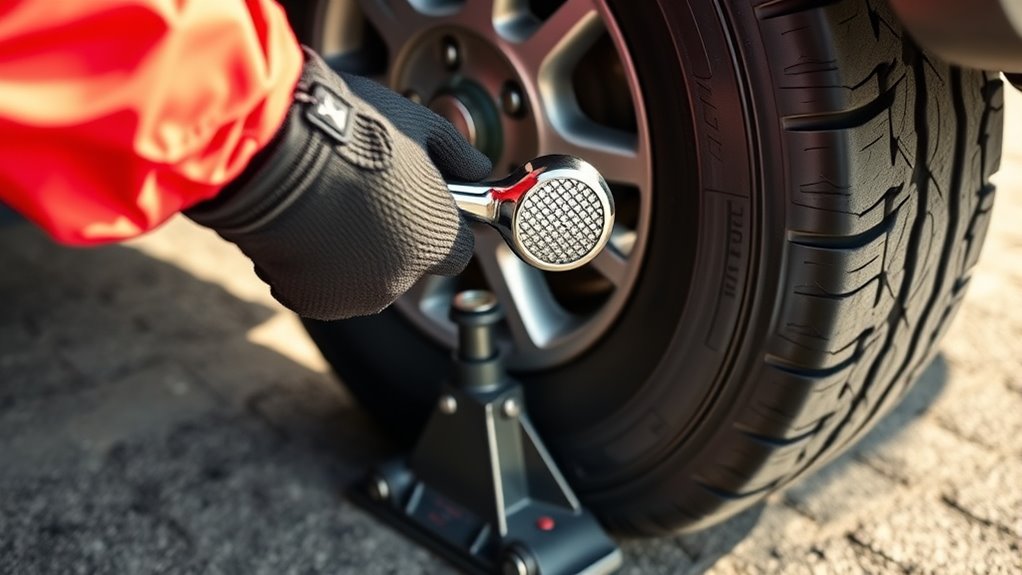
Begin by gathering all necessary tools—your jack, lug wrench, and a spare tire. Familiarize yourself with their placement and function before you need them. Once you’re ready, loosen the lug nuts slightly while the tire is still on the ground. This step prevents the wheel from spinning once it’s elevated. Use the lug wrench, applying steady pressure, and turn counterclockwise to loosen each nut. Don’t remove them entirely just yet; loosen them enough so that they can be easily unscrewed when the tire is off the ground. This early step is essential for maintaining control and efficiency during the change.
Gather tools, loosen lug nuts slightly before lifting the vehicle for control and efficiency.
Next, position your jack at the manufacturer-recommended lift point—usually marked on the vehicle’s frame or under the door jamb. Carefully raise the vehicle until the flat tire is off the ground. Ensure the jack is stable and positioned correctly to avoid slips or accidents. Once elevated, fully unscrew the lug nuts and remove the flat tire. Place it aside in a safe spot, away from the working area. Then, align the spare tire onto the hub, matching the holes with the lug bolts. Hand-tighten the lug nuts onto the spare to hold it in place. Using your foot or the lug wrench, tighten the nuts in a crisscross pattern to ensure even pressure, which helps prevent warping or damage.
Lower the vehicle slowly, allowing the tire to make contact with the ground. Once it’s fully supported, tighten the lug nuts securely using your lug wrench, again in a crisscross pattern. Double-check each nut to confirm they’re tight enough—this step is essential for vehicle safety during your drive. After lowering the car completely, remove the jack and store all tools and the flat tire properly. Remember, a quick tire change isn’t just about speed; it’s about safety. Proper use of your maintenance tools and attention to detail help prevent accidents and ensure your vehicle remains roadworthy. Additionally, regularly inspecting your tools and understanding the vehicle’s lift points can make future tire changes more efficient and safer. Taking these steps carefully will build your confidence and keep you prepared for any roadside emergency.

Scissor Car Jack 2 Ton (4409 lbs) Tire Changing Kit with Lug Wrench – Emergency Kit for Car, SUV, MPV
- High Capacity Lifting: 2 Ton (4409 lbs) maximum lift
- Wide Lifting Range: From 4.33" to 15.75"
- Complete Tire Replacement Kit: Includes jack, wrenches, gloves, gauge
As an affiliate, we earn on qualifying purchases.
As an affiliate, we earn on qualifying purchases.
Frequently Asked Questions
How Do I Know if My Jack Is Suitable for My Vehicle?
You can tell if your jack suits your vehicle by checking its weight capacity and compatibility with your car’s weight. Look at the manufacturer’s specifications, ensuring it matches or exceeds your vehicle’s weight and tire pressure requirements. Also, verify if the jack fits under your car’s jacking points without risking wheel misalignment or damage. Always use a stable, level surface to prevent accidents during your tire change.
What Are Signs My Lug Nuts Are Over-Tightened?
Over-tightened lug nuts often cause damage, making removal difficult and risking stripped threads. You might notice lug nut damage, like rounded edges or rust, or feel uneven wheel rotation, hinting at wheel alignment issues. If nuts are overly tight, expect extra effort during removal and potential warping of the wheel or hub. Always tighten in a crisscross pattern to avoid over-tightening, ensuring safe driving and proper wheel alignment.
Can I Use a Hydraulic Jack on Uneven Ground?
You shouldn’t use a hydraulic jack on uneven ground because it risks instability. Always check ground stability before placing the jack; choose a flat, solid surface. Proper jack placement is essential—position it directly under the lifting point and avoid soft or loose soil. If the ground isn’t even, find a more stable spot or use a wood block to level the surface, ensuring safety during your tire change.
How Do I Prevent My Car From Rolling During a Tire Change?
To prevent your car from rolling during a tire change, first engage the parking brake firmly. Then, place wheel chocks behind and in front of the tires that remain on the ground. This combination guarantees your vehicle stays stable while you lift the tire. Always double-check that the chocks are snug and the parking brake is fully engaged before starting your work.
What’s the Best Way to Store a Spare Tire After Changing?
After changing your spare tire, you should store it in a cool, dry place with good ventilation, like your garage or trunk. Check the spare for proper inflation and any damage periodically to guarantee it’s ready when needed. For storage safety, secure the tire so it doesn’t roll or shift during driving or storage. Proper maintenance and safe storage extend your spare tire’s lifespan and ensure quick, reliable use in emergencies.
Scissor Car Jack 2 Ton (4409 lbs) Tire Changing Kit with Lug Wrench – Emergency Kit for Car, SUV, MPV
- High Capacity Lifting: 2 Ton (4409 lbs) maximum lift
- Wide Lifting Range: From 4.33" to 15.75"
- Complete Tire Replacement Kit: Includes jack, wrenches, gloves, gauge
As an affiliate, we earn on qualifying purchases.
As an affiliate, we earn on qualifying purchases.
Conclusion
Now that you’ve learned how to safely change a tire using a jack and lug wrench, you’re ready for anything. Funny enough, just last week, I found myself stuck on the side of the road, but thanks to these tips, I quickly swapped out my flat without stress. It’s a small coincidence that knowing this simple skill can turn a potential disaster into a quick fix. Remember, you’ve got the tools—you’re prepared for whatever comes your way.

StanceMagic Complete Spare Wheel Tire Kit Fits 2020-2026 Tesla Model Y Spare Tire Kit, 18×4 Rim, Includes 2 Ton Scissor Jack, Tools, Carrying Bag, Also fits Juniper
- Compatible with Tesla Model Y: Fits 2020-2026 Tesla Model Y and Juniper
- Complete Spare Wheel Kit: Includes wheel, tire, jack, tools, bag
- Modern Gloss Black Wheel: 6-spoke 18×4 rim with 5×114.3 bolt pattern
As an affiliate, we earn on qualifying purchases.
As an affiliate, we earn on qualifying purchases.

Rpeconu 15" Tire Spoons Kit, Tire Changing Tool for Motorcycles, Dirt Bikes, Lawn Mowers and More, 29PCS Tire Removal Tool Set, with Tire Spoon, Rim Protector, Valve Tool, Valve Cover and Valve Core
- Complete Tire Changing Kit: Includes 29 pieces for various tasks
- Durable Premium Materials: Hardened steel with rust-resistant chrome finish
- Ergonomic Design: 15-inch leverage tool with non-slip grip
As an affiliate, we earn on qualifying purchases.
As an affiliate, we earn on qualifying purchases.