
TL;DR
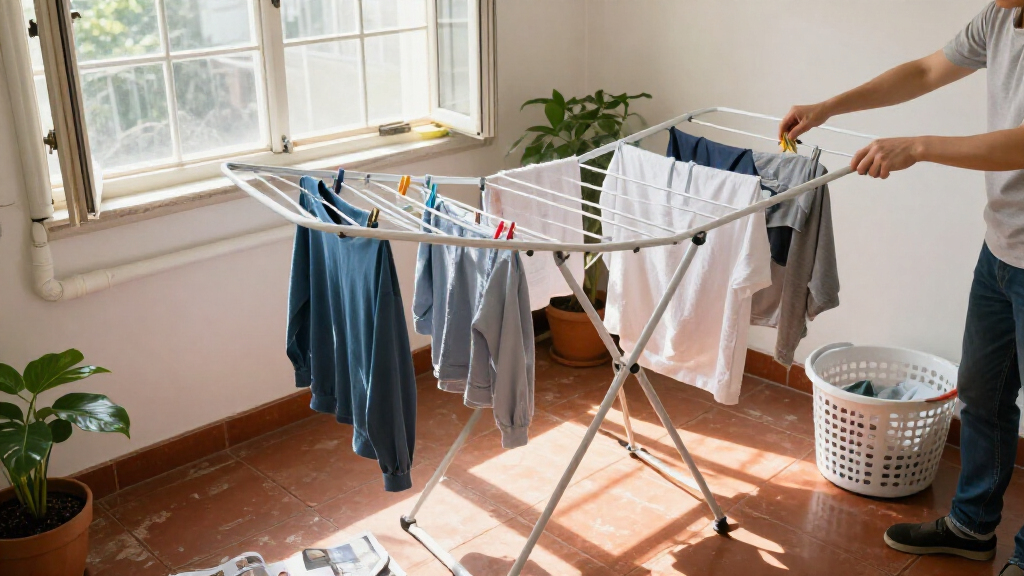
A YouTube video by Thaitrick demonstrates a lightweight drying rack made from PVC pipe that mounts to a wall and folds up when not in use. The design uses common pipe fittings, wall clamps, hooks and twine; the tutorial does not provide load limits or detailed wall-installation specifications.
A Thaitrick YouTube tutorial shows how to make a wall-mounted PVC drying rack that swivels down for laundry and folds up when it is not needed, offering a space-saving option for crowded laundry rooms. The design uses short pipe sections and standard fittings, with wall clamps, hooks and twine supporting its movement and use.

Get business pricing on tools and workshop supplies
- Business-only prices and quantity discounts
- Tax-exempt purchasing
- Multiple users, one account, clear invoices
The rack in the video is made with half-inch PVC pipe: six lengths measuring 70 centimeters, or about 27 inches, along with 10 short joining pieces, eight tee fittings and four elbows. Thaitrick’s design can be resized by using more or longer pipe sections, though a larger rack would also require additional fittings. The video’s listed measurements describe the example rack, not a tested maximum size or load.
To assemble it, the pipe sections are fitted together to form the rack, which is attached to the wall with pipe clamps so it can pivot. A clamp holds the rack against the wall when folded up. When lowered, four metal hooks and twine support it. The tutorial describes drilling pilot holes in the rack for the hooks and tying the twine to them.
A ratcheted PVC pipe cutter is used in the video to make clean cuts. The pipe can be left unglued because the fittings grip it tightly, according to the tutorial; solvent-weld PVC cement is another option. It recommends clear cement if gluing, to avoid the visible colored finish of some PVC cements. Furniture-grade and plumbing-grade pipe can both be used with standard PVC fittings, though furniture-grade pipe is available in different colors and a glossy finish.
A drying rack that folds away and clears floor space
Thaitrick’s wall-mounted PVC design swings down for laundry and folds against the wall when not in use. Its load capacity and wall suitability are unverified.
What the example uses
The tutorial builds with half-inch PVC pipe and common fittings.
Pipe and fittings
Six 70 cm lengths, 10 short joining pieces, eight tees and four elbows form the rack.
Clamps, hooks and twine
Wall clamps let it pivot; a clamp holds it up, while hooks and twine support it when lowered.
Two positions, one wall mount
The wall attachment enables the rack to swing between storage and use.
- Swings up against the wall.
- A plastic clamp holds it in place.
- Leaves more floor and work area clear.
- Swings down for drying laundry.
- Four hooks and twine provide support.
- Secure placement depends on the installation.
Plan the build for your space
The tutorial says the design can be resized, but larger builds need more or longer pipe and additional fittings.
Choose pipe lengths and fittings for the intended space.
The tutorial says fittings can hold the pipe without glue; solvent-weld cement is another option.
Select wall fasteners and supports suited to the wall and expected laundry load.
What the tutorial leaves open
The example dimensions describe one build, not a tested capacity or size range.
- No tested weight limit or recommended number of garments.
- No load ratings for anchors, clamps, hooks or twine.
- No durability results for heavy, wet laundry or repeated folding.
A Rack That Clears Floor Space
The design addresses a practical constraint in small or busy laundry areas: a fixed rack can take up room even when no clothes are drying. Because this rack folds against the wall, it can leave more of the floor and work area clear between uses. That may suit renters or homeowners with limited space, although the tutorial does not establish whether the installation is suitable for every wall or household.
The parts are familiar hardware-store items, and the design can be adjusted to fit a particular space. Those features may make it approachable as a DIY project, but the convenience depends on secure attachment and adequate support. The tutorial does not state how much wet laundry the rack can hold, so users should not treat the video’s dimensions as proof of a particular weight capacity.
Products Worth Considering

Bose TV Speaker (2nd Gen) Compact Soundbar with Bluetooth and HDMI Connectivity

TCL 65-Inch R7D Series 4K UHD QLED Roku Smart TV

Shark Pet Cordless Stick Vacuum with 40-Minute Runtime, Grey, IX141
As an affiliate, we earn on qualifying purchases.
How the Folding Design Works
The rack is not a freestanding frame: its wall attachment is what allows it to swing between a stored position and a drying position. In the raised position, a plastic clamp holds it in place. In the lowered position, the hooks and twine provide support. The arrangement is intended to keep the rack from simply hanging unsupported when open, but exact placement and tension depend on the wall and rack dimensions.
Thaitrick’s materials list includes plastic pipe clamps and drywall anchors for the wall screws. The tutorial says plastic conical anchors can be used and describes threaded drywall anchors as stronger and easier to install. That guidance concerns the example installation; it does not replace checking the wall material or choosing hardware rated for the expected load. The video also says the pipe and fittings can be assembled without adhesive, while allowing for cement if a more permanent connection is preferred.
“The pipe fittings hold the pipe tightly enough for the rack to stay together without glue.”
— Thaitrick, in the YouTube tutorial
Load Limits and Wall Fit
The tutorial provides no tested weight limit, durability data or recommended number of garments. It is also unclear how the rack performs with heavy, wet items, repeated folding or prolonged use. The dimensions shown are for one example and do not establish the best span or pipe size for a different room.
Wall conditions are another variable. The video describes drywall anchors, but it does not give a load rating for the anchors, clamps, hooks or twine, or specify how installation should change for masonry, wood framing or other surfaces. The instructions do not establish whether local rules apply to a particular installation. Anyone adapting the build must judge the wall and hardware rather than assume the pictured setup will work unchanged.
Check the Installation Before Use
Anyone following the tutorial would need to measure the available wall and clearance, select pipe lengths and fittings, and decide how the rack will be anchored and supported before cutting materials. After assembly, the hinges, raised-position clamp, hooks and twine should be checked for secure attachment. The tutorial does not specify a formal test procedure or safe load, so the rack’s capacity remains unverified.
The next practical step is to compare the planned setup with the wall’s construction and the expected laundry load, then choose appropriately rated fasteners and supports. Thaitrick’s video offers a fold-away design and parts list; it does not report a tested capacity or a follow-up assessment of performance.
Key Questions
What materials does the example rack use?
The example uses half-inch PVC pipe, eight tee fittings, four elbows, 10 short joining pieces, wall clamps, four metal hooks and twine. Its six main pipe lengths are each 70 centimeters, or about 27 inches.
Does the PVC rack need to be glued?
Thaitrick says the fittings hold the pipe tightly enough for the rack to stay assembled without glue. Solvent-weld PVC cement can be used, and the tutorial favors clear cement for appearance. The video does not compare the long-term strength of glued and unglued versions.
How does the rack fold away?
Wall-mounted pipe clamps let the rack swivel. A plastic clamp holds it up against the wall, while hooks and twine support it when lowered for use.
How much laundry can it hold?
The tutorial gives no tested load limit. Capacity will depend on the rack’s size, materials, fasteners and wall, so the example dimensions should not be taken as a weight rating.
Can the rack be made larger?
Yes. The tutorial says the same general method can be used with more pipe sections or longer pieces, but a larger rack needs additional fittings. It does not provide a tested size range or load guidance for larger builds.
Source: hunker.com