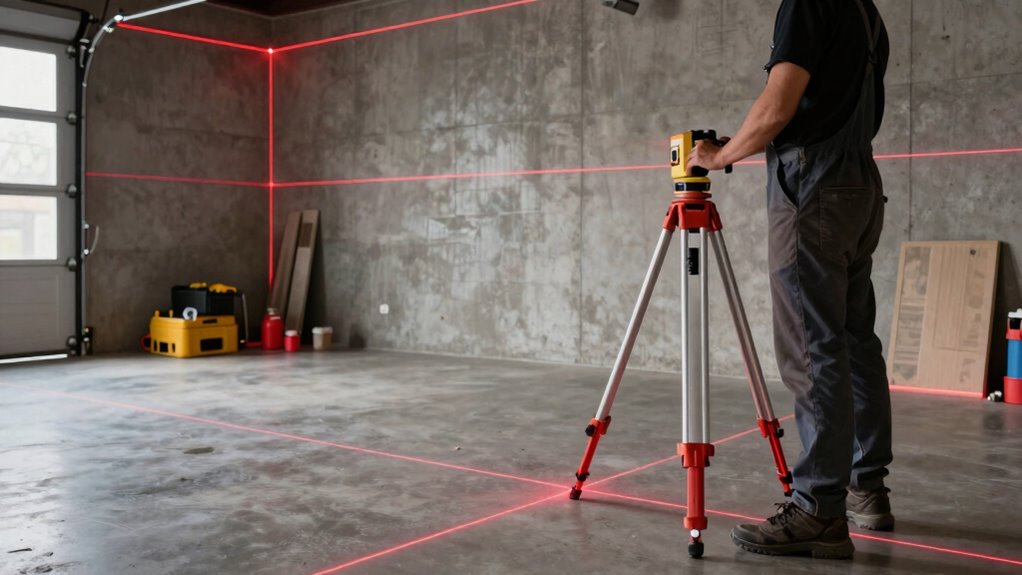

Using a laser level speeds up your garage layout work by providing quick, accurate lines across large surfaces. It eliminates the need for manual measurements and multiple markings, saving you time and effort. The laser’s precise, straight lines make tasks like marking walls, installing cabinets, and laying flooring faster and more consistent. Proper setup and calibration guarantee accuracy, while safety precautions protect against accidental laser exposure. Keep exploring to discover how to maximize your laser level’s benefits further.

Get business pricing on tools and workshop supplies
- Business-only prices and quantity discounts
- Tax-exempt purchasing
- Multiple users, one account, clear invoices
Key Takeaways
- Laser levels project straight, precise lines quickly, reducing manual measurement time during garage layouts.
- They allow for easy marking of walls, cabinets, and flooring, speeding up installation processes.
- Self-leveling features ensure fast setup without extensive adjustments, saving time.
- Consistent calibration maintains accuracy, preventing errors that could cause delays.
- Secure, stable setups minimize rework by ensuring reliable, accurate line placement.
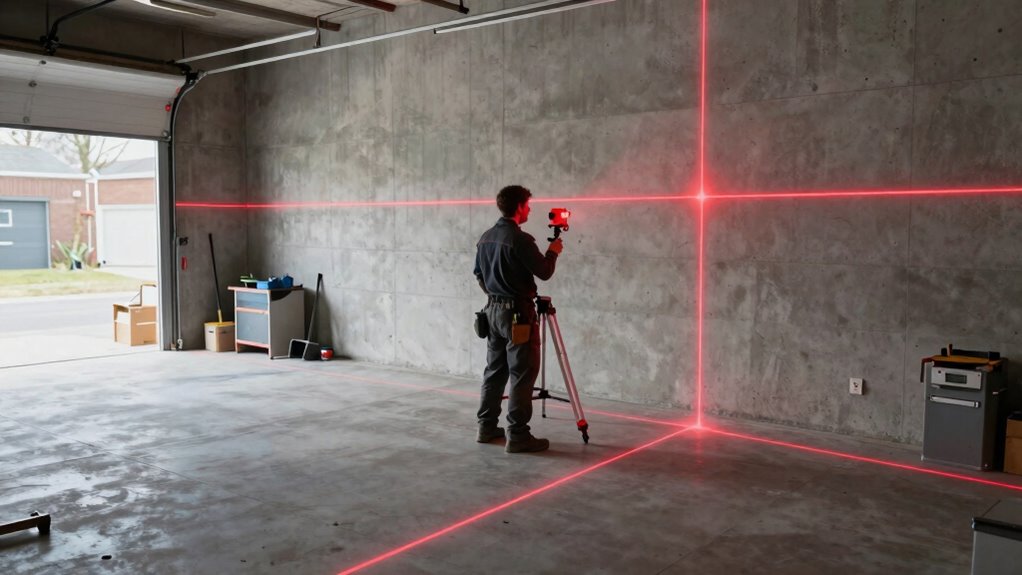
When you’re working on garage layout projects, laser levels can considerably cut down the time and effort required. They deliver precise, straight lines across large surfaces, making tasks like marking walls, installing cabinets, or laying out flooring much more straightforward. Instead of manually measuring and drawing multiple lines, you simply set up the laser, turn it on, and let it project a clear, accurate line across the space. This not only speeds up your work but also enhances accuracy, reducing mistakes that could lead to costly rework later on.
One of the key aspects of using laser levels effectively is ensuring proper laser calibration. Before you start, you want to verify that your device is properly calibrated to produce accurate lines. Many laser levels have self-leveling features, but it’s still wise to double-check the calibration periodically, especially if the device has been transported or bumped. Proper calibration guarantees that the lines you project are true to your measurements, preventing errors that could compromise your entire layout. Taking a few minutes to calibrate the laser level initially and after transportation can save you hours of correction work down the line. Additionally, understanding laser calibration techniques can help you maintain accuracy over time. Regular calibration checks can also extend the lifespan of your laser level by preventing misalignments caused by wear or mishandling. Being familiar with proper setup procedures can further enhance the reliability of your measurements and ensure consistent results. Recognizing the importance of consistent calibration can help you avoid incremental inaccuracies that accumulate throughout your project.
Safety considerations are paramount when working with laser levels, particularly with the Class 2 or Class 3R lasers common in construction tools. Always avoid direct eye exposure to the laser beam, as even low-powered lasers can cause eye damage if stared into directly. Wear appropriate safety glasses if recommended, and keep the laser level out of reach of children or untrained individuals. Additionally, be cautious about where you set up the laser; don’t point it at reflective surfaces or windows that could redirect the beam into your eyes or others’. Properly securing the laser level on a stable surface or tripod also minimizes accidental shifts that could cause misalignment or unsafe conditions. Being aware of laser safety standards ensures you’re using the device responsibly and within legal guidelines.
Products Worth Considering

Shark PowerDetect Robot Vacuum and Mop Combo with 60-Day Self-Emptying Base (AV2800ZE)

iRobot Roomba 105 Combo Robot Vacuum and Mop with AutoEmpty Dock

TCL 85-Inch QM6K QLED Mini LED 4K HDR Smart Google TV, 144Hz
As an affiliate, we earn on qualifying purchases.
Frequently Asked Questions
Are Laser Levels Suitable for Outdoor Garage Projects?
Yes, laser levels are suitable for outdoor garage projects, especially if you choose a durable model designed for outdoor use. Look for laser levels with high durability to withstand weather conditions, and consider laser level accessories like tripods and protective cases to enhance stability and protection. These features make your outdoor layout work more precise and efficient, saving you time and effort while ensuring your project stays on track.
What Safety Precautions Should I Take With Laser Levels?
Imagine a thin, bright beam slicing through your workspace—this is why laser safety matters. You should always wear appropriate eye protection, avoid pointing the laser at anyone, and keep the device away from children. Follow user precautions diligently, like securing the laser level to prevent accidental shifts and double-checking the calibration. These steps guarantee safe operation, protecting your eyes and maintaining a secure environment during your garage projects.
Can Laser Levels Be Used on Uneven Surfaces?
Yes, laser levels can be used on uneven surfaces, but you need to guarantee surface stability and proper surface preparation. You might need to place a stable, level base or use a tripod with adjustable legs to compensate for uneven terrain. Securing the laser level firmly helps maintain accuracy. Remember, a stable and well-prepared surface minimizes errors, making your layout work more precise and efficient across uneven garage surfaces.
How Do I Calibrate a Laser Level Accurately?
To calibrate your laser level accurately, start with calibration techniques like placing it on a stable surface or a known flat reference. Use precision adjustments to align the laser beam perfectly horizontal or vertical, following the device’s manual. Check the calibration regularly, especially after bumps or transportation. This guarantees your laser level maintains accuracy, making your layout work faster and more precise across your garage or any project.
What Is the Typical Lifespan of a Laser Level’s Battery?
A laser level’s battery usually lasts between 4 to 12 hours depending on usage and model. When the battery weakens, you’ll need a battery replacement to maintain accuracy and efficiency. To extend your device’s lifespan, practice good power management by turning it off when not in use and avoiding unnecessary features. Regularly check the battery health and keep spare batteries handy for quick replacements during projects.
Conclusion
Using laser levels can cut your garage layout time by up to 50%, making your project more efficient and less stressful. With precise, easy-to-read lines, you’ll spend less time measuring and rechecking, ensuring everything lines up perfectly the first time. Imagine completing your garage setup in just a few hours instead of days—that’s the power of modern laser technology. Embrace these tools, and you’ll be amazed at how quickly you can transform your space.