Pocket hole joinery helps your utility furniture last longer by creating strong, hidden joints that resist pulling apart and handle daily stress. This method provides a durable foundation, reducing the chance of joint failure over time. Plus, proper finishing and using moisture-resistant wood protect your furniture from wear and moisture damage. When you choose pocket holes, you’re building reliable furniture that stands up to heavy use, and there’s more to discover about maximizing its durability.
Key Takeaways
- Concealed, strong joints resist pulling apart under heavy use, enhancing furniture durability.
- Proper finishing and sealing protect joints from moisture, reducing deterioration over time.
- Durable pocket hole joinery maintains structural integrity even with frequent disassembly and reassembly.
- Using moisture-resistant wood and sealing techniques extends the lifespan of utility furniture.
- The efficient, precise joinery reduces stress points, minimizing joint failure and increasing longevity.
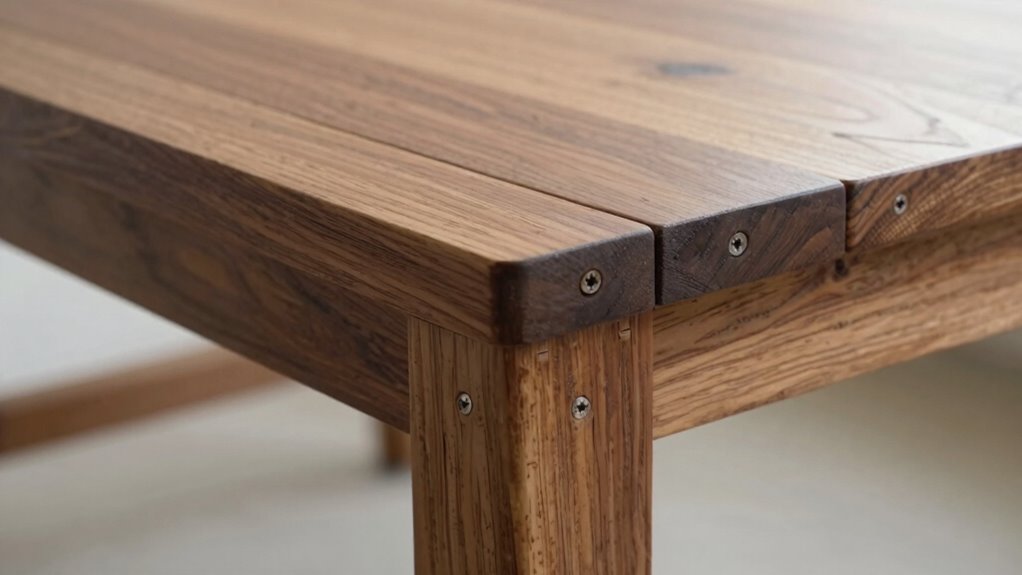
Pocket hole joinery offers a simple and efficient way to build sturdy utility furniture, making it accessible even for beginners. When you’re working on utility pieces like shelves, workbenches, or storage units, reliable joints are essential for durability. Pocket holes allow you to connect panels securely without complicated tools or techniques. This method creates strong, concealed joints that stand up to daily use and heavy loads, which is critical for utility furniture meant to last. Unlike traditional woodworking joints, which often require precise cutting and fitting, pocket hole joinery simplifies assembly, saving you time while still delivering strong results. This ease of use doesn’t mean you compromise on strength—these joints resist pulling apart and maintain their integrity over years of use.
With utility furniture, longevity depends heavily on the quality of the construction and the finishing process. Pocket holes provide a solid foundation that withstands stress and movement, reducing the likelihood of joint failure over time. Because the joints are hidden, they also give your projects a cleaner look, which is especially important if you’re aiming for a professional finish. When it comes to furniture finishing, the durability of the joint means you can focus on applying paint, stain, or sealant confidently, knowing the structure will remain intact. This is particularly useful if you’re working on multiple pieces or doing a project that will see frequent use, like a workshop or garage storage. Additionally, joint strength plays a crucial role in how long your utility furniture will last under constant use. Proper maintenance and protective coatings further enhance the lifespan of furniture built with pocket hole joinery, ensuring your investment lasts for years.
Traditional woodworking often involves complex joinery techniques like dovetails or mortise and tenon joints, which can be time-consuming and require advanced skills. Pocket hole joinery, on the other hand, offers a practical alternative that still produces durable, long-lasting furniture. Its simplicity makes it perfect for DIYers and hobbyists who want to create utility furniture that’s both functional and resilient. Plus, the ability to quickly disassemble and reassemble furniture pieces can be an advantage in utility settings. When you combine pocket hole joinery with proper furniture finishing—like sanding, sealing, and protective coatings—you enhance the longevity even further. The finished product not only looks good but also resists moisture, wear, and tear, ensuring your utility furniture remains dependable for years. Emphasizing sustainable living practices, choosing durable joinery methods like pocket hole joinery aligns with environmentally conscious goals by reducing waste and the need for frequent replacements. Additionally, understanding wood properties helps in selecting the right materials for longer-lasting utility furniture. Proper selection of moisture-resistant wood can further improve durability and extend the lifespan of your projects.

Kreg K4 Pocket Hole Jig – Adjustable, Versatile Jig for Strong Joints – Create Perfect, Rock-Solid Joints – Easily Adjustable Drill Guides – For Materials 1/2" to 1 1/2" Thick
- Easy Woodworking Joinery: Fast, strong wood joints
- Adjustable Pocket-Hole Jig: Precise, customizable settings
- Versatile Material Compatibility: Works with 1/2" to 1 1/2" thick wood
As an affiliate, we earn on qualifying purchases.
As an affiliate, we earn on qualifying purchases.
Frequently Asked Questions
What Tools Are Needed for Pocket Hole Joinery?
To do pocket hole joinery, you need a pocket hole jig, a drill, pocket hole screws, and a clamp. The jig guides your drill for precise holes, ensuring joint stability through proper drilling technique. Using these tools correctly helps you create strong, durable connections in your utility furniture. Focus on maintaining consistent angles and tight clamping, which guarantees the best results and longer-lasting furniture.
Can Pocket Hole Joinery Be Used Outdoors?
Yes, pocket hole joinery can be used outdoors if you prioritize outdoor durability and weather resistance. To guarantee longevity, use exterior-grade plywood or treated wood, and apply waterproof wood glue. Seal all joints with a weatherproof finish or outdoor sealant to protect against moisture and temperature changes. Properly treated and sealed pocket hole joints will withstand outdoor conditions, making your utility furniture durable and long-lasting outside.
How Much Weight Can Pocket Hole Joints Support?
Think of pocket hole joints as the backbone of your project—they support quite a bit! Typically, they can hold around 150 to 250 pounds, depending on wood type and screw size. This exemplifies solid joint durability and impressive load capacity. While perfect for many applications, always consider your specific project requirements to confirm your pocket holes can handle the weight, especially for load-bearing furniture.
Is Special Training Required to Use Pocket Hole Jigs?
You don’t need special training to use pocket hole jigs, but focusing on pocket hole safety is important. Start by carefully reading the manufacturer’s instructions and guaranteeing proper jig calibration before use. This helps prevent accidents and ensures strong, precise joints. With a little practice, you’ll become comfortable handling the jig, making your utility furniture durable and long-lasting. Always prioritize safety and accuracy for the best results.
How Do I Maintain the Strength of Pocket Hole Joints Over Time?
Think of your joints like a well-tuned orchestra—maintain their harmony by regularly checking for looseness and re-tightening screws when needed. To preserve joint strength over time, avoid excessive movement that could compromise joint flexibility. Applying aesthetic finishes carefully helps protect the wood, preventing damage. Keep your pocket hole joints solid by practicing good maintenance, ensuring they stay strong and durable, much like a timeless symphony that continues to impress.
moisture resistant wood for furniture
As an affiliate, we earn on qualifying purchases.
As an affiliate, we earn on qualifying purchases.
Conclusion
By using pocket hole joinery, you guarantee your utility furniture is durable and long-lasting. This technique distributes stress more evenly, which might suggest it’s inherently stronger than traditional joints, aligning with the theory that efficient design enhances longevity. When you choose pocket holes, you’re not just building furniture—you’re investing in resilience that stands the test of time. So, next time you craft or buy utility pieces, consider this method for a smarter, more enduring choice.
utility furniture assembly tools
As an affiliate, we earn on qualifying purchases.
As an affiliate, we earn on qualifying purchases.
hidden joint connectors for woodworking
As an affiliate, we earn on qualifying purchases.
As an affiliate, we earn on qualifying purchases.