
TL;DR

Get business pricing on tools and workshop supplies
- Business-only prices and quantity discounts
- Tax-exempt purchasing
- Multiple users, one account, clear invoices
B+N Industries presents three modular interior systems—System 1224, Sorbetti 2.0 and Muro—as products designed to be altered and expanded after installation. Product manager Elisa Radominski says the systems use tool-free adjustments and adaptable components to accommodate changing workplace, retail and hospitality needs; independent performance data was not provided.
B+N Industries says its modular interior systems—System 1224, Sorbetti 2.0 and Muro—are designed to change after installation, letting users adjust shelving, cabinetry, lighting, graphics and layouts as a space’s needs shift. In a report published by Design Milk, product manager Elisa Radominski described tool-free adjustments and expandable components as a way to adapt interiors without rebuilding them.
The three products take different design approaches. System 1224 uses a rectilinear panel grid with front-mounted accessories that can be swapped; its layout can move from symmetrical to more informal. B+N also describes it as suitable for freestanding displays or room dividers. A collaboration with British artist Shantell Martin used black-and-white acrylic panels as a surface for her drawings.
Sorbetti 2.0 combines an aluminum frame with cabinetry and adjustable shelves. Radominski said its intended settings include lobbies, waiting rooms, offices, retail spaces and residential closets. The company says its low-voltage power can support illuminated shelving, cabinetry and signage, and that the system can be installed as a freestanding divider as well as along a wall.
Muro is an open framework intended to support uses including retail displays, media walls and partitions. According to B+N, its components can accommodate graphics and signage, plug-and-play lighting, cabinets, SEG light boxes and digital displays. The company says all three systems are designed to expand, with shared grids and components kept in production so additions can be made later. Specific production periods were not stated.
Designed for Changing Interior Needs
The proposal addresses a practical challenge for organizations whose spaces change more often than their walls and fixtures are replaced. Workplace headcounts and schedules, retail assortments and hospitality branding can shift over time; adaptable shelving, partitions and displays may let a client update a room without commissioning a full rebuild.
Radominski said tool-free changes are intended to reduce reliance on contractors for routine reconfiguration. That is a company claim about the systems’ usability, not a reported measurement of time or cost savings. If the components work as described and remain available, the approach could also allow an existing installation to be updated rather than discarded. The report provides no lifecycle, cost or environmental analysis to quantify those potential benefits.
As an affiliate, we earn on qualifying purchases.
Three Systems, Different Roles
The Design Milk report presents the products as distinct visual systems rather than a single interchangeable wall. System 1224 emphasizes a clean grid, while Sorbetti 2.0 combines a frame with furniture-like casework. Muro uses a more open structure intended to take on display, media or room-divider functions.
Across the three lines, B+N describes a common aim: making modular equipment read as part of an interior rather than as generic infrastructure. Radominski pointed to options such as veneers, metals, acrylics, fabrics and woods for System 1224. The source material describes product capabilities and the company’s design rationale; it does not report a new installation, customer case study, sales figure or independent assessment.
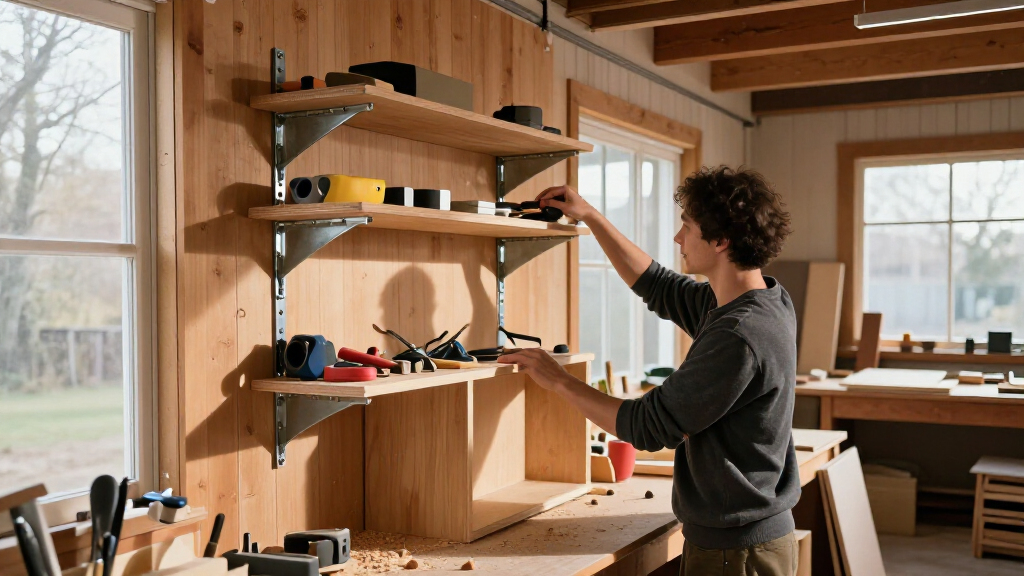
tool-free adjustable shelving units
As an affiliate, we earn on qualifying purchases.
As an affiliate, we earn on qualifying purchases.
Costs and Product Lifespans Unreported
The supplied report does not give prices, installation costs, warranties or quantified labor savings. It also does not specify how long components remain in production, although B+N says finishes and parts are kept available so systems can be expanded years after installation.
There are no independent tests, customer results or lifecycle data in the source material to establish how often reconfiguration occurs, how durable components are, or whether adapting an installation costs less than replacing it. The company’s descriptions of flexibility and intended uses should not be read as independently verified performance findings.
reconfigurable retail display panels
As an affiliate, we earn on qualifying purchases.
As an affiliate, we earn on qualifying purchases.
Availability and Long-Term Support
The report does not announce a launch date, a new product release or a forthcoming milestone. Readers considering the systems would need to contact B+N Industries or a project supplier for current pricing, configuration options, installation requirements and component availability.
For the systems’ long-term adaptability, the most relevant details to confirm are which parts and finishes can be added to an existing installation, how long they will remain available, and whether later additions are compatible with earlier configurations. The source material does not provide those product-by-product specifications.
As an affiliate, we earn on qualifying purchases.
Key Questions
Which modular systems does B+N Industries describe?
The report covers System 1224, Sorbetti 2.0 and Muro. They use different structures and finishes but are presented as systems that can be adjusted or expanded after installation.
Can the systems be changed without tools?
Radominski says System 1224 accessories mount and swap from the front without tools. The supplied report does not give the same tool-free detail for every adjustment across all three product lines.
What are the systems designed to support?
Depending on the product and configuration, B+N describes uses such as shelving, cabinetry, illuminated displays, signage, media installations and room dividers in workplaces, retail, hospitality and other interiors.
Does the report show that reconfiguration saves money?
No. The report says tool-free changes can avoid rebuilding walls or hiring contractors for some adjustments, but it provides no cost comparisons or measured savings.
How long will replacement or additional parts remain available?
B+N says it keeps finishes and components in production long enough for later additions, but the report gives no specific availability period. Buyers would need to confirm current support and compatibility with the company.
Source: rss
Fall yard work Picks
leaf blowers
As an affiliate, we earn on qualifying purchases.