
TL;DR

Get business pricing on tools and workshop supplies
- Business-only prices and quantity discounts
- Tax-exempt purchasing
- Multiple users, one account, clear invoices
A Veranda writer chose cape plumbago for front-door containers after seeking a flowering plant suited to sun, heat and relatively light watering. Her plants showed new blooms within weeks, but the report is a personal early-season account, not proof that the plant is foolproof in every climate or container.
A Veranda writer has named cape plumbago (Plumbago auriculata) her pick for sunny front-door containers after the plants began producing new blooms within weeks of planting. The early results support its appeal as a relatively low-maintenance flowering shrub, but the writer says it is too soon to know how well her plants will perform through summer and into fall.
The writer said she was looking for a flowering plant that could handle sun and heat and would not be ruined by an occasional missed watering. After speaking with coworkers and doing her own research, she settled on cape plumbago, a shrub native to South Africa that can be grown as a shrub, trained as a climber or planted in a container.
For her front entrance, she bought two one-gallon plants and four pint-sized plants, along with potting mix. She removed some of the old soil from the containers, loosened the plants’ roots and set them into planting holes described as twice the width and depth of the root balls. She then backfilled with potting mix and applied a balanced, slow-release fertilizer around the plants, avoiding direct contact with the stems.
A few weeks later, she reported that the plants were putting out blooms almost daily and growing upward and over the container edges. Rain in her area had limited her need to water: she had used a hose once. The article says watering should generally be guided by how dry the soil surface is, with one to two waterings per week as a typical reference rather than a fixed schedule.
A Flowering Option for Sunny Entries
For readers choosing plants for a front step, porch or other sunny container, the report offers a practical candidate that combines blue flowers and flexible growth. Cape plumbago can be allowed to spread, trained upward or kept in a pot, giving gardeners options where planting space is limited. The reported early flowering also gives a timely example of what a new planting may look like after establishment begins.
The result is not a guarantee of easy care everywhere. Water needs depend on rainfall, container size, drainage and local conditions, and the writer’s own watering experience was shaped by steady rain. Her account is most useful as a first-person trial with specific planting details, not as a controlled comparison with other plants or a promise that the shrub will thrive without attention.
Products Worth Considering

LEVOIT Vital 200S-P Smart Air Purifier for Large Rooms

Levoit Core 600S-P Smart Air Purifier for Large Rooms

Philips Hue Festavia 130-Foot Indoor/Outdoor Smart String Lights, 500 LEDs
As an affiliate, we earn on qualifying purchases.
The Writer’s Early-Season Trial
The original report appeared in Veranda under the headline “I Discovered the Perfect Front-Door Plant—and It’s Foolproof.” Its author, the magazine’s art director, described searching in spring for a summer flowering plant that could handle full sun, heat and relatively infrequent watering. The piece combines her own container-planting experience with general care guidance; it does not report a formal gardening study.
Veranda says cape plumbago is suited to USDA hardiness zones 8 through 11 and may tolerate winter temperatures in the 20-to-25-degree Fahrenheit range. That temperature note does not establish that the plant will survive every freeze or winter condition. The report also describes the shrub as deer-resistant and attractive to pollinators, but offers no independent measurements or trial data for those characteristics.
Summer Results Are Still Pending
The account covers only the first few weeks after planting. It does not establish whether these particular containers will keep flowering through fall, reach the shrub’s potential height, or require additional fertilizer and pruning. The writer said she planned to monitor the plants over the summer and might add fertilizer or light pruning to encourage growth.
Local climate, winter exposure, pot size, drainage and soil moisture can affect how a container-grown plant performs. Although the article gives a general watering range, it does not report the writer’s exact location, rainfall totals, soil conditions or container dimensions. The term “foolproof” in the original headline is a characterization, not evidence that cape plumbago needs no care or will succeed in all settings.
Watch for Growth Through Fall
The next evidence in this individual trial will be whether the plants continue flowering and fill out their containers as the season progresses. The writer said she would check their growth, water according to how dry the soil is, and decide whether further feeding or pruning is needed. She had also bought obelisks for the plants to grow around.
For prospective growers, the report’s immediate takeaway is to match the plant to local conditions and monitor the soil rather than assume that a low-maintenance label means no upkeep. The source provides no later update on the containers, so their eventual size, fall bloom and winter survival remain unreported.
Key Questions
What is cape plumbago?
Cape plumbago (Plumbago auriculata) is a flowering shrub from South Africa. The Veranda report says it can be grown as a spreading shrub, trained as a climber or planted in a container.
How often should cape plumbago be watered?
The report gives one to two waterings per week as a typical guide, depending on how dry the soil is at the top. Rainfall and container conditions matter; the writer watered only once during her first few weeks because her area had steady rain.
Can cape plumbago grow in a pot by a front door?
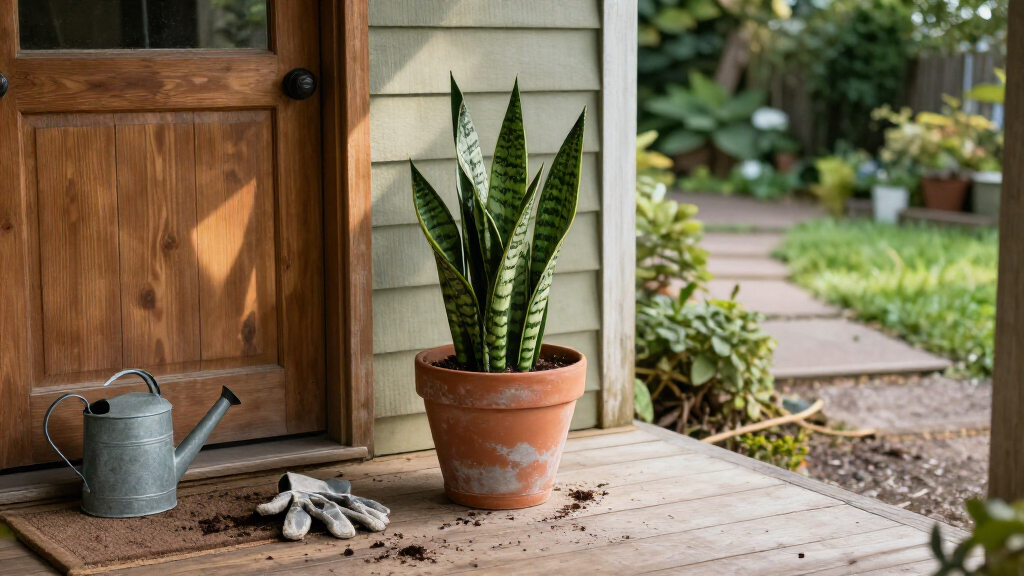
Yes. The writer planted cape plumbago in front-door containers and reported new blooms and growth over the edges within weeks. Her account does not establish how every container or climate will perform.
Is cape plumbago truly foolproof?
The source does not prove that it is foolproof. The writer describes it as a promising, relatively low-maintenance choice, but says summer and fall results were still unknown and recommends paying attention to soil dryness and plant growth.
Source: veranda.com