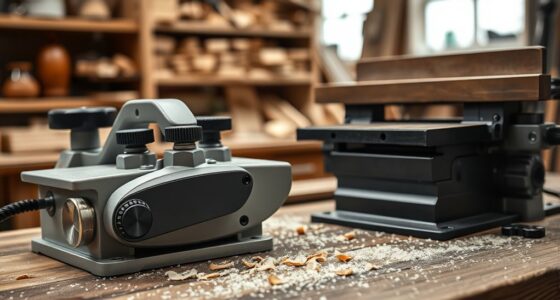
When choosing between air tools and electric tools, consider their performance, portability, and maintenance. Air tools are lightweight, powerful, and great for heavy-duty jobs, but require an air compressor. Electric tools are easier to use, more versatile, and produce less noise, making them ideal for precision work. Each has pros and cons, so understanding these differences helps you pick the right tool for your DIY projects. Keep exploring to understand which option fits your needs best.

Get business pricing on tools and workshop supplies
- Business-only prices and quantity discounts
- Tax-exempt purchasing
- Multiple users, one account, clear invoices
Key Takeaways
- Air tools are lightweight, portable, and ideal for heavy-duty tasks, while electric tools offer consistent power for precision work.
- Air tools require an air compressor, making them suitable for large projects but less convenient for small DIY tasks.
- Electric tools generally have lower maintenance needs and are easier to set up, with longer run times depending on battery life or power outlet.
- Noise and vibration levels are typically lower in electric tools, enhancing user comfort during extended use.
- Cost-wise, air tools are often cheaper upfront but may incur higher long-term maintenance expenses compared to electric tools.
As an affiliate, we earn on qualifying purchases.
Performance and Power Sources
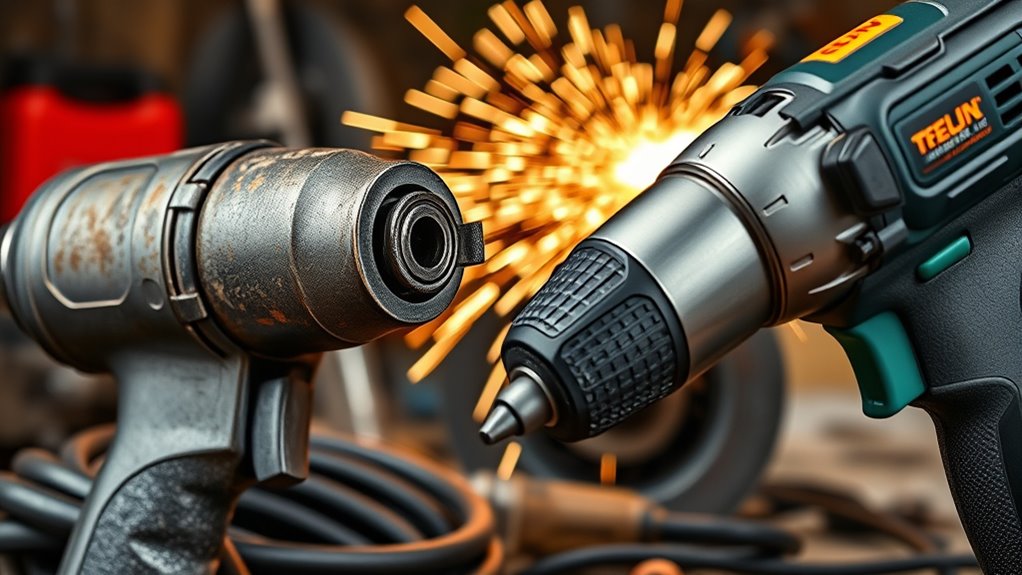
When comparing air tools and electric tools, their performance largely depends on their power sources. Air tools rely on compressed air delivered by an air compressor, which must be compatible with the tool’s design. This compatibility ensures peak performance and avoids issues like power loss or inefficiency. Electric tools, on the other hand, draw power directly from a battery or electrical outlet. Battery efficiency plays a key role here; high-quality batteries provide longer run times and quicker charging, enhancing overall productivity. If you’re choosing between the two, consider how well your air compressor matches your air tool’s requirements. Electric tools offer consistent power without needing external equipment, but their performance hinges on battery life or cord length. Both options have strengths based on their power sources, which significantly influence their effectiveness and usability. Additionally, understanding the performance capabilities of each type can help you select the best tool for your specific DIY projects. For example, performance consistency can vary based on design and intended use, impacting your project outcomes. Moreover, the maintenance requirements of each system can affect long-term reliability and ease of use.
electric drill with long battery life
As an affiliate, we earn on qualifying purchases.
As an affiliate, we earn on qualifying purchases.
Portability and Ease of Use

Air tools are generally more portable because they are lightweight and often compact, making them easy to carry around a job site. This enhances ergonomics comfort, reducing fatigue during extended use. Plus, their size allows for better storage convenience, fitting into tight spaces or toolboxes easily. With less weight, you can maneuver more comfortably, improving your control and accuracy. Portable air compressors can also be moved effortlessly, increasing your flexibility on the job. To maximize portability, consider these points:
- Compact design for easy handling
- Lightweight construction for less fatigue
- Easy storage options for organization
Additionally, the use of quick-connect fittings simplifies setup and disconnection, further enhancing portability and efficiency.]
As an affiliate, we earn on qualifying purchases. As an affiliate, we earn on qualifying purchases.portable air compressor for tools
Cost and Maintenance Considerations
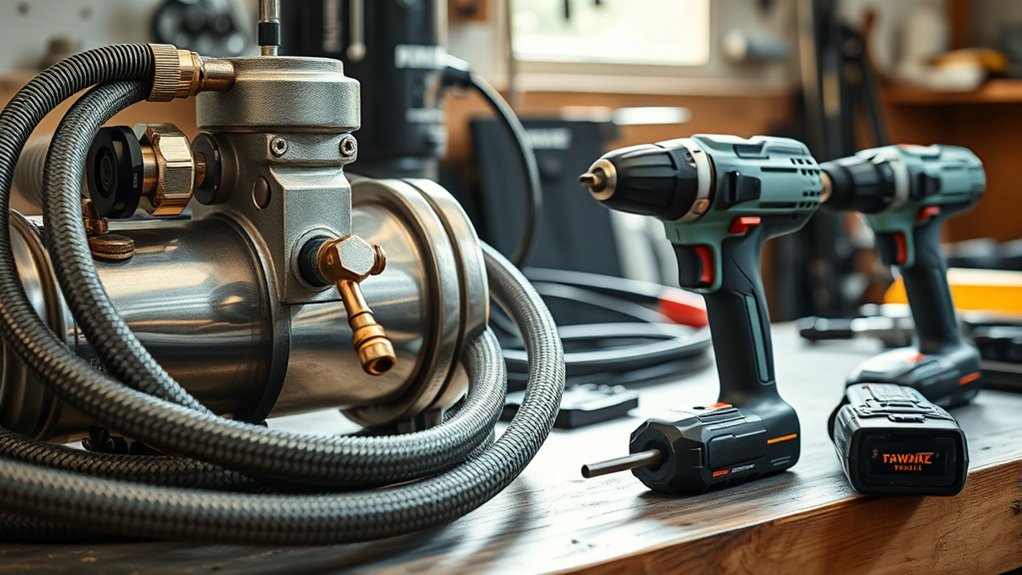
Although air tools often have a lower initial purchase price, their long-term costs can add up due to maintenance and operational expenses. You’ll need to regularly inspect and replace parts like filters, hoses, and lubricants, which can increase costs over time. Additionally, air compressors consume energy and require upkeep, impacting your budget. Regularly checking air compressor filters and replacing worn parts can improve performance and reduce breakdowns. On the other hand, electric tools with good ergonomic design tend to offer better battery life, reducing the need for frequent recharges and replacements. Maintenance for electric tools is generally simpler, often limited to keeping batteries charged and cleaning parts. While electric tools may have a higher upfront cost, their lower ongoing maintenance and efficient power use can save you money in the long run, especially if you prioritize tool durability and reliability. Properly maintaining body jewelry can also extend the lifespan of your piercings and reduce replacement costs over time. Regularly checking and cleaning air purifier filters can further enhance performance and ensure healthier indoor air quality.
As an affiliate, we earn on qualifying purchases.
Typical Applications and Versatility
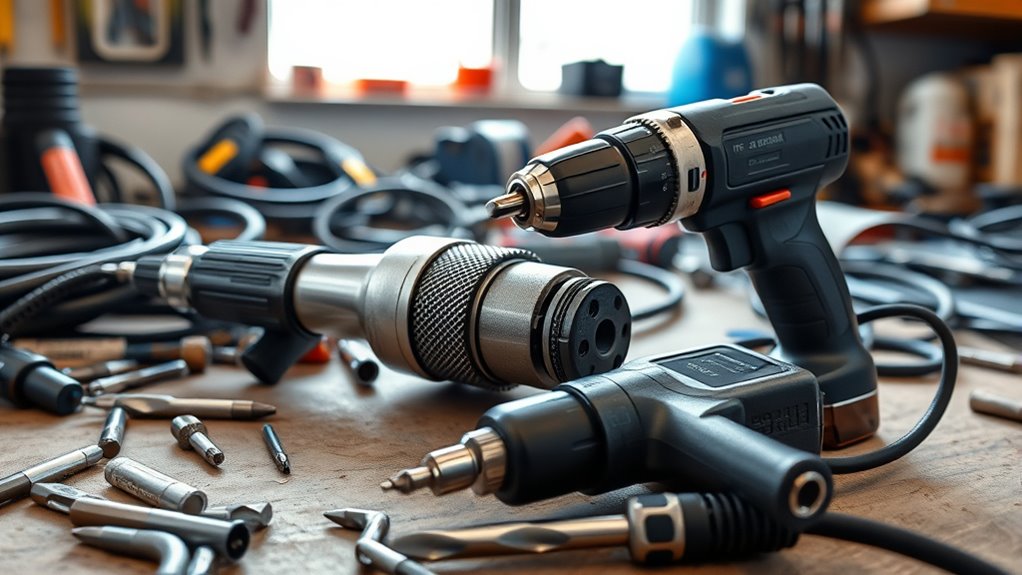
Both air and electric tools excel in different applications due to their unique strengths and versatility. Air tools are ideal for heavy-duty tasks like framing, roofing, and automotive work, thanks to their power and durability. Electric tools, on the other hand, shine in precision tasks such as sanding, drilling, and grinding, often offering better tool compatibility with a variety of accessories. Your choice also impacts the environmental impact; air tools typically consume more energy and require compressors, which can be less eco-friendly. Consider your project scope and environment when selecting tools. Understanding tool types can help you make an informed decision based on your specific needs, especially when considering the energy consumption and operational efficiency of each tool type. Additionally, magnification levels in certain tools like esthetician lamps demonstrate how specialized features can enhance task accuracy and effectiveness. Being aware of essential oil applications for health can also inform your safety practices when working with various equipment and environments. Moreover, understanding tool maintenance can extend the lifespan and reliability of your tools, ensuring optimal performance over time.
Noise Levels and User Comfort

When it comes to noise levels and user comfort, electric tools generally operate more quietly than their air-powered counterparts. This noise reduction helps minimize ergonomics concerns like fatigue and hearing strain during extended use. Electric tools tend to produce less vibration, making them more comfortable to handle and reducing user fatigue. Their ergonomic designs often prioritize comfort, with features like rubberized grips and balanced weight distribution. In contrast, air tools can be louder and more vibratory, which may lead to discomfort over time. If you’re looking to improve your working environment and reduce strain, electric tools offer a significant advantage in noise reduction and overall user comfort, making them a smarter choice for many DIY projects. Vibration levels also play a critical role in user comfort, and electric tools generally excel in this area, especially when combined with ergonomic features designed to reduce fatigue and enhance control. Additionally, electric tools often have quieter operation due to their design, further contributing to a more comfortable working experience. Incorporating noise mitigation techniques can further enhance comfort and safety during prolonged use, and choosing tools with advanced vibration control can significantly improve durability and user satisfaction.
Frequently Asked Questions
Which Type of Tool Is Better for Detailed or Precision Work?
For detailed or precision work, electric tools are better because they offer greater precision accuracy and control. You can easily handle delicate tasks with electric tools, thanks to their consistent power and finer adjustments. Air tools, while powerful, might lack the finesse needed for intricate projects. So, if your focus is on delicate tasks, electric tools will give you the control and accuracy you need to achieve professional results.
How Do Air and Electric Tools Compare in Safety Risks?
Think of safety hazards as lurking shadows—you need to light the way with careful risk management. Air tools often have higher risks due to pressurized air, which can cause sudden bursts or flying debris. Electric tools pose risks like electric shock or sparks. You stay safer by wearing protective gear, following manufacturer instructions, and maintaining your tools properly. Being vigilant transforms potential hazards into manageable risks, ensuring your DIY journey stays smooth and safe.
Can Air Tools Be Used Indoors Safely?
You can safely use air tools indoors if you prioritize proper indoor safety and ventilation requirements. Make sure the workspace is well-ventilated to avoid inhaling harmful fumes or dust. Keep the area free of flammable materials, and wear protective gear like masks and safety goggles. Regularly check for leaks or air pressure issues, and use the tools in a well-ventilated space to prevent any buildup of hazardous fumes or noise.
What Is the Typical Lifespan of Air Versus Electric Tools?
Think of your tools as marathon runners—some go the distance longer than others. Generally, electric tools last around 5 to 10 years with proper tool maintenance, while air tools can often run 10 to 15 years if well cared for and with durable power sources. Regular maintenance and quality power sources extend their lifespan, making your investment more worthwhile. Keep them clean and serviced, and they’ll serve you well for years to come.
Are There Eco-Friendly Options Within Air or Electric Tools?
You can find eco-friendly alternatives in both air and electric tools that focus on sustainable power. Look for models with energy-efficient motors or those powered by rechargeable batteries, reducing emissions and waste. Some brands prioritize eco-conscious manufacturing, using recycled materials or low-impact processes. By choosing tools with these features, you support sustainability while enjoying reliable performance, making your DIY projects greener and more environmentally responsible.
Conclusion
Choosing between air and electric tools depends on your needs. Air tools offer raw power and durability, perfect for heavy-duty jobs, but they can be bulky and noisy. Electric tools are more convenient and quieter, ideal for casual DIY projects. Think of air tools as a rugged, high-performance vehicle—powerful but demanding—while electric tools are like a nimble city car—easy to handle and ready when you are. Your choice shapes your DIY experience.
Evergreen bestsellers Picks
bestsellers
As an affiliate, we earn on qualifying purchases.