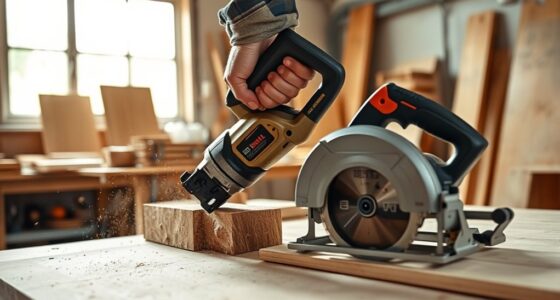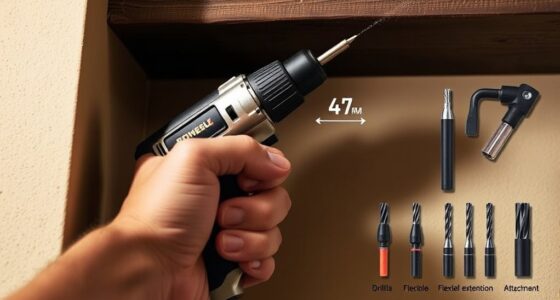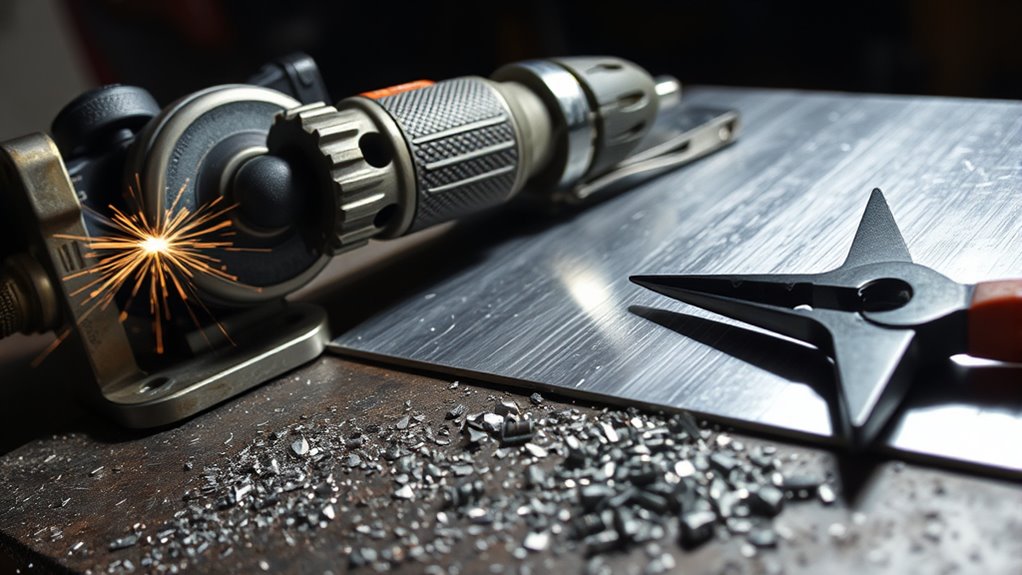

To work on metal at home, you’ll need fundamental tools like a hacksaw or angle grinder for cutting, a grinder or abrasive wheels for smoothing rough edges, and a drill or rotary tool for creating holes. Make certain to wear safety gear like gloves, goggles, and a mask to protect yourself from sparks, fumes, and debris. Using these tools safely ensures a smooth workflow, and if you keep exploring, you’ll discover even more tips to improve your projects.
Key Takeaways
- A good quality angle grinder is essential for cutting and grinding metal efficiently.
- Use a portable drill with metal-specific drill bits for precise drilling tasks.
- Safety gear like gloves, goggles, and a welding helmet protects against sparks and debris.
- Metal files and sanding tools help smooth rough edges after cutting or grinding.
- Keep a sturdy workbench and clamps to secure metal pieces during cutting, grinding, and drilling.
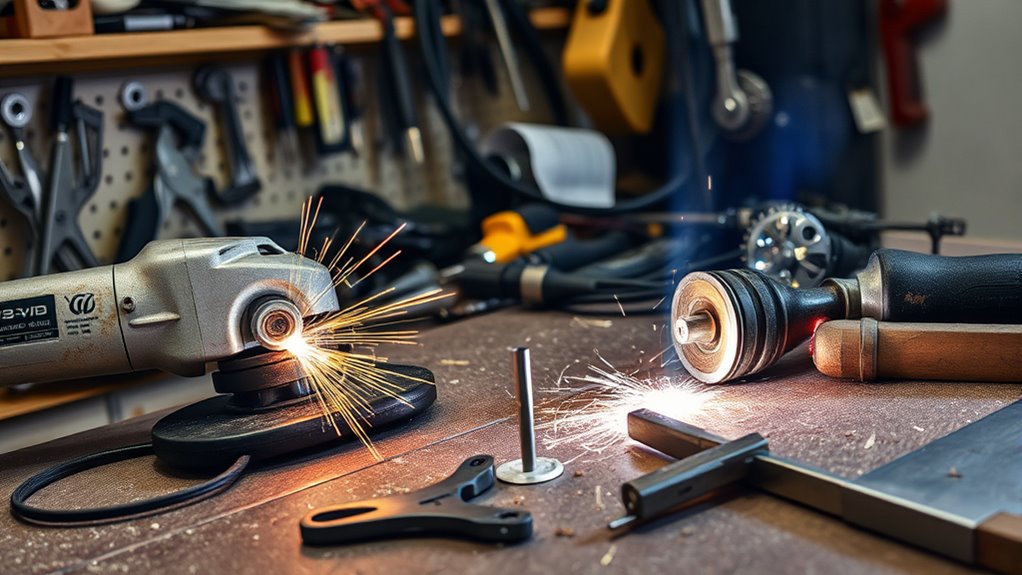
Have you ever considered trying metalworking at home? It’s a rewarding skill that allows you to create custom pieces, repair furniture, or even craft art. Before diving in, it’s essential to understand some foundational aspects, especially welding safety and metal finishing techniques. These are critical for both your safety and the quality of your work. Welding safety isn’t just about wearing the right gear; it’s about understanding the risks of sparks, fumes, and intense heat. Always wear a welding helmet with a proper shade, gloves, and protective clothing to shield your skin from burns and UV radiation. Ensure your workspace is well-ventilated to avoid inhaling harmful fumes, and keep a fire extinguisher nearby in case of emergencies. Never weld near flammable materials, and double-check your equipment for any damage before starting a project. These precautions will keep you safe while you learn and experiment. Incorporating modern nanotechnology techniques can also enhance your metalworking projects by improving material properties and finishes.
Once you’re comfortable with safety, focus on mastering metal finishing techniques. After cutting, grinding, or drilling your metal, the surface might be rough or uneven. Metal finishing techniques transform raw, rough edges into smooth, polished surfaces. You can start with simple sanding using coarse grit sandpaper, then move to finer grits for a sleek finish. For a more professional look, consider using a wire brush or a polishing wheel on a drill to remove rust and surface imperfections. Applying a metal primer and paint can also protect your work from corrosion and give it a finished appearance. Take your time with each step—rushing can damage the surface or leave unwanted scratches. Proper finishing not only improves the visual appeal but also enhances the durability of your projects.

DEWALT Angle Grinder, One-Touch Guard, 4-1/2 -Inch (DWE4011)
- Motor Power: 7 amp, 12,000 rpm motor
- Overload Protection: Designed for higher overload protection
- Guard Adjustment: One-Touch guard for quick adjustments
As an affiliate, we earn on qualifying purchases.
As an affiliate, we earn on qualifying purchases.
Frequently Asked Questions
What Safety Gear Is Essential for Home Metalworking?
You need essential safety gear like protective clothing and eye protection when working with metal at home. Wear long sleeves, gloves, and sturdy pants to shield your skin from hot sparks and sharp pieces. Always use safety goggles or glasses to protect your eyes from flying debris and sparks. This gear helps prevent injuries, keeps you safe, and allows you to focus on your project with confidence.
How Do I Choose the Right Cutting Tool for Different Metals?
To choose the right cutting tool, consider material hardness, cutting precision, and the type of metal you’re working with. Softer metals like aluminum require less aggressive blades, while harder metals like stainless steel need durable, high-speed steel or carbide tools. Match the tool to your project’s needs by evaluating the metal’s hardness and the desired precision, ensuring clean cuts and efficient work. This approach guarantees safe, effective, and precise metalworking at home.
Can I Perform Detailed Metal Engraving at Home?
Yes, you can perform detailed metal engraving at home. Use engraving techniques like hand engraving or rotary tools for precision. Start with simple designs and gradually work on more complex patterns. Follow detailed design tips such as sketching your pattern first and practicing on scrap metal. Patience and steady hands are key. With the right tools and techniques, you can create intricate, professional-looking engravings right in your workspace.
What Maintenance Do Home Metalworking Tools Require?
To keep your home metalworking tools in top shape, regularly perform tool lubrication to prevent rust and guarantee smooth operation. You should also sharpen blades frequently to maintain cutting efficiency. Check for wear and tear, clean tools after each use, and store them properly. Proper maintenance reduces downtime, extends their lifespan, and keeps your projects precise. Consistent care makes your tools more reliable and your work more enjoyable.
How Do I Prevent Metal Warping During Cutting and Grinding?
Don’t let your project go up in smoke! To prevent metal warping during cutting and grinding, use effective cooling techniques like water or coolant to keep the metal from overheating. Also, clamp your workpiece securely with proper clamping methods to maintain stability and even pressure. These steps help distribute heat evenly and minimize deformation, ensuring your metal stays true to shape and your work remains precise and professional.

DEWALT Drill Bit Set, 3-Flats Shank,14-Piece, 135 Degree Split Point, for Plastic, Wood and Metal (DWA1184)
- Split point tip: Reduces walking during drilling
- Material: High Speed Steel for versatile use
- Durability: Tapered web design resists breakage
As an affiliate, we earn on qualifying purchases.
As an affiliate, we earn on qualifying purchases.
Conclusion
Now that you know the essential tools for cutting, grinding, and drilling metal, you’re ready to start your DIY projects. Did you know that the global metalworking tools market is projected to reach over $75 billion by 2027? With the right equipment and safety precautions, you can confidently tackle metalworking tasks at home. So, grab your tools, stay safe, and turn your creative ideas into reality—your next project is just a cut, grind, or drill away!
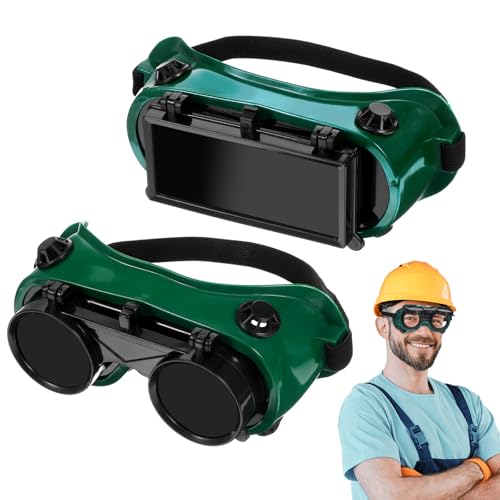
Zerodeko 2pcs Industrial Welding Goggles Flip-up Safety Glasses with Impact-resistant Lenses for Welder Eye Protection, Dustproof Welding Gear Suitable for Metalworking and Fabrication
- Protection Against Radiation and Splashes: Comprehensive safety for welders
- Durable and Practical Design: Reasonable structure for convenience
- Comfortable Fit: Soft frame with adjustable headband
As an affiliate, we earn on qualifying purchases.
As an affiliate, we earn on qualifying purchases.

50PCS Sanding Sticks, Premium Double End Sanding Twigs, 120/280 Grit
- Number of Sanding Sticks: 50 premium sanding sticks included
- Double-End Design: 120/280 grit for coarse and fine sanding
- Color Coding: Black for coarse, grey for fine
As an affiliate, we earn on qualifying purchases.
As an affiliate, we earn on qualifying purchases.