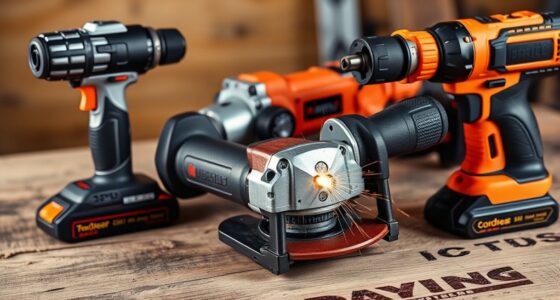
Dremel and rotary tools are small but mighty, perfect for a wide range of projects like engraving jewelry, carving wood, polishing surfaces, or even repairing household items. You can customize your crafts or tackle DIY tasks with ease by selecting the right bit and speed. With proper safety practices, these tools turn creative ideas into reality efficiently. Curious how to get the most out of your rotary tool? Keep exploring for expert tips and tricks.
Key Takeaways
- Dremel and rotary tools excel in detailed craft projects like jewelry making, engraving, and custom home décor.
- They are versatile for small repairs, carving, grinding, polishing, and shaping across various materials.
- Proper safety measures and technique ensure precise results and prevent injuries during intricate tasks.
- Selecting the right bit and speed enhances project quality, whether working with wood, metal, or plastic.
- Regular maintenance and practice improve control, leading to professional-looking DIY or craft outcomes.
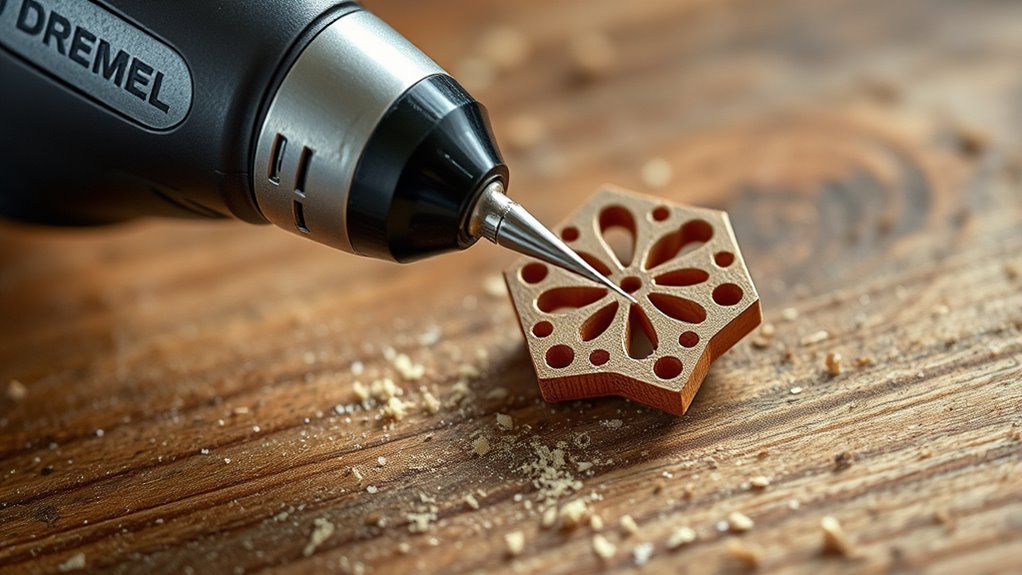
Dremel and rotary tools are versatile gadgets that can turn your creative ideas into reality. Whether you’re customizing jewelry, personalizing home décor, or tackling DIY projects, these tools are your reliable companions. One of the most popular uses is engraving, which allows you to add intricate designs or personalized messages to various surfaces. When exploring engraving techniques, it’s essential to start with a steady hand and choose the right bit for your material. For wood, you might opt for a fine-point engraving bit, while metal surfaces require a different, more durable tip. Practicing on scrap material helps you get a feel for the tool’s speed and pressure, ensuring cleaner, more precise results. Remember, mastering engraving isn’t just about technique; safety precautions play a crucial role in keeping your project smooth and injury-free. Always wear eye protection, as debris can fly up unexpectedly, and consider dust masks or respirators when working with materials that create fine particles. Secure your workpiece firmly to prevent slipping, and keep your hands away from spinning bits to avoid accidental cuts or punctures. Using the correct speed setting is equally important—higher speeds are suitable for detailed work, but slower settings provide better control and reduce the risk of slipping or damaging your surface.
Before you start, read the tool’s manual thoroughly and ensure all attachments are properly secured. If you’re working on delicate or valuable items, use masking tape or painter’s tape to create guidelines and protect areas you don’t want to engrave. Good lighting is also vital; it helps you see your work clearly and avoid mistakes. Take your time—rushing can lead to slips or uneven engraving. Keep a steady hand, and don’t press too hard; let the tool do the work. If you’re new to engraving, practice basic patterns first, then gradually move on to more complex designs. Remember, patience and precision yield better results than rushing through your project. Additionally, understanding the water chemistry involved in cleaning or finishing your project can help preserve your engraved designs over time.
Frequently Asked Questions
What Safety Gear Is Recommended When Using a Dremel?
When using a Dremel, you should always wear protective eyewear to shield your eyes from debris and dust masks to prevent inhaling dust particles. These safety gears safeguard you from potential hazards during grinding, cutting, or sanding. Always verify your protective gear fits well and is in good condition. By taking these precautions, you keep yourself safe and can focus on your project with confidence.
Can Rotary Tools Be Used for Metal Engraving?
Imagine carving delicate patterns into metal, and yes, you can use rotary tools for metal engraving. They excel with metal engraving techniques, especially when paired with the right rotary tool accessories like engraving bits. These tools give you precision and control, allowing you to create intricate designs. Just remember to wear safety gear, work in a well-ventilated area, and take your time to achieve professional-looking results.
How Do I Choose the Right Attachment for My Project?
When choosing the right attachment for your project, focus on compatibility and the specific task. Check the attachment selection to guarantee it fits your rotary tool model and suits your project needs. Consider your material, whether it’s wood, metal, or plastic, and pick an attachment designed for that purpose. By matching your attachment to your project requirements, you’ll achieve better results and work more efficiently.
What Is the Maintenance Routine for a Rotary Tool?
Think of your rotary tool as a well-tuned orchestra. You should regularly clean dust collection ports to prevent buildup, lubricate moving parts to keep everything flowing smoothly, and check for wear or damage. After each use, wipe down the tool, remove dust, and make sure parts are properly lubricated. This routine keeps your tool humming along efficiently, extending its life and ensuring it performs at its best every time you pick it up.
Are Dremel Tools Suitable for Beginners?
Yes, Dremel tools are great for beginners. They’re easy to handle, versatile, and come with user-friendly features. To get started, follow beginner tips like choosing the right attachments and practicing on scrap materials. When selecting a tool, consider your project needs and comfort. With proper tool selection and a bit of practice, you’ll find Dremel tools are a small but mighty addition to your DIY toolkit, perfect for honing your skills.
Conclusion
With a Dremel or rotary tool in your hands, you’re like a tiny but mighty craftsman, capable of transforming small ideas into stunning realities. I once watched a friend bring a worn-out coin back to life with just a few seconds of polishing—proof that even the smallest tool can make a big difference. So, don’t underestimate your power—your creativity and a little bit of grit can turn tiny projects into masterpieces. Keep forging ahead!