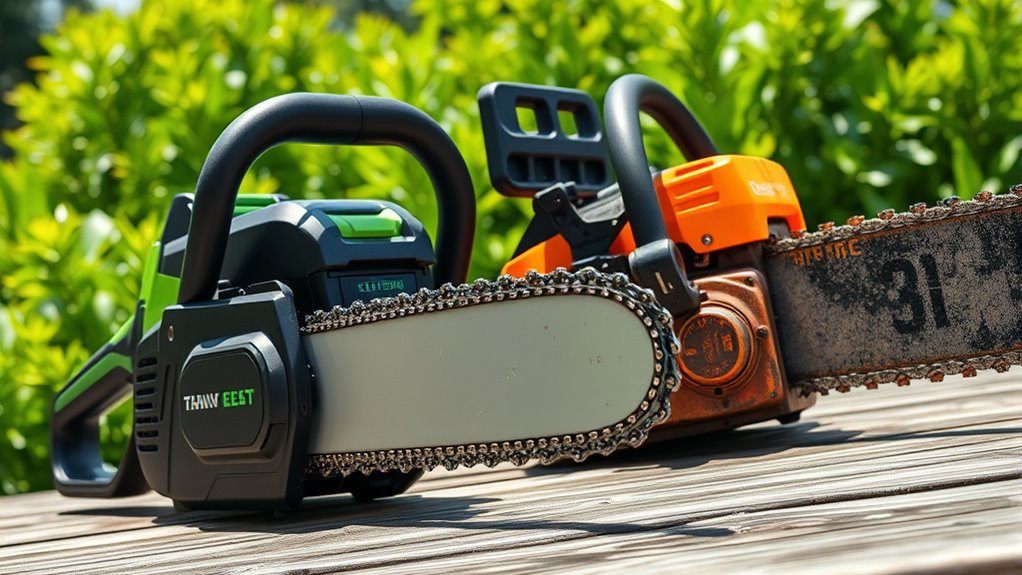

Choosing between electric and gas chainsaws depends on your needs. If you want a lightweight, easy-to-start tool for quick tasks and less noise, an electric chainsaw is ideal. For heavy-duty projects like felling large trees, a gas model provides more power and longer run time. Consider safety, maintenance, and environmental impact too. To find out which suits your home projects best, explore these points further.

Get business pricing on tools and workshop supplies
- Business-only prices and quantity discounts
- Tax-exempt purchasing
- Multiple users, one account, clear invoices
Key Takeaways
- Electric chainsaws are ideal for small to medium residential tasks due to their lightweight, ease of use, and quick startup.
- Gas chainsaws provide more power and longer run times, suitable for heavy-duty, large-scale projects like felling big trees.
- Electric models are environmentally friendly, produce less noise, and require less maintenance, making them better for eco-conscious homeowners.
- Gas chainsaws have higher initial costs and ongoing fuel expenses but are more suitable for extensive, demanding jobs.
- Choose electric if you prioritize convenience, safety, and lower long-term costs; opt for gas for raw power and longer operation.
As an affiliate, we earn on qualifying purchases.
Power and Performance Comparison
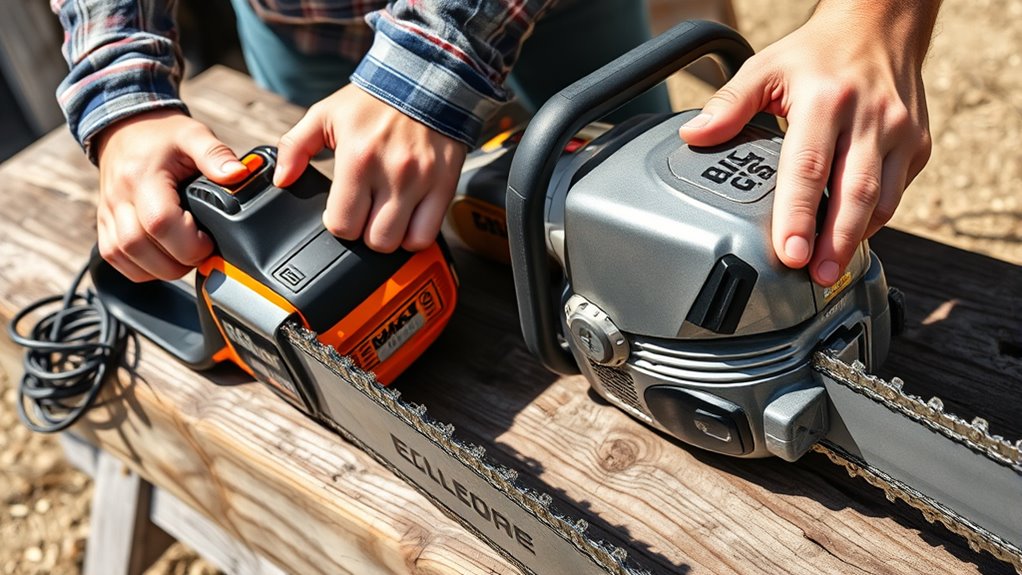
When it comes to power and performance, electric chainsaws often provide ample cutting ability for most residential tasks, but gas chainsaws generally deliver more raw power for heavy-duty jobs. Electric models typically have a shorter battery life, so you’ll need to plan your work accordingly, especially for larger projects. They excel in fuel efficiency, running on electricity instead of fuel, which saves you money and reduces emissions. Gas chainsaws, on the other hand, offer superior raw power and longer run times, making them ideal for demanding tasks like felling large trees or cutting thick logs. While gas models require refueling and maintenance, they provide consistent performance over extended periods. Your choice depends on whether you prioritize sustained power or efficiency and convenience. Understanding vehicle tech can help you make more informed decisions about your equipment. Additionally, considering power-to-weight ratio can help evaluate how manageable each type is during prolonged use. For homeowners tackling varied projects, assessing motor type can further guide the optimal choice between electric and gas options. Evaluating tool ergonomics also plays a crucial role in ensuring comfort and safety during extended operation. Moreover, the emissions impact of each type may influence your decision if environmental considerations are important to you.
gas chainsaw for heavy-duty projects
As an affiliate, we earn on qualifying purchases.
As an affiliate, we earn on qualifying purchases.
Ease of Use and Portability
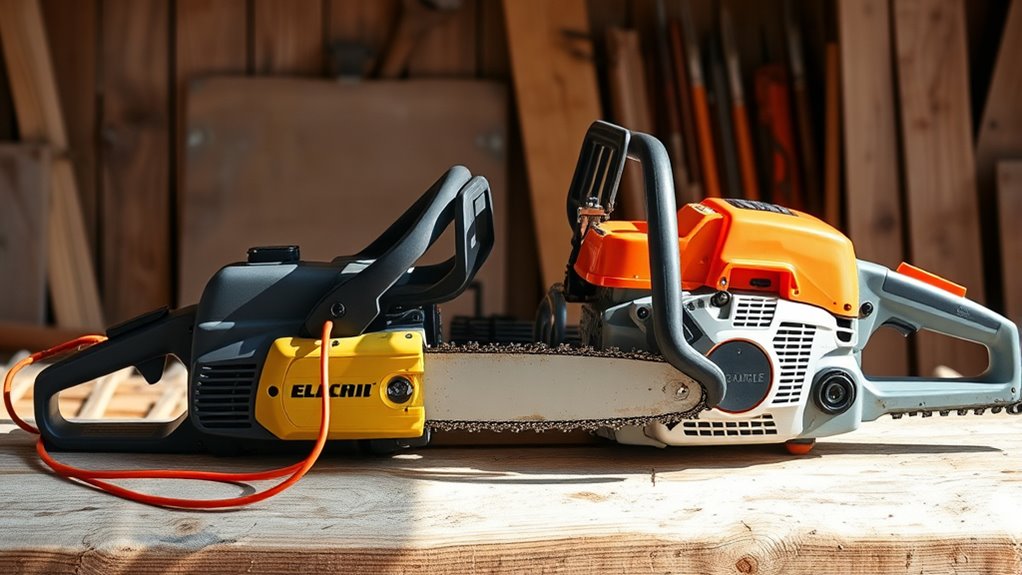
When it comes to ease of use and portability, electric chainsaws often feel lighter and more manageable in your hands. You’ll appreciate the cordless design, which lets you move freely without worrying about cords or fuel. Plus, their simple start-up means you can get to work quickly without fiddling with pull cords or gas mixes. Additionally, their compact size makes them ideal for maneuvering in tight spaces around your property. Many models also feature ergonomic handles, which reduce fatigue during extended use, enhancing overall control and comfort.
Lightweight Handling
Lightweight handling is a key factor to contemplate when choosing between electric and gas chainsaws, as it directly affects ease of use and portability. Electric chainsaws tend to be lighter due to their compact design and lack of heavy engine components, making them easier to maneuver for extended periods. Their ergonomic design minimizes fatigue, allowing you to work longer without discomfort. Battery efficiency also plays a role, as modern batteries are lightweight yet powerful enough to handle typical pruning tasks, contributing to overall portability. In addition, electric chainsaws often feature simpler maintenance, which reduces downtime and makes them more convenient for homeowners. Electric models also benefit from advanced battery technology, which enhances their power-to-weight ratio and extends usage time. Innovations in battery design continue to improve efficiency and weight, making electric chainsaws an even more user-friendly option. In contrast, gas chainsaws often weigh more because of their engine and fuel tank, which can make handling more challenging, especially for prolonged use. Prioritizing lightweight handling guarantees safer, more comfortable operation and easier transport around your property.
Cordless Convenience
Ever wondered which chainsaw offers greater convenience for your tasks? Cordless chainsaws excel in portability, letting you move freely without cords or fuel. Their battery life varies, affecting how long you can work before recharging. Charging times can range from 30 minutes to several hours, so planning ahead is key. Imagine holding a lightweight tool, ready to trim or cut anywhere. Here’s a quick visual:
| Feature | Electric Chainsaw | Gas Chainsaw |
|---|---|---|
| Battery Life | 30 min – 2 hrs | N/A |
| Charging Times | 30 min – 2 hrs | N/A |
| Portability | High | Moderate |
This table illustrates how cordless convenience offers quick, easy use, perfect for home projects. Battery management plays a crucial role in maximizing the effectiveness of cordless chainsaws, ensuring you can complete your tasks efficiently. Additionally, advancements in battery technology continue to extend operational times, making cordless options increasingly viable for larger jobs. Proper maintenance practices can also help prolong battery life and performance, further enhancing cordless chainsaw usability.
Easy Start-Up
Ease of start-up is a key factor that makes a chainsaw more user-friendly. When choosing between electric and gas models, consider how simple it is to get the saw running. Electric chainsaws typically start with the push of a button, making them convenient for quick tasks. To maximize ease, keep these points in mind:
- Ensure your electric saw has good battery life for longer projects without interruptions.
- Regularly check and maintain chain lubrication to prevent overheating and wear.
- Look for models with a clear, accessible oil reservoir for quick refills.
- Choose lightweight designs for better portability and less fatigue during use.
- Utilizing professional equipment can ensure optimal performance and safety during operation.
- Also, consider the ease of maintenance, as simpler maintenance routines can significantly reduce setup time and improve overall usability. Additionally, selecting a model with easy access components can streamline routine checks and repairs, saving you time and effort.
These features make start-up smoother and help you work more efficiently without hassle.
As an affiliate, we earn on qualifying purchases.
Noise Levels and Environmental Impact
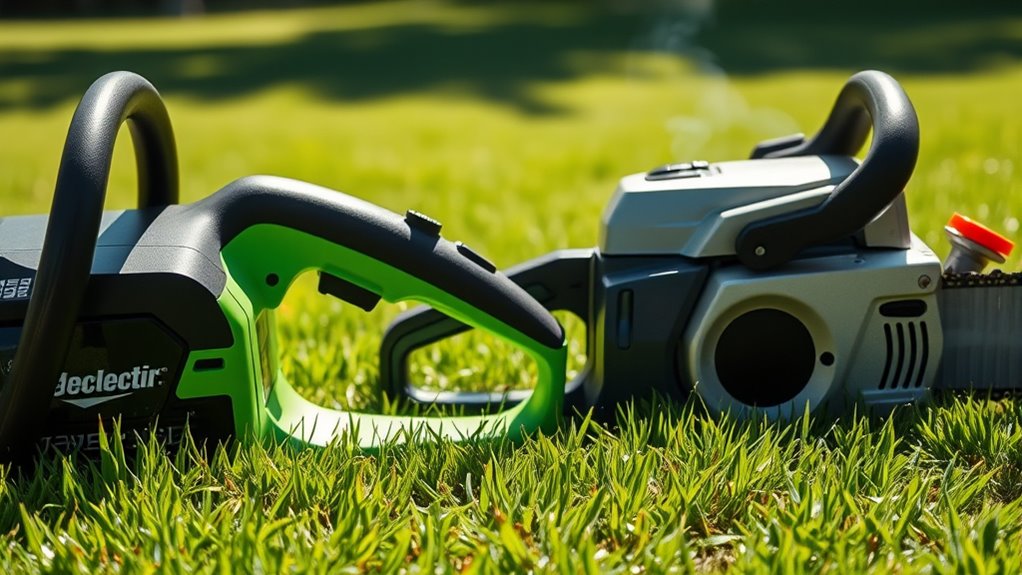
When comparing noise levels, electric chainsaws generally operate more quietly than their gas-powered counterparts, making them less disruptive in residential areas. This reduction in noise pollution benefits your neighbors and creates a more peaceful environment. Additionally, electric chainsaws have a smaller ecological footprint—they produce no direct emissions, which helps reduce air pollution. Gas chainsaws, on the other hand, release fumes that contribute to environmental harm and worsen air quality. By choosing an electric model, you’re not only minimizing noise disturbance but also taking a step toward a cleaner, greener environment. This makes electric chainsaws an eco-friendlier option for homeowners concerned about their impact on the planet and their community’s well-being. Furthermore, electric chainsaws tend to require less maintenance, reducing the need for chemical fuel additives and lowering the overall environmental impact. They also typically have a simpler maintenance routine, making them more convenient for homeowners who prefer straightforward upkeep. Additionally, electric models often feature quieter operation, which enhances their suitability for use in noise-sensitive areas. Moreover, electric chainsaws often have faster startup times, making them more efficient for quick jobs around the yard.
best electric chainsaw for small trees
As an affiliate, we earn on qualifying purchases.
As an affiliate, we earn on qualifying purchases.
Maintenance and Operating Costs
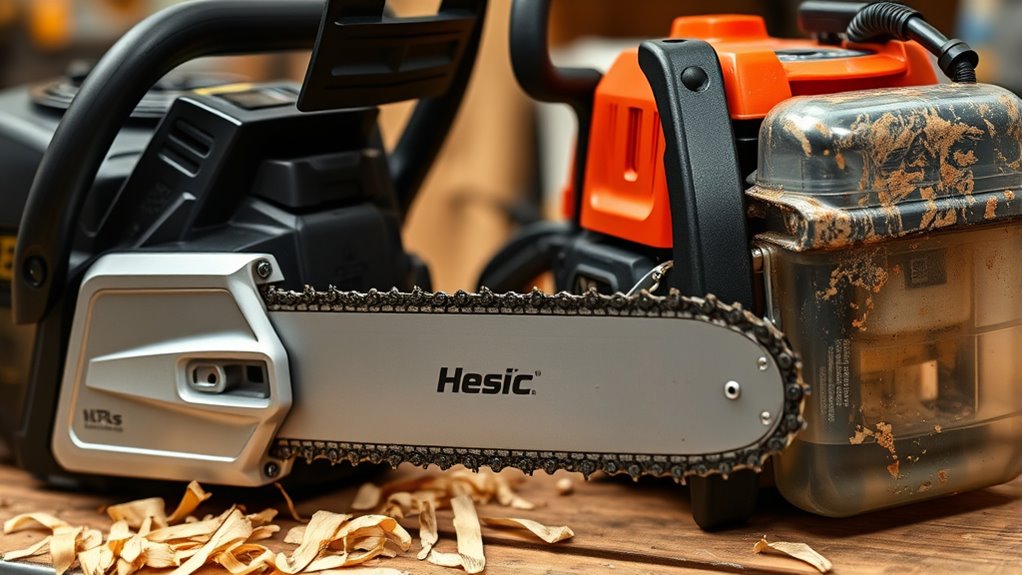
When comparing electric and gas chainsaws, you’ll notice differences in initial purchase expenses and ongoing costs. Electric models often cost less upfront and have lower maintenance, while gas saws might require more frequent repairs and fuel. Understanding these costs helps you choose the option that fits your budget and maintenance preferences. Additionally, considering sound therapy techniques can be beneficial for users with auditory sensitivities related to noise levels from different saw types. Incorporating cost analysis comparisons can further clarify long-term expenses associated with each type of chainsaw. Evaluating maintenance requirements can also influence your decision based on how much time and effort you’re willing to invest in upkeep. Moreover, examining energy consumption can provide insights into the environmental impact and operational efficiency of each type. Recognizing the market availability of replacement parts and accessories can also affect long-term maintenance and operational costs.
Initial Purchase Expenses
Electric chainsaws typically have a higher upfront cost than gas models, but their lower maintenance and operating expenses can offset this initial investment over time. When considering initial purchase expenses, think about these factors:
- Battery life: A longer-lasting battery may cost more upfront but ensures extended use without frequent replacements.
- Storage requirements: Electric models often need a dedicated space for charging and storing batteries, which could add to your initial setup.
- Purchase price: Electric chainsaws generally cost more initially but save money on fuel and oil.
- Accessories and extras: Consider if you’ll need additional batteries or chargers, which can increase the overall upfront cost.
Ongoing Maintenance Costs
Ongoing maintenance costs for electric chainsaws are generally lower than those for gas models, thanks to fewer moving parts and less frequent servicing. With electric models, you mainly need to monitor the battery lifespan and replace the battery when it starts losing its ability to hold a charge. Batteries tend to last several years with proper care, which keeps replacement costs manageable. Unlike gas chainsaws, electric versions don’t require oil changes, spark plug replacements, or carburetor servicing, reducing overall expenses. When parts like blades or chains wear out, replacements are straightforward and usually less costly than repairing or replacing components of gas-powered units. Overall, electric chainsaws offer a simpler, more predictable maintenance routine, helping you save money over the long run.
Fuel and Power Expenses
Fuel and power expenses play a significant role in the overall cost of operating a chainsaw. For gas models, fuel efficiency varies depending on engine size and usage, which affects long-term costs. Electric chainsaws, on the other hand, typically have lower energy costs and require less maintenance. When contemplating emissions comparison, electric saws produce zero emissions, making them more eco-friendly and cheaper to operate over time. Here are some key points to consider:
- Gas chainsaws often have higher fuel costs due to inefficiencies.
- Electric chainsaws benefit from lower energy costs and fewer maintenance needs.
- Fuel efficiency impacts ongoing expenses for gas models.
- Emissions comparison favors electric saws, reducing environmental costs.
Choosing based on these factors can help you save money and reduce your environmental footprint.
Safety Features and Considerations

Safety features are crucial for preventing accidents and ensuring confident operation when using chainsaws. For electric models, battery safety is a priority—look for features like thermal overload protection and secure battery compartments to prevent overheating or fires. Gas chainsaws, on the other hand, should include gas leak prevention mechanisms, such as sealed fuel caps and secure fuel lines, to minimize the risk of leaks and fires. Both types benefit from safety switches that require intentional engagement before operation, reducing accidental starts. Chain brakes are essential for halting the chain instantly if kickback occurs. Additionally, handguards and ergonomic designs help protect your hands and improve control. Considering these safety features ensures you operate your chainsaw more confidently and reduces the risk of injury.
Suitability for Different Home Projects
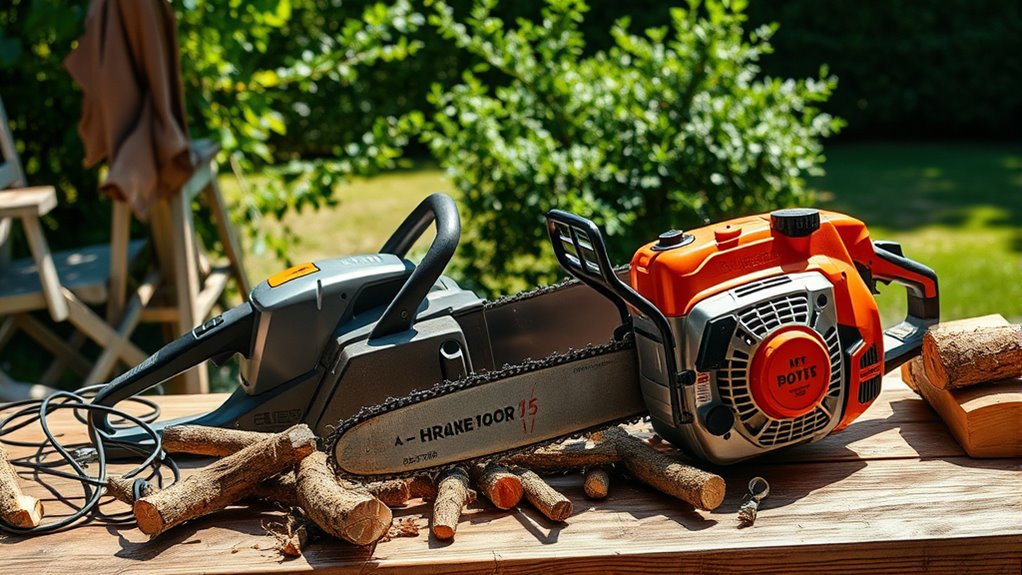
Choosing the right chainsaw depends on the specific projects you plan to tackle around your home. For tasks like tree pruning or landscaping enhancements, your choice matters. An electric chainsaw is ideal for smaller jobs, such as trimming branches or shaping bushes, thanks to its lightweight design and easy handling. Gas chainsaws, on the other hand, excel for larger projects, like felling trees or extensive cutting. Consider these:
- Light duty tasks (pruning, small branches)
- Heavy-duty projects (large tree removal)
- Precision work (landscaping details)
- Portability needs (moving around your yard)
Matching your project scope with the chainsaw’s power and size ensures efficiency and safety. Pick the right tool for each job to get the best results around your home.
Long-Term Value and Investment
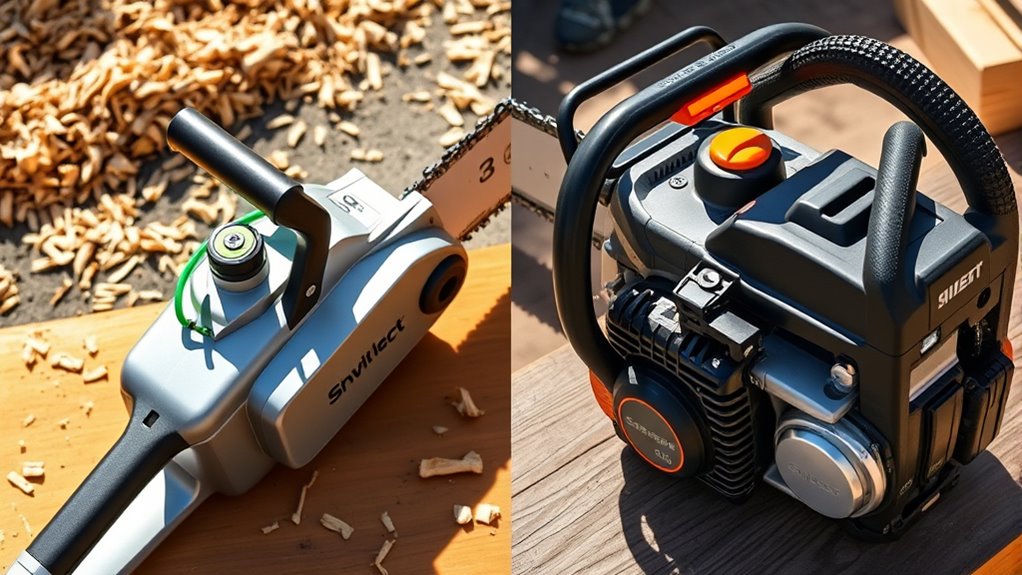
When evaluating the long-term value of electric versus gas chainsaws, consider how each tool fits into your ongoing yard maintenance budget and needs. Electric chainsaws typically offer lower upfront costs and require less maintenance, making them cost-effective over time. Their battery life is a key factor—if you need to run multiple projects, verify the battery can handle extended use or consider models with interchangeable batteries. Gas chainsaws usually have longer-lasting power and are better for heavy-duty tasks, but they often come with higher maintenance costs and expenses for fuel. Warranty coverage also plays a vital role; a thorough warranty can protect your investment against unexpected repairs, adding to the long-term value of your chosen chainsaw.
Frequently Asked Questions
How Do Electric and Gas Chainsaws Compare in Weight?
You’ll find electric chainsaws generally weigh less than gas models because their battery weight is lighter than a gas engine’s motor weight. Electric tools are more compact and easier to handle, making them ideal for quick, small tasks. Gas chainsaws tend to be heavier due to their larger motor and fuel tank, which can cause fatigue over extended use. If weight matters, electric chainsaws are a more comfortable choice.
Are Electric Chainsaws Suitable for Heavy-Duty Tree Cutting?
Electric chainsaws are generally not suitable for heavy-duty tree cutting because their battery life limits runtime, and they may struggle with thick, tough wood. You might find them convenient for small to medium tasks, but for larger jobs, gas chainsaws are better due to their more powerful engines. Plus, electric models tend to have lower noise levels, making them more pleasant to use in residential areas.
What Are the Storage Requirements for Each Type?
Did you know electric chainsaws are 50% easier to store than gas models? For electric saws, you should keep the battery in a cool, dry place, ideally at around 50% charge, and avoid extreme temperatures. Gas chainsaws require secure fuel storage in approved containers, stored upright in a well-ventilated area away from heat sources. Proper storage maintains the tool’s lifespan and ensures safety.
Can Electric Chainsaws Operate Effectively in Cold Weather?
Electric chainsaws can operate in cold weather, but cold temperatures may affect battery longevity and performance. You might notice shorter run times or slower cutting power as batteries struggle in low temperatures. To guarantee effectiveness, keep batteries warm when not in use and store your chainsaw in a heated area. Regularly check the battery and be prepared for temporary power reductions during very cold conditions.
How Do Replacement Parts Availability Differ Between the Two?
Think of replacement parts as the lifeblood of your chainsaw’s health. Electric chainsaws generally offer easier repair accessibility and more readily available replacement parts, making maintenance costs lower. Gas chainsaws, like rugged old engines, may have parts that take longer to find and cost more. You feel confident knowing that with electric models, you’re less likely to face delays or hefty expenses when fixing or maintaining your tool.
Conclusion
Ultimately, choosing between an electric and gas chainsaw depends on your specific needs. If you’re tackling small to medium projects around your home, an electric model offers convenience and quiet operation—perfect for a suburban yard. For larger or more demanding jobs, a gas chainsaw provides the power and endurance you need. For example, Sarah’s weekend tree trimming became easier with her electric saw, proving that the right choice can make all the difference in your home projects.
Fall Picks
fall essentials
As an affiliate, we earn on qualifying purchases.