A jigsaw is a lightweight, precise tool perfect for intricate cuts in wood, metal, or plastic, thanks to adjustable blades and variable speeds. In contrast, a reciprocating saw is heavier and more durable, designed for rough demolition projects like pruning or cutting drywall. If you want detailed control and versatility, a jigsaw suits your needs. For tough, large tasks, a reciprocating saw works best. Continue exploring to see which tool fits your DIY projects perfectly.

Get business pricing on tools and workshop supplies
- Business-only prices and quantity discounts
- Tax-exempt purchasing
- Multiple users, one account, clear invoices
Key Takeaways
- Jigsaws offer precise, intricate cuts suitable for detailed DIY projects, while reciprocating saws excel at rough demolition tasks.
- Jigsaws support a variety of blades and adjustable speeds for versatility in different materials.
- Reciprocating saws are more robust and durable, ideal for heavy-duty tasks like pruning or drywall removal.
- Jigsaws are generally lighter and easier to maneuver in tight spaces compared to bulkier reciprocating saws.
- Power source options differ: cordless jigsaws provide portability; corded reciprocating saws offer continuous power for demanding projects.
cordless jigsaw for DIY projects
As an affiliate, we earn on qualifying purchases.
As an affiliate, we earn on qualifying purchases.
Design and Construction
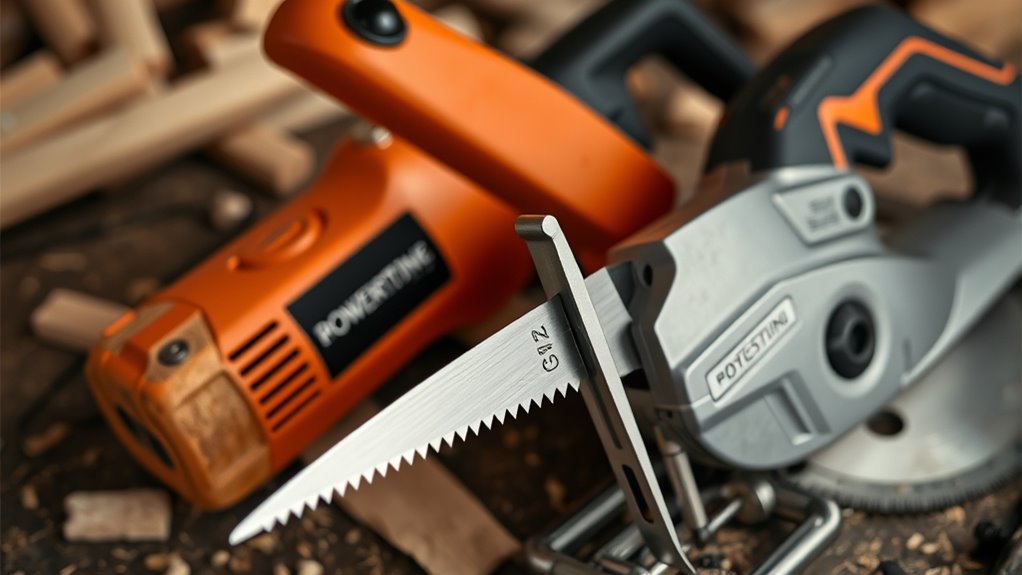
When it comes to design and construction, jigsaws and reciprocating saws differ markedly in their build and intended use. Jigsaws feature a compact, lightweight body with a curved handle that emphasizes ergonomic design, making them comfortable for detailed cuts. They typically support a wide range of blade compatibility, allowing you to switch blades for different materials and cut types. In contrast, reciprocating saws have a more robust, heavy-duty construction, often with a pistol grip that provides power and control for rough demolition tasks. Their build prioritizes durability over finesse. While jigsaws excel in precision, their ergonomic design reduces fatigue during intricate work. Conversely, reciprocating saws are built for strength, with blade compatibility suited for tougher materials, but they’re less focused on comfort during prolonged use. Design and construction also influences how well each tool handles extended projects and varying work environments. Additionally, understanding the material compatibility of each tool ensures optimal performance across different DIY tasks. A good ergonomic design can also help minimize strain during prolonged use, further improving efficiency. Moreover, selecting the appropriate tool based on project scope can significantly improve efficiency and results. Furthermore, considering the power source can impact portability and convenience for different tasks.
reciprocating saw for demolition
As an affiliate, we earn on qualifying purchases.
As an affiliate, we earn on qualifying purchases.
Cutting Capabilities and Applications
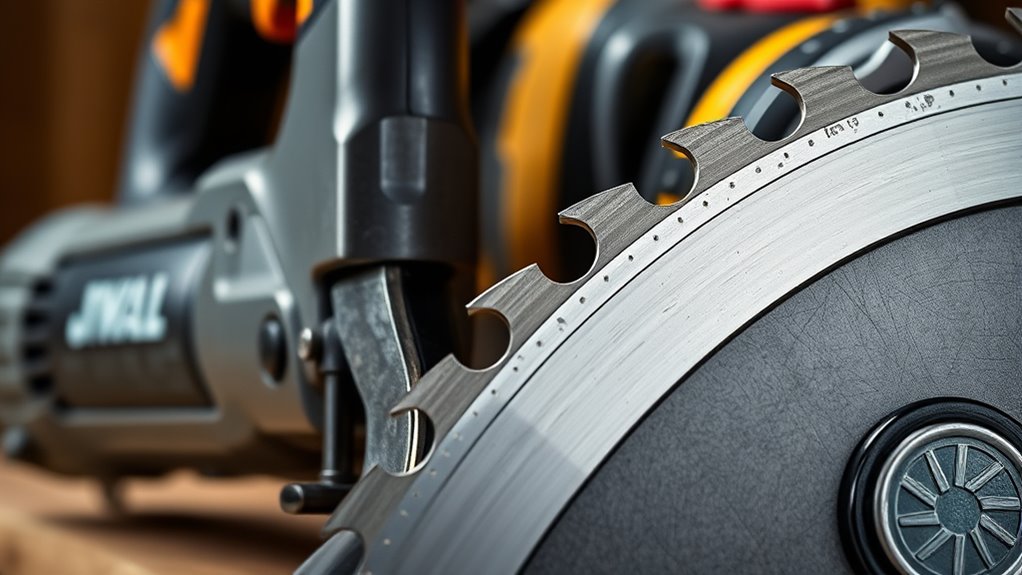
Jigsaws excel at making precise, intricate cuts in a variety of materials, including wood, metal, and plastic, thanks to their adjustable blades and variable speed settings. You can choose from different blade types, such as straight, scroll, or oscillating blades, depending on the project’s needs. This versatility allows you to handle detailed curves, straight cuts, or beveled edges with ease. Safety features like blade guards, trigger locks, and anti-vibration handles help protect you during operation, reducing the risk of accidents. Reciprocating saws, on the other hand, are better suited for rough cuts, demolition, and larger materials. They excel in tearing through wood, metal, or drywall quickly, but lack the finesse and safety options that make jigsaws ideal for precision work and delicate applications. Additionally, the power source of each tool can influence their suitability for different projects—cordless models offer portability, while corded tools provide continuous power for extended use.
As an affiliate, we earn on qualifying purchases.
Power and Speed Settings
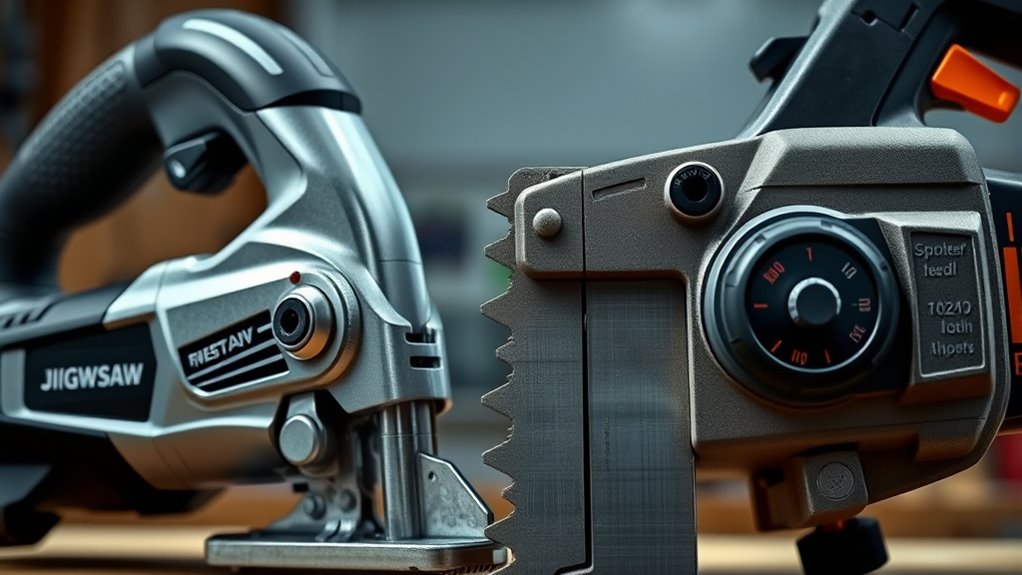
Power and speed settings play a crucial role in optimizing the performance of both jigsaws and reciprocating saws. Adjusting these settings allows you to match blade compatibility to your task, ensuring cleaner cuts and less wear on your tools. For example, higher speeds are ideal for quick cuts through softer materials, while lower speeds provide better control for delicate or precise work. Keep in mind that increased power and speed often lead to higher noise levels, which can be uncomfortable during extended use. Many models feature variable speed controls, so you can fine-tune the tool’s performance based on your project’s requirements. Properly managing power and speed ensures efficient, safe operation and helps prolong the lifespan of your blades and saws. Additionally, understanding the impact of power and speed settings on your cutting accuracy can help you achieve more professional results. Being aware of cutting speed and how it affects material control is essential for achieving precise and safe cuts.
As an affiliate, we earn on qualifying purchases.
Maneuverability and Ease of Use
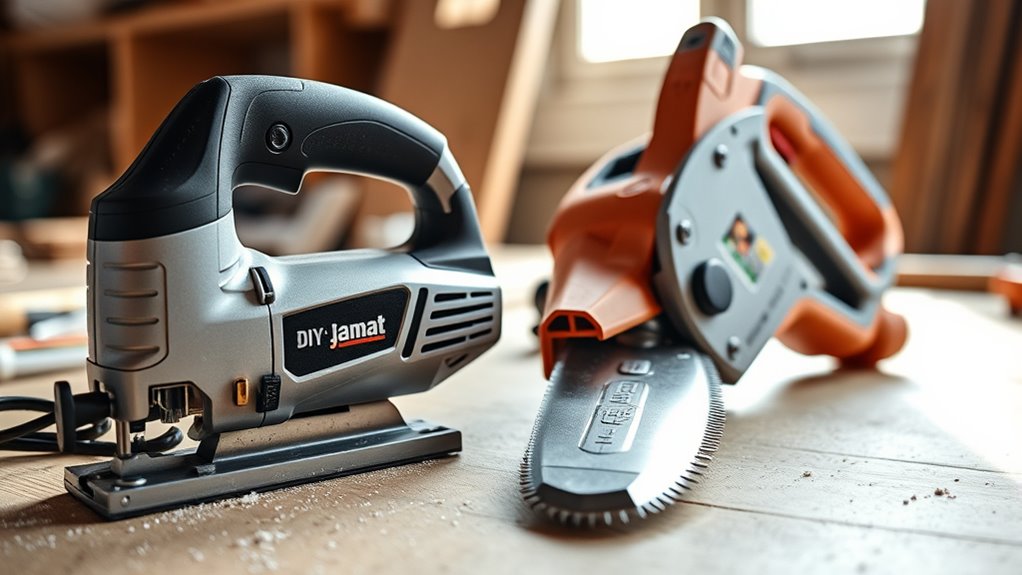
Maneuverability and ease of use substantially impact how comfortably and efficiently you can handle these tools. Good ergonomics and user comfort are essential, especially during longer projects. To compare:
- Jigsaws often feature ergonomic handles designed for precise control, reducing fatigue.
- Reciprocating saws tend to be bulkier, which can make tight corners or detailed cuts more challenging.
- Jigsaws typically have adjustable speed controls that enhance user comfort and accuracy.
- Reciprocating saws, while powerful, may require more effort to maneuver due to their weight and size.
- The user interface of each tool influences how intuitive and straightforward they are to operate, affecting overall maneuverability.
- Additionally, tool weight can significantly influence how easily the tool can be controlled during intricate tasks, impacting overall ease of use.
- Understanding ergonomic design principles helps users select tools that minimize strain and maximize comfort during extended use.
- Considering performance features such as vibration control and grip texture can further improve handling and reduce fatigue during prolonged use.
- Incorporating ergonomic considerations into your selection process ensures better control and less physical strain during demanding projects.
Understanding these factors helps you choose the right tool for comfortable, efficient operation, ensuring your DIY projects are both manageable and enjoyable.
Common Projects and Best Uses
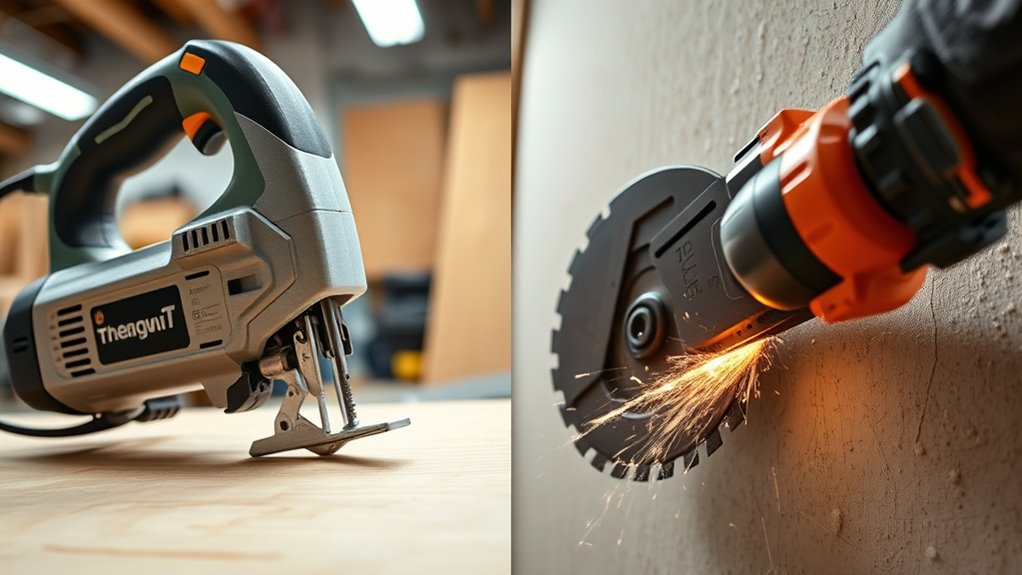
Both jigsaws and reciprocating saws excel in different projects based on their design and capabilities. Jigsaws are ideal for detailed cuts in wood, metal, and plastic, especially with various blade types like fine-tooth blades for precision or rough-cut blades for faster work. They are perfect for making curved or intricate designs. A new sentence with blade versatility and the rest of the sentence. The adjustable speed controls on jigsaws facilitate precise control for delicate work, enhancing their versatility. Additionally, blade compatibility of jigsaws allows for a wide range of materials and project requirements. Their compact size makes them easy to handle for detailed tasks in tight spaces. Reciprocating saws, on the other hand, are best suited for demolition, pruning, and rough cuts in framing or drywall, thanks to their powerful, aggressive action. When choosing a tool, consider safety features like blade guards and lock-off switches to prevent accidents. Reciprocating saws often include anti-vibration features for comfort during heavy-duty tasks. Matching your project needs with these strengths for ideal results can help ensure safety and efficiency, especially considering the different operation styles of each tool.
Frequently Asked Questions
Which Saw Is Safer for Novice Users?
A jigsaw is generally safer for novice users because it has more safety features like blade guards and a slower start, reducing the risk of accidents. Plus, its user familiarity makes it easier to control for precise cuts. You can better handle a jigsaw without risking injury, especially if you’re new to power tools. Always follow safety guidelines and wear protective gear to minimize any hazards while working.
Can Both Saws Cut Through Metal?
Both saws can cut through metal, but their efficiency depends on blade compatibility and the type of metal. Imagine trying to cut through a tough cheese with a butter knife; you need the right blade for the job. A reciprocating saw with a specialized metal-cutting blade can handle thicker steel, while a jigsaw with a fine blade works best for thinner metal sheets. Always choose the right blade for safe, effective metal cutting.
How Long Does Each Saw’s Battery Last?
Your jigsaw’s battery life usually lasts about 30 to 60 minutes, depending on its power capacity and the intensity of your cuts. Reciprocating saw batteries tend to last similarly, around 20 to 45 minutes, but high-capacity batteries can extend this time. Keep in mind, heavy-duty tasks drain batteries faster. To maximize runtime, use tools with higher power capacity batteries and consider carrying spare batteries for prolonged projects.
Are There Specific Blades Recommended for Each Saw?
You should choose blades tailored for each saw to guarantee ideal blade compatibility and cutting precision. For a jigsaw, opt for blades designed for curved or straight cuts in wood, metal, or plastic, depending on your project. For a reciprocating saw, select heavy-duty blades meant for demolition, pruning, or demolition tasks. Matching the blade to your saw and project guarantees better performance, safety, and cleaner cuts every time.
Which Saw Is More Durable for Heavy-Duty Tasks?
For heavy-duty tasks, a reciprocating saw is more durable due to its robust build and powerful motor. It handles tougher materials and prolonged use better than a jigsaw. When choosing blades, confirm blade compatibility to maximize cutting precision and lifespan. You’ll want heavy-duty blades designed for demolition or thick materials. This combination guarantees you get the durability needed for demanding projects while maintaining accurate, clean cuts.
Conclusion
Choosing between a jigsaw and reciprocating saw depends on your project needs. The right tool can make your DIY tasks easier and more enjoyable. Remember, “a job worth doing is worth doing well,” so pick the saw that best fits your project. Whether you need precision or power, understanding their differences helps you make smarter choices. With the right tool in hand, you’ll turn your DIY dreams into reality with confidence and ease.
Fall yard work Picks
leaf blowers
As an affiliate, we earn on qualifying purchases.