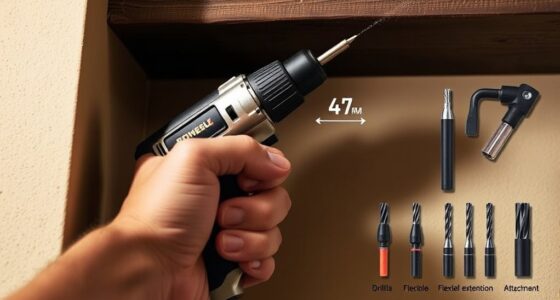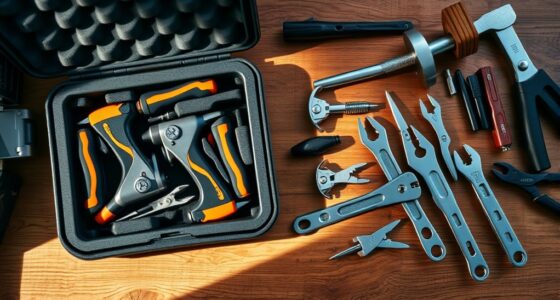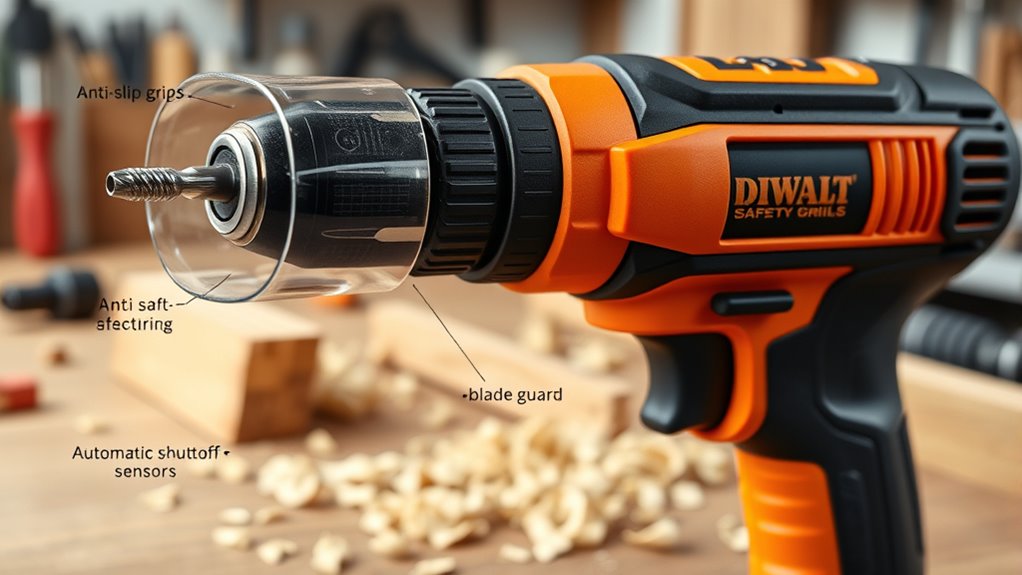

Modern power tools include safety tech that helps prevent accidents by focusing on ergonomic designs, smart technology, and battery protections. You’ll find tools with comfortable grips, balanced weight, and intuitive controls that reduce fatigue and slipping. Smart features like automatic shut-offs, safety locks, and hazard sensors make operation safer. Battery safety systems prevent overheating and short circuits. Keep exploring to discover how these innovations can make your work both easier and safer.
Open a free Amazon Business account
Business pricing, bulk buying and tax-exempt orders.
As an affiliate, we earn on qualifying purchases.
Key Takeaways
- Ergonomic designs with textured grips and balanced weight reduce operator fatigue and improve control, preventing slips and mishaps.
- Battery safety features like thermal protection and management systems prevent overheating, fires, and short circuits.
- Smart technology such as automatic shut-off and safety locks minimizes accidental activation and responds to hazardous conditions.
- Intuitive controls and user-focused comfort promote better handling, reducing careless mistakes and enhancing safety during use.
- A combination of ergonomic design and advanced safety systems ensures comprehensive protection and increased user confidence.
Have you ever wondered how modern power tools are becoming safer to use? Advances in safety technology have transformed the way you handle these tools, making accidents less likely and work more efficient. One of the key factors driving this progress is the focus on ergonomic design. Manufacturers now prioritize creating tools that fit comfortably in your hand, reducing strain and fatigue during prolonged use. Ergonomic features such as textured grips, balanced weight distribution, and intuitive controls allow you to maintain better control, which directly decreases the chances of slips or unexpected movements that could cause injury. When a tool feels natural to hold and operate, you’re less likely to lose your grip or make careless mistakes. This focus on ergonomics recognizes that comfort and control are essential for safe operation, especially during demanding tasks. Additionally, incorporating field‑of‑view considerations in design helps users better anticipate tool behavior and environment, further enhancing safety.
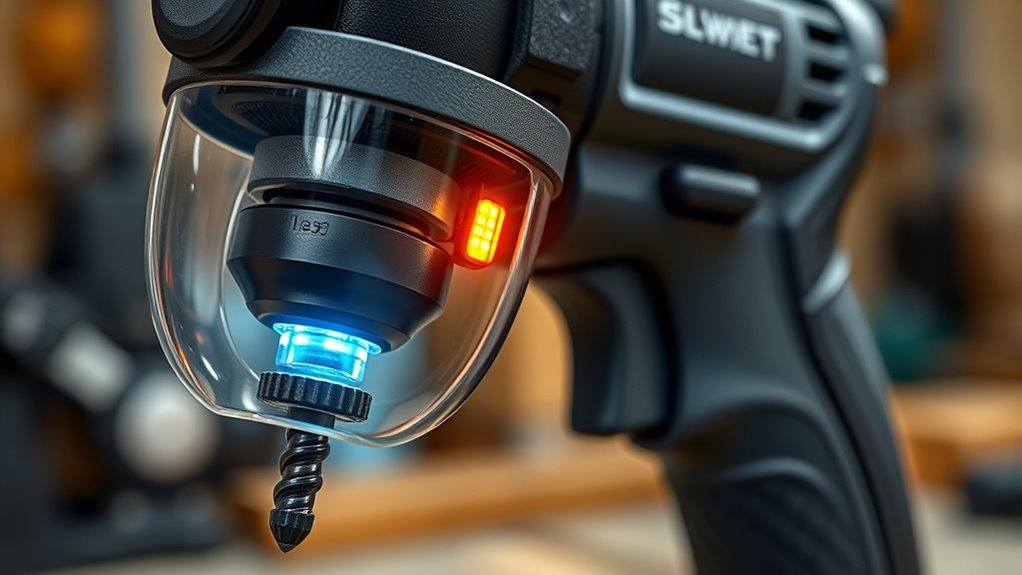
Alongside ergonomic design, battery safety has become a major concern in modern power tools. Lithium-ion batteries, common in cordless models, have improved convenience but also pose risks if mishandled. To prevent issues like overheating, short circuits, or even fires, manufacturers incorporate multiple safety features. These include built-in thermal protection that automatically shuts down the battery if it gets too hot, preventing thermal runaway. Additionally, advanced circuitry monitors voltage and current flow, alerting you to potential faults before they escalate. Many tools also feature battery management systems that balance cell charge and prevent overcharging or deep discharging, both of which can compromise safety and battery lifespan. You might notice that newer models come with indicators or warnings if the battery is malfunctioning or needs replacement, providing an extra layer of security. These safety measures ensure that you can work confidently, knowing your cordless power tool is designed to minimize the risk of battery-related incidents.
Furthermore, manufacturers are integrating smart technology to enhance overall safety. For example, some tools now include automatic shut-off features that activate if abnormal vibrations or movement are detected, preventing accidental startup or operation when the user isn’t prepared. Others incorporate safety locks or two-handed triggers that require deliberate engagement, reducing accidental activation. The combination of ergonomic design and robust battery safety features demonstrates a clear commitment to user protection. As a user, you benefit from tools that are not only easier and more comfortable to handle but also equipped with intelligent safety mechanisms that respond to potential hazards. This synergy of thoughtful design and technological innovation makes modern power tools safer than ever, giving you greater confidence and peace of mind during every project.
ergonomic power tools with textured grips
As an affiliate, we earn on qualifying purchases.
As an affiliate, we earn on qualifying purchases.
Frequently Asked Questions
How Do Safety Features Impact Power Tool Performance?
Safety features can slightly influence power tool performance, but they’re designed to enhance your experience. An ergonomic design ensures you stay comfortable and in control, even during prolonged use. User feedback helps manufacturers refine these features, balancing safety with efficiency. Overall, safety tech may add a bit of weight or complexity, but it ultimately boosts your confidence, reduces fatigue, and prevents accidents, making your work safer without sacrificing performance.
Are Safety Tech Features Standard in All Power Tools?
Safety standards shape the supply of safety tech features in power tools. While many modern tools include essential safety tech, not all do, and safety regulations influence their presence. You’ll find advanced features more often on high-end or professional models. To stay safe, follow safety regulations and seek user training, ensuring you understand each tool’s safety tech. Always check if safety features are standard before purchasing or using a power tool.
Can Safety Features Be Added to Existing Tools?
Yes, you can add safety features to existing tools through retrofit enhancements or safety upgrade options. Many manufacturers offer accessories or modifications that improve safety, like blade guards or electronic brakes. You should check if your tool is compatible with these upgrades and follow installation instructions carefully. Upgrading your power tools with these safety tech options helps reduce risks and keeps you safer during use.
What Maintenance Is Required for Safety Technology?
You need to regularly follow inspection protocols and calibration procedures to maintain safety technology. Check for any signs of wear, damage, or malfunction, and guarantee sensors and safety switches are functioning correctly. Keep records of inspections and calibrations, and perform necessary adjustments or replacements promptly. Proper maintenance ensures your safety features work reliably, reducing accident risks and keeping your workspace safe.
Do Safety Features Increase the Cost of Power Tools?
Safety features do increase the cost implications of power tools, but they’re often worth the investment. Safety feature costs can add to the initial price, but they help prevent accidents, saving you money and time in the long run. You’ll find that many manufacturers incorporate these features to enhance safety without substantially boosting the overall price, making safer tools accessible without breaking your budget.
cordless power tools with battery safety features
As an affiliate, we earn on qualifying purchases.
As an affiliate, we earn on qualifying purchases.
Conclusion
As you wield modern power tools equipped with cutting-edge safety tech, you’re steering through a battlefield of potential hazards with a shield of innovation. These features act like vigilant guardians, silently watching over your every move, turning risk into reassurance. Embrace these safety marvels, and let them be your trusted allies in the conquest of craftsmanship. Remember, with advanced safety tech, you’re not just working—you’re forging your path safely through the sparks of progress.
power tools with automatic shut-off
As an affiliate, we earn on qualifying purchases.
As an affiliate, we earn on qualifying purchases.
As an affiliate, we earn on qualifying purchases.
Flea & tick season Picks
flea and tick prevention
As an affiliate, we earn on qualifying purchases.