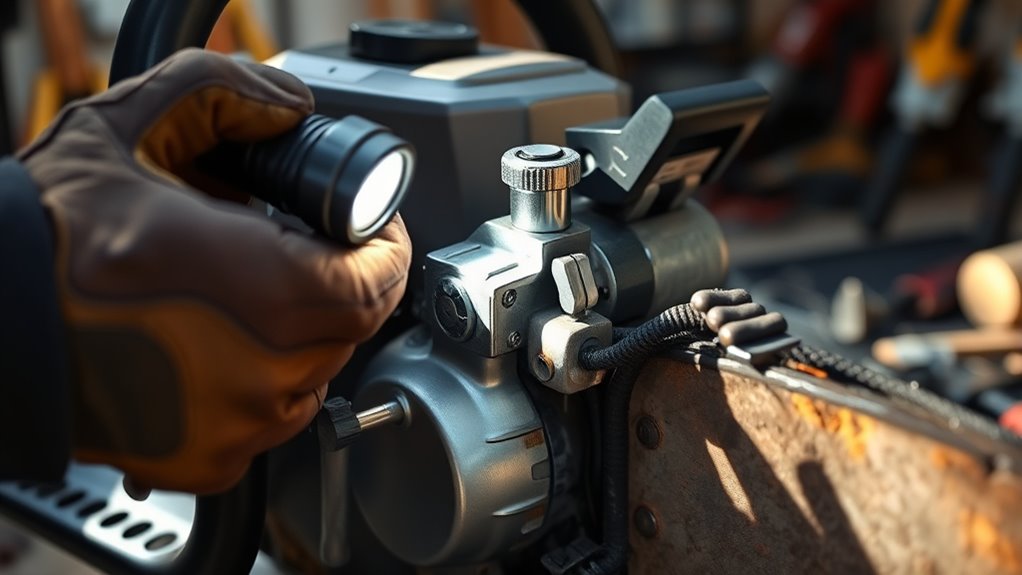

If your chainsaw won’t start, start by checking the safety features, like making sure the chain brake is disengaged. Then inspect the spark plug for damage or carbon buildup and guarantee the air filter is clean. Next, verify the fuel mixture is correct and fresh, and that the carburetor isn’t clogged. If adjustments don’t work, explore other common fixes; continuing further can help you troubleshoot more thoroughly.
Key Takeaways
- Ensure the chain brake is disengaged and the ignition switch is in the correct start position.
- Check and replace the spark plug if it’s worn, dirty, or damaged; verify correct gap.
- Inspect the fuel system, using fresh fuel mixed at the proper ratio and ensuring a tight seal on the cap.
- Clean or rebuild the carburetor and replace the air filter to ensure proper airflow and fuel delivery.
- Confirm all safety features are engaged/disengaged correctly and that the chainsaw is on a stable surface during start-up.
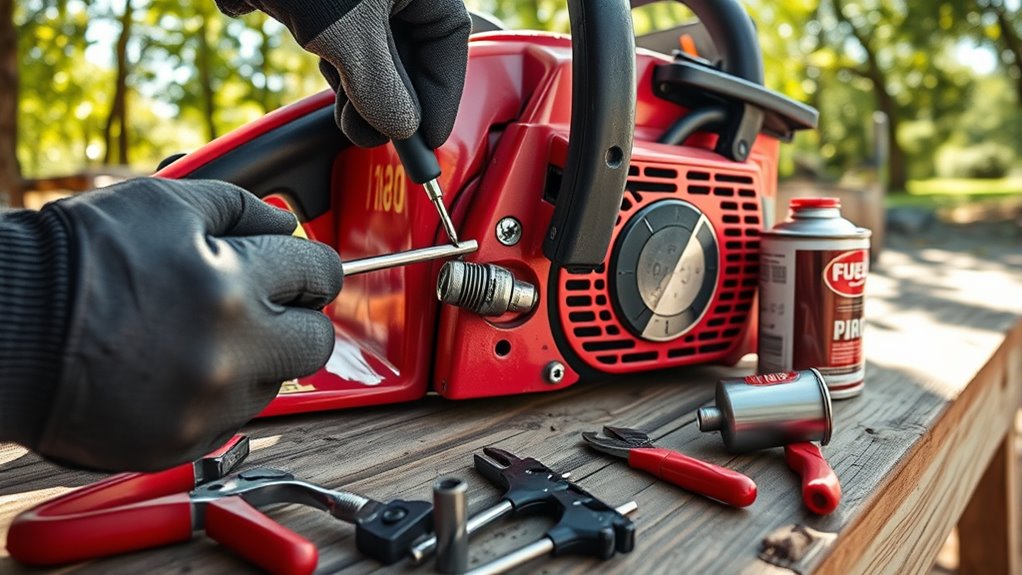
If your chainsaw refuses to start, it can be frustrating and inconvenient, especially when you need it most. Before you embark on complex troubleshooting, make sure you’re dressed appropriately with all your safety gear—helmet, gloves, eye protection, and hearing protection. Safety isn’t just about preventing injuries; it also helps you focus and work more effectively. When starting your chainsaw, confirm the chain brake is engaged and the saw is on a stable surface.
One common reason a chainsaw won’t start is related to fuel issues. Check the fuel mixture first. Many chainsaws require a specific ratio of gasoline to oil, typically 50:1, unless specified otherwise by the manufacturer. Using old or improperly mixed fuel can cause starting problems since the mixture might have degraded or isn’t combustible enough. Drain the old fuel and mix fresh fuel and high-quality bar and chain oil. When adding fuel, confirm the cap is sealed tightly to prevent evaporation or contamination. A clean, properly mixed fuel supply is essential for smooth engine operation.
Next, inspect the spark plug. Remove it and examine for signs of wear, carbon buildup, or damage. A dirty or worn spark plug can prevent the engine from firing. Clean it with a wire brush if it’s dirty, or replace it if it shows signs of damage or excessive wear. Make sure the spark plug gap matches the manufacturer’s specifications, as a too-wide or too-narrow gap can hinder spark delivery. Also, check the ignition switch and kill switch to confirm they’re in the correct position for starting. Sometimes, these simple checks resolve the issue without further troubleshooting.
Another potential problem is the carburetor. If you’ve used old fuel or the chainsaw has been sitting idle for a long time, the carburetor jets might be clogged or gummed up. Cleaning the carburetor with the appropriate cleaner can often restore proper fuel flow. However, if cleaning doesn’t help, you might need to rebuild or replace the carburetor entirely. Additionally, verifying that the air filter isn’t clogged or dirty is crucial, as a blocked air filter restricts airflow, making it difficult for the engine to start. Remove the filter, clean or replace it as needed, and then try starting the chainsaw again. If it still refuses to start, recheck all connections, confirm the chain brake is disengaged, and verify there’s no damage to the starter cord or recoil assembly. Troubleshooting step-by-step using these tips can get your chainsaw running smoothly again, saving you time and effort.

Spark Plug Replacement for NGK BPMR7A, L7T and for Champion CJ8 RCJ6Y RCJ7Y & More Types Sparkplug, Adefol Spark Plugs Fit for Stihl & Husqvarna Chainsaw Lawnmower Engines
Replaceable Models – Optimum quality spare par compatible with NGK BPMR7A, BPM7A, BM6A, L7T and so on. Also…
As an affiliate, we earn on qualifying purchases.
As an affiliate, we earn on qualifying purchases.
Frequently Asked Questions
How Often Should I Replace the Chainsaw’s Spark Plug?
You should replace your chainsaw’s spark plug every year or after about 100 hours of use, whichever comes first. Regular spark plug maintenance helps guarantee reliable starts and peak engine performance. Keep an eye on signs like difficulty starting or engine misfires, which indicate it’s time for a replacement. Following the recommended replacement schedule helps prevent issues and keeps your chainsaw running smoothly.
Can I Repair My Chainsaw’s Carburetor Myself?
Yes, you can repair your chainsaw’s carburetor yourself if you’re comfortable with DIY repairs. Start by cleaning the carburetor thoroughly, removing debris and buildup that can hinder performance. With some basic tools and patience, you can disassemble, inspect, and reassemble it. Just make certain you follow safety precautions, and if you’re unsure, consult a guide or professional. This DIY approach saves money and gets your chainsaw running smoothly again.
What Safety Precautions Should I Take Before Troubleshooting?
Before troubleshooting, you should wear protective gear like gloves and safety goggles to prevent injuries. Make sure the chainsaw is turned off and disconnected from any power source. Keep a fire safety plan in place, avoiding flammable materials nearby. Work in a well-ventilated area, and clear your workspace of debris. Taking these precautions minimizes risks and keeps you safe while diagnosing and fixing your chainsaw.
Is It Normal for a Chainsaw to Start Then Stall?
Imagine pulling your chainsaw’s starter cord, and it roars to life only to stall immediately—that’s quite common. Your chainsaw starting and then stalling can happen due to a variety of reasons, like a clogged carburetor or old fuel. It’s not unusual, but it signals you should check for fuel flow issues, dirty air filters, or spark problems. Regular maintenance keeps your engine running smoothly and prevents these frustrating stalls.
How Do I Store My Chainsaw to Prevent Starting Issues?
To prevent starting issues, store your chainsaw properly with chainsaw storage that keeps it dry and cool. Remove the fuel if you’re not using it for a while, and clean the chain and bar. Regular preventative maintenance, like checking the spark plug and air filter, also helps. Keep it in a secure, dry place and ensure it’s well-ventilated, so it’s ready to go when you need it.
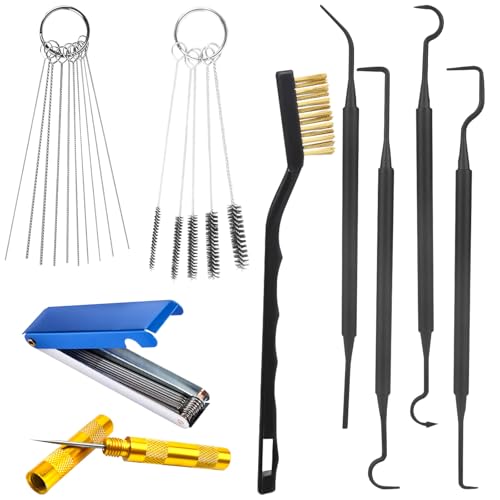
CYUXING 9Pcs Carburetor Cleaning Tool, Carb Jet Cleaning Kit & Welding Tip Cleaner with Stainless Steel Needles, Brushes & Hooks for Motorcycle ATV Chainsaw & Welder Professional
【Material】Engineered for performance and longevity, our carburetor cleaning kit utilizes high-grade stainless steel and tough nylon. The stainless…
As an affiliate, we earn on qualifying purchases.
As an affiliate, we earn on qualifying purchases.
Conclusion
So, next time your chainsaw refuses to roar to life, remember—it might just be tired from all that sitting idle. Instead of blaming the tool, maybe it’s asking for a little TLC. After all, who knew that a simple spark or some fresh fuel could turn a silent monster back into a roaring beast? Sometimes, the biggest fix is just giving your chainsaw the attention it desperately doesn’t know it needs.

530037793 Air Filter Replacement for Poulan Pro Craftsman 1900 1950 2025 2050 2075 2150 2350 2375 2450 2550 1838 Snapper 1950LE 1975 Woodshark 1975LE 2050LE 2050WT Sears Craftsman Chainsaw(2 Pack)
Part Number:530037793,5300377-93,530-037793 .
As an affiliate, we earn on qualifying purchases.
As an affiliate, we earn on qualifying purchases.

TruFuel Pre-Blended 2-Cycle Fuel for Outdoor Equipment – 32 oz. (2-Pack, 50:1)
TruFuel Pre-Blended 2-Cycle Fuel for Outdoor Equipment – 32 oz. (2-Pack, 50:1)
As an affiliate, we earn on qualifying purchases.
As an affiliate, we earn on qualifying purchases.