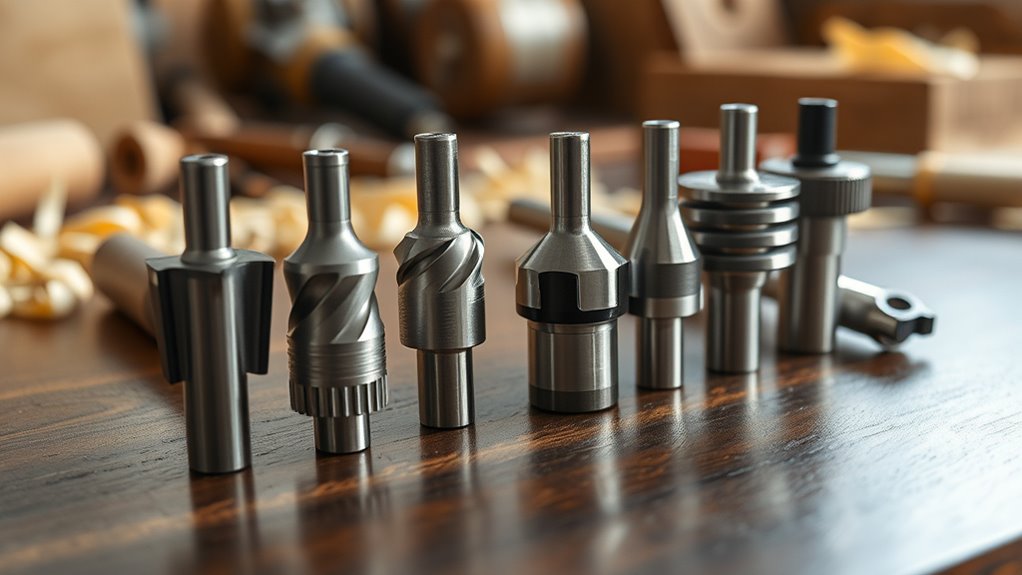

To create different edge profiles, choose router bits based on the look you want. Use round-over bits for smooth, rounded edges, and chamfer bits for sleek angled corners. Ogee or cove bits add classic, decorative styles, while Roman or bullnose bits produce rounded, convex edges. Multi-profile bits can craft intricate details in a single pass. Exploring each bit type can help you achieve professional finishes—continue exploring to discover how each can transform your projects.

Get business pricing on tools and workshop supplies
- Business-only prices and quantity discounts
- Tax-exempt purchasing
- Multiple users, one account, clear invoices
Key Takeaways
- Different router bits are designed to create specific edge profiles, such as round-over, chamfer, ogee, or cove shapes.
- Round-over bits soften edges for a smooth, polished look, ideal for furniture and tabletops.
- Chamfer bits produce angled edges, enhancing modern or classic aesthetic styles.
- Ogee and cove bits craft decorative, flowing profiles suitable for moldings and trim.
- Specialized bits like Bullnose or multi-profile bits enable complex, professional finishes in a single pass.

Router bits are essential tools that shape, cut, and hollow out wood and other materials with precision. When it comes to edge profiling, these bits become your best allies for creating decorative edges that enhance the look of your projects. Whether you’re aiming for a smooth rounded edge, a detailed beveled finish, or a complex ornamental profile, choosing the right bit makes all the difference. Edge profiling involves shaping the edges of a piece of wood to add character, style, or functionality, and the variety of router bits available allows you to achieve countless decorative effects with ease.
Router bits are vital for creating decorative edges and adding character to woodworking projects.
If you’re after simple, smooth curves, a round-over bit is your go-to. It effortlessly creates rounded edges that soften sharp corners and provide a polished appearance. These bits are perfect for furniture edges, tabletops, or any project where a gentle, decorative finish is desired. For more intricate profiles, a chamfer bit can add a sleek angled edge, giving your work a modern or classic look depending on the angle you choose. Chamfered edges are often used in picture frames, cabinet doors, or decorative trim, adding a subtle but sophisticated detail.
For more elaborate decorative edges, a ogee or cove bit can produce elegant, flowing profiles that add a touch of craftsmanship to your work. An ogee bit creates a classic S-shaped curve, perfect for molding and trim, while a cove bit produces a concave profile suited for detailed moldings or inlays. These bits allow you to craft complex profiles that give your project a professional, finished appearance.
Another versatile option is the Roman or Bullnose bit, which creates a rounded, convex edge that’s often used in staircases, handrails, or furniture. These bits can turn a simple edge into a feature that invites touch and adds visual interest. If you’re looking to add a decorative touch with a more detailed profile, a multi-profile bit or a molding bit can help you create intricate edge designs in a single pass, saving time and effort. Additionally, using the right oil or lubricant can prolong the life of your bits and ensure smooth operation during detailed edge work.
As an affiliate, we earn on qualifying purchases.
Frequently Asked Questions
Can I Use a Single Router Bit for Multiple Profiles?
Yes, you can use a single router bit for multiple profiles if it offers profile versatility. However, you should check bit compatibility to guarantee the bit can handle different profiles safely and effectively. Keep in mind, using one bit for various profiles might limit precision and finish quality. For best results, choose bits designed for multiple profiles or switch bits to achieve the desired profile with accuracy.
How Do I Choose the Right Bit for Hardwood Versus Softwood?
Think of choosing the right bit like steering through a lush forest—softwood is like gentle moss underfoot, while hardwood is a sturdy oak. For softwood, opt for carbide-tipped bits that glide smoothly with grain direction, reducing tear-out. In hardwood, select durable, high-quality bit material to withstand tougher cuts. Always align your bit with the grain direction for cleaner results, ensuring your project stays sturdy and precise.
Are There Safety Precautions for Using Certain Router Bits?
Yes, there are safety precautions when using certain router bits. Always wear safety gear like goggles and ear protection to shield your eyes and ears. Proper handling is essential—firmly grip the router, keep your hands clear of the bit, and avoid loose clothing. Make certain the bit is securely installed before use, and follow the manufacturer’s instructions. Taking these steps helps prevent accidents and ensures safe, effective routing.
How Often Should I Replace or Sharpen Router Bits?
Like a knight tending to their sword, you should regularly check your router bits for sharpness. You’ll want to replace or sharpen them when they become dull—to maintain cut quality and safety. Bit maintenance is key; generally, sharpening frequency depends on usage, but if you notice burn marks or rough cuts, it’s time to sharpen or replace. Stay vigilant, and your bits will serve you well through many projects.
Can I Use Router Bits With a Handheld Router Securely?
Yes, you can securely use router bits with a handheld router. Just guarantee you maintain good handheld stability to control the router safely. Check that the router bits are compatible with your handheld model and properly installed. Use both hands for better control, and always wear safety gear. If you follow these steps, you’ll achieve precise cuts while keeping yourself safe during your woodworking projects.
As an affiliate, we earn on qualifying purchases.
Conclusion
Choosing the right router bit is essential for perfect profiles and smooth finishes. Remember, a craftsman is only as good as his tools, and knowing which bit to use makes all the difference. With the right bit, you can turn rough wood into a masterpiece. So, take your time, select wisely, and trust your skills—after all, Rome wasn’t built in a day. Your woodworking journey begins with the right tools and a clear plan.
As an affiliate, we earn on qualifying purchases.
As an affiliate, we earn on qualifying purchases.
Fall Picks
fall essentials
As an affiliate, we earn on qualifying purchases.