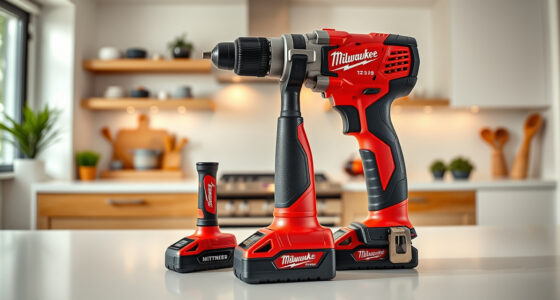
To extend the life of your batteries and power tools, store them in a cool, dry, climate-controlled area away from sunlight and extreme temperatures. Charge batteries when they’re around 20-30%, and avoid full discharges, while keeping them at partial charge when not in use for long periods. Organize your tools safely, keep the workspace tidy, and regularly inspect for damage. Continuing to explore how proper storage practices can maximize your tools’ longevity will give you even better results.

Get business pricing on tools and workshop supplies
- Business-only prices and quantity discounts
- Tax-exempt purchasing
- Multiple users, one account, clear invoices
Key Takeaways
- Store batteries in a cool, dry place at partial charge (40-60%) to maintain capacity and extend lifespan.
- Keep tools in a climate-controlled environment, away from moisture, extreme temperatures, and direct sunlight.
- Regularly clean, inspect, and lubricate power tools to prevent corrosion and mechanical failure.
- Charge batteries when they reach around 20-30% and unplug chargers once full to avoid overcharging.
- Organize tools and batteries in labeled, easily accessible compartments to prevent damage and facilitate maintenance.
battery storage container for power tools
As an affiliate, we earn on qualifying purchases.
As an affiliate, we earn on qualifying purchases.
Choosing the Right Storage Environment for Your Tools
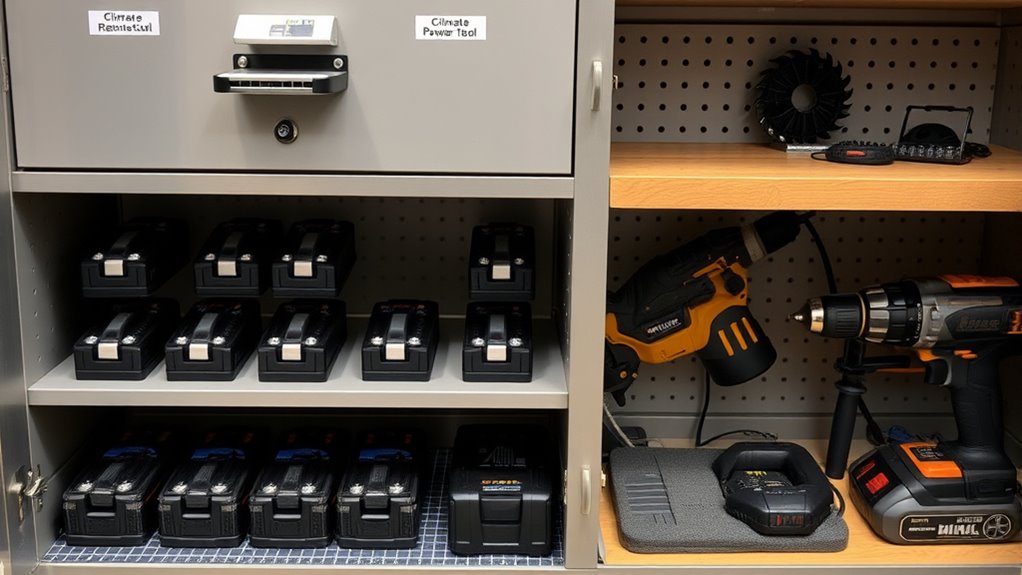
Selecting the right storage environment is essential to keep your tools in top condition. Store your power tools and batteries in a cool, dry place away from direct sunlight and extreme temperatures. Moisture can cause rust and damage, reducing your tools’ lifespan and voiding the tool warranty. Proper storage also encourages responsible battery recycling; avoid leaving batteries in areas prone to leaks or corrosion. Keep batteries and tools organized to prevent accidental damage. Additionally, using proper storage practices can help prevent potential safety hazards associated with improperly stored batteries. Ensuring proper ventilation and climate control is crucial, especially for battery storage, to minimize the risk of overheating or other environmental damage. Maintaining an environment with controlled humidity levels can further prolong the life of your tools and batteries by preventing deterioration caused by excess moisture. Adequate temperature regulation helps prevent damage caused by temperature fluctuations that can impair battery performance. By maintaining a stable environment, you help preserve the integrity of your tools and ensure they perform reliably. Remember, a well-kept storage spot not only extends tool life but also reinforces good maintenance habits, protecting your investment and making future projects smoother. An organized storage system can make all the difference in maintaining your tools and simplifying future tasks.
climate-controlled tool storage cabinet
As an affiliate, we earn on qualifying purchases.
As an affiliate, we earn on qualifying purchases.
Proper Battery Charging and Discharging Practices
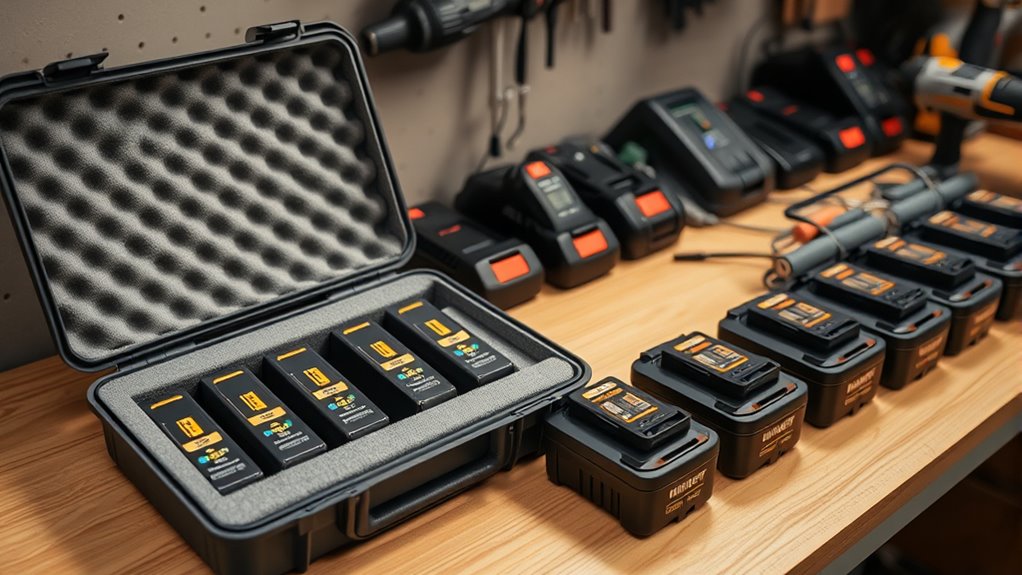
To keep your tools running smoothly, it’s important to charge your batteries at ideal times rather than letting them sit idle. You should also avoid fully discharging your batteries, as this can shorten their lifespan. Following these practices helps guarantee your tools stay reliable and ready when you need them.
Optimal Charging Times
Understanding the ideal times to charge your power tools’ batteries can substantially extend their lifespan and guarantee reliable performance. To achieve this, focus on proper charging cycle optimization by avoiding overcharging or frequent shallow charges. Charging when the battery drops to around 20-30% helps maintain battery health and supports accurate battery calibration. Regularly calibrate your batteries by fully discharging and then fully charging them periodically, which ensures the battery management system remains accurate. It’s best to avoid leaving batteries on chargers for extended periods once fully charged. Instead, unplug once they reach full capacity. Consistently following these appropriate charging times helps prevent unnecessary wear and tear, keeps your tools ready when needed, and maximizes their overall longevity. Additionally, understanding the importance of proper storage can help prevent capacity loss and improve battery lifespan over time. Implementing proper storage practices minimizes capacity degradation and preserves battery efficiency during periods of inactivity. Proper storage techniques, such as keeping batteries in a cool, dry environment, further support battery health and extend their usable life.
Avoid Full Discharges
While maintaining proper charging times helps preserve your battery’s health, avoiding full discharges is equally important. Fully draining your battery can markedly reduce its lifespan and diminish overall performance. To maximize your battery’s longevity, try to recharge it before it hits zero percent. This practice prevents deep discharges that strain the battery’s chemistry. When storing power tools for an extended period, use correct storage techniques, such as keeping batteries partially charged at around 40-60%. Avoid leaving batteries fully drained or fully charged for long durations, as both can harm their capacity. Proper discharging habits and storage techniques help ensure your batteries stay healthy longer, saving you money and effort. Remember, gentle handling and mindful charging extend the life of your tools and batteries alike. Additionally, understanding the weight of different pinball machines can help you plan for safe transportation and setup. Proper storage techniques contribute significantly to maintaining battery capacity and performance over time. Maintaining optimal battery charge levels also reduces the risk of overheating and capacity loss during storage. Furthermore, paying attention to manufacturer recommendations can optimize your battery’s care and lifespan.
As an affiliate, we earn on qualifying purchases.
Techniques for Safely Storing Power Tools When Not in Use
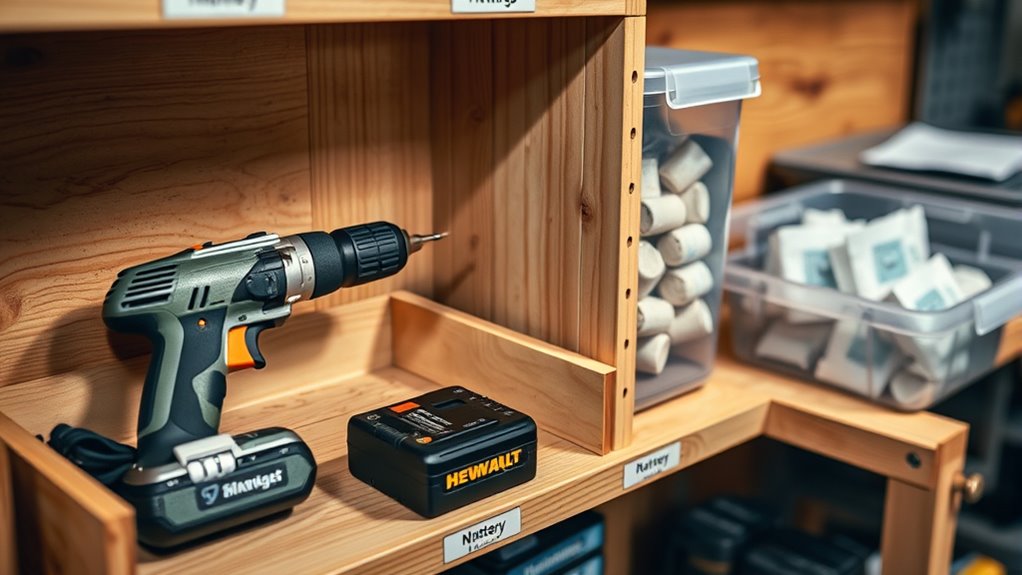
Properly storing your power tools when you’re finished using them is essential for safety and longevity. After use, clean the tools and remove any debris or dust to prevent damage. Store batteries in a cool, dry place, and consider battery recycling programs for long-term storage or disposal. Keep tools in designated cases or racks to avoid accidental damage and to maintain organization. When storing power tools, ensure they’re unplugged or the batteries are removed to prevent electrical hazards. Check your power tool warranties and follow manufacturer storage recommendations to keep warranties valid. Proper storage not only protects your tools but also ensures they function correctly when needed. Additionally, understanding home energy considerations can help you develop safe and efficient storage solutions that prevent overheating or electrical issues. Utilizing energy-efficient storage methods can further enhance safety and extend the lifespan of your tools. Being mindful of electrical safety practices during storage can prevent potential hazards and ensure safe operation in the future. For example, using proper storage containers designed for power tools can help keep them in optimal condition and prevent accidents. Incorporating temperature regulation techniques can also help maintain battery health and prevent overheating during storage. By taking these steps, you extend the life of your tools and support safe, efficient operation.
As an affiliate, we earn on qualifying purchases.
Protecting Your Tools From Humidity and Temperature Fluctuations
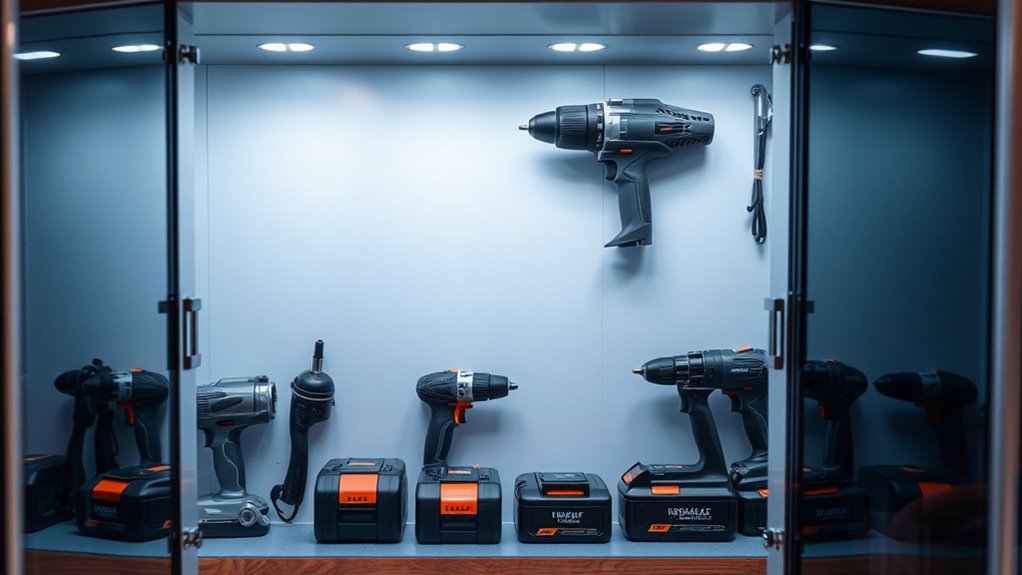
Extreme changes in humidity and temperature can quickly damage your tools, causing rust, warping, or electrical issues. To prevent this, focus on humidity control and temperature stabilization. Store your tools in a dry, climate-controlled environment, avoiding places like garages or basements prone to moisture. Use silica gel packs or dehumidifiers to reduce humidity. Keep temperature stable by avoiding direct sunlight or heating sources. Here’s a quick guide:
| Situation | Recommended Action | Why It Matters |
|---|---|---|
| High humidity | Use dehumidifiers or silica gel | Prevents rust and corrosion |
| Temperature swings | Store in climate-controlled space | Avoids warping and damage |
| Sudden temperature drops | Keep tools in consistent environment | Protects electrical components |
| Excess heat | Insulate storage area | Prevents warping and degradation |
Additionally, ensuring proper storage conditions can extend the lifespan of your tools and keep them working reliably over time. Proper climate control in your storage area is essential for maintaining the integrity of your power tools and batteries.
Organizing Your Toolbox for Easy Access and Safety
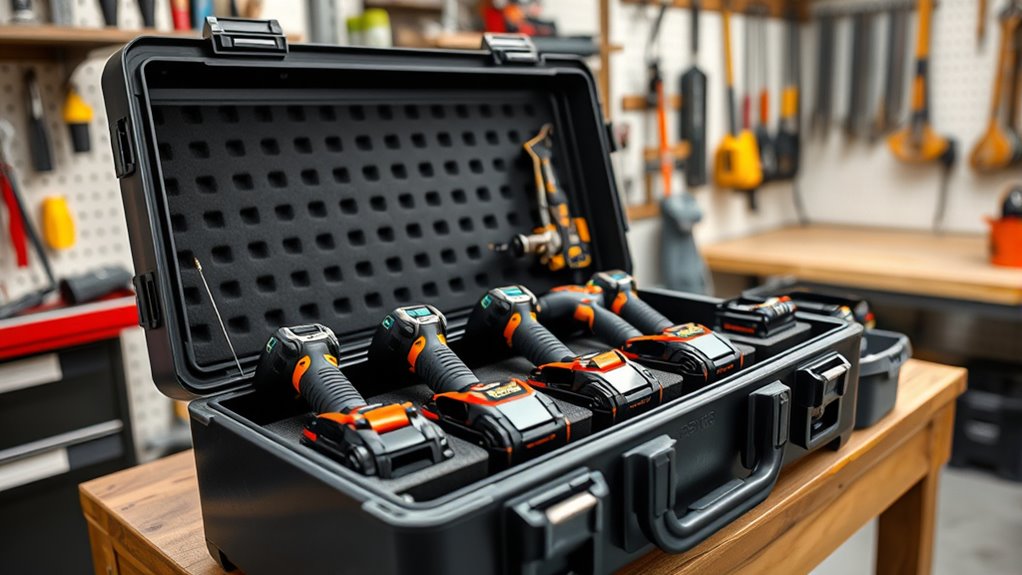
To keep your toolbox organized, start by categorizing tools by type so you can find what you need quickly. Use clear labels on compartments or drawers to avoid confusion and save time. Make sure frequently used tools are within easy reach to enhance safety and efficiency. Additionally, incorporating proper storage techniques can prolong the lifespan of your tools and prevent damage. Maintaining a clean and organized workspace can also reduce the risk of accidents and improve overall safety. Employing correct handling practices can further help prevent tool damage and ensure safe usage. Remember that tool maintenance plays a key role in extending the durability of your equipment and ensuring optimal performance over time.
Categorize by Tool Type
Organizing your toolbox by tool type makes it easier to find what you need quickly and keeps everything safe. When you sort tools, you reduce the risk of accidents and improve battery safety by storing batteries separately from metal tools that could cause shorts or corrosion. Keep power tools in designated compartments to prevent tool corrosion from moisture or debris. By grouping similar tools together, you minimize the chance of misplacing items and damaging delicate parts. Proper organization also helps you spot worn or damaged tools before use, maintaining safety standards. Avoid mixing batteries with tools or storing them loosely, as this can lead to battery leaks or damage. Additionally, filtration and pump protection are vital for maintaining the performance and longevity of spray guns and other equipment. A well-organized toolbox not only boosts efficiency but also prolongs the life of your tools and batteries.
Use Clear Labels
Clear labels are essential for quick identification and safe handling of your tools. When you label your toolbox, you make it easier to find the right tool fast, reducing the risk of accidents. Use clear, durable labels for each compartment or container, noting the contents and any important safety instructions. Proper tool labeling also helps with battery recycling—by marking which batteries are rechargeable or single-use, you prevent confusion and ensure correct disposal. Labels should be legible and weather-resistant, especially if your toolbox is stored in less protected areas. Consistent labeling keeps your workspace organized and minimizes mishandling. Taking the time to label your tools properly not only improves efficiency but also enhances safety for everyone using the toolbox. Incorporating labels for your power tools and batteries can also extend their lifespan by preventing improper storage and handling, especially when dealing with battery maintenance and disposal practices. Additionally, clear labels can assist in preventing costly repairs by ensuring tools are stored correctly and used appropriately.
Maintain Accessibility
Ensuring your toolbox remains accessible is key to working efficiently and safely. Organize tools by frequency of use, placing daily essentials at the top. Use compartments designed with tool ergonomic design in mind to reduce strain and improve safety. Keep batteries in a designated section, making battery recycling straightforward when needed. Regularly clean and maintain your toolbox to prevent clutter. Here’s an example layout:
| Frequently Used Tools | Power Tools | Small Parts & Accessories |
|---|---|---|
| Screwdrivers, Pliers | Drills, Saws | Fasteners, Bits |
| Battery Storage | Spare Batteries | Labels for Easy Identification |
| Safety Gear | Chargers | Maintenance Tools |
This setup promotes quick access, reduces accidents, and extends your tools’ lifespan.
Regular Maintenance and Inspection to Extend Tool Life
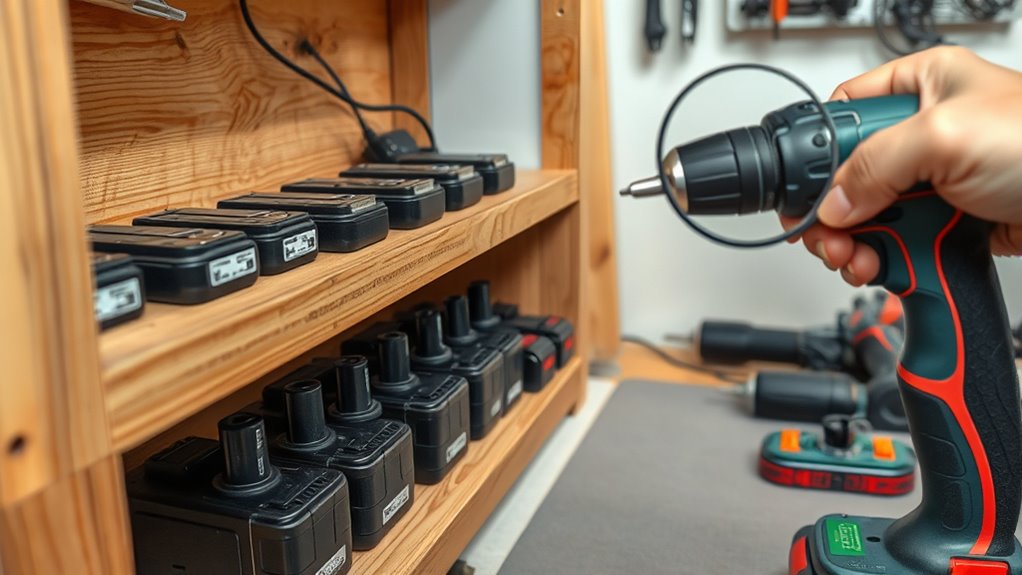
Regular maintenance and inspection are essential steps to prolong the life of your tools. You should regularly check for signs of wear, corrosion, or damage, especially on batteries and power tools. Properly cleaning and lubricating moving parts can prevent unnecessary breakdowns. When a battery shows reduced performance, consider battery recycling options to dispose of it safely and responsibly. Keeping detailed records of maintenance helps preserve your tool warranty, ensuring coverage if repairs are needed. Inspect cords and connections for fraying or loose fittings, and replace any compromised components promptly. Regular inspections allow you to catch minor issues before they become costly repairs. By staying proactive, you extend your tools’ lifespan, save money, and guarantee they perform reliably whenever you need them.
Frequently Asked Questions
How Often Should I Replace Batteries to Ensure Optimal Performance?
You should replace batteries when they no longer hold a charge or if their performance drops considerably, typically every 2-3 years with proper battery maintenance. Regularly check your batteries to guarantee they’re functioning well, as this directly impacts your power tool lifespan. Avoid using worn-out batteries to prevent damage to your tools and maintain ideal performance. Proper storage and timely replacement keep your power tools running smoothly and efficiently.
Can Storing Tools in a Garage Affect Their Lifespan?
Think of your garage as a medieval castle—if it’s damp and humid, it can shorten your tools’ lifespan. Garage humidity promotes tool corrosion and damages batteries, making them less reliable. To keep your power tools in top shape, store them in a dry, well-ventilated space, and consider using silica gel packs or dehumidifiers. Proper storage prevents corrosion and extends your tools’ life, saving you money in the long run.
What Are Signs My Power Tool Needs Professional Repair?
You should seek professional repair if your power tool exhibits signs like battery corrosion, which causes poor performance, or if it’s not operating as smoothly as before. Also, if you notice calibration issues affecting accuracy or inconsistent cutting, it’s time for expert help. Addressing these problems early guarantees your tool stays reliable, and a professional can properly diagnose and fix internal issues to extend its lifespan.
Are There Specific Storage Solutions for Delicate Electronic Components?
You need the ultimate storage solution for delicate electronic components! Use anti-static mats to zap away static electricity and protect sensitive parts. Pair them with humidity control to prevent corrosion and moisture damage. Keep components in sealed, anti-static bags or containers, and store in a cool, dry place. This combo shields your electronics from static shocks and humidity, ensuring they stay pristine and functional for years of high-tech adventures.
How Do Temperature Extremes Impact Battery Charging Cycles?
Temperature extremes can considerably affect your battery’s charge efficiency and overall lifespan. When you expose batteries to high or low temperatures, it disrupts temperature regulation, making charging less effective and increasing wear. To maintain ideal performance, keep your batteries within recommended temperature ranges, ideally in a cool, dry place. Proper storage helps guarantee consistent charge cycles, prolongs battery life, and keeps your power tools ready for use whenever you need them.
Conclusion
By following these storage tips, you’ll maximize your tools’ lifespan and guarantee they’re always ready when you need them. But remember, the true test isn’t just in storage—it’s in how you care for your tools day after day. Are you prepared to go beyond basics and realize their full potential? The secret to lasting power tools lies in the details. Stay vigilant, and your investment will serve you for years to come… if you dare to take the extra step.
Fall yard work Picks
leaf blowers
As an affiliate, we earn on qualifying purchases.