When choosing between inverter and conventional generators, consider your power needs, budget, and noise preferences. Inverter models provide cleaner, more stable power, are quieter, and fuel-efficient—ideal for sensitive electronics and outdoor use. Conventional generators are typically cheaper upfront but noisier and less fuel-efficient, suited for basic heavy-duty tasks. To pick the best fit for your projects and environment, explore further to understand their advantages and limitations in detail.
Key Takeaways
- Inverter generators produce cleaner, more stable power, ideal for sensitive electronics like laptops and medical devices.
- Conventional models are typically cheaper upfront but consume more fuel and generate noisier operation.
- Inverter generators are more fuel-efficient and quieter, making them better for camping or residential use.
- Conventional generators run at a constant speed, providing less stable power unsuitable for delicate electronics.
- Choose based on your needs: inverter for portability and sensitive devices, conventional for larger, budget-friendly power.
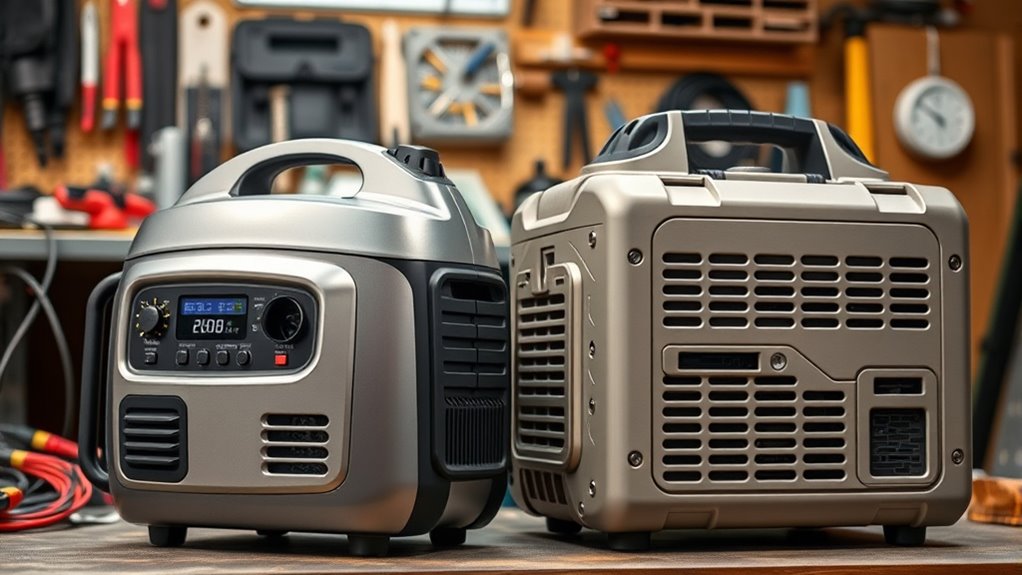
When choosing a DIY generator, understanding the differences between inverter and conventional models is essential. Both types serve the same fundamental purpose—providing power during outages, outdoor adventures, or remote projects—but they operate quite differently, impacting fuel efficiency and noise levels. Your choice depends on your specific needs and how you plan to use the generator.
Choosing between inverter and conventional generators depends on your needs, considering fuel efficiency and noise levels.
Inverter generators are designed to produce cleaner, more stable power, which is especially beneficial if you’re powering sensitive electronics like laptops, smartphones, or medical devices. They achieve this by using advanced electronics to convert DC power into AC power, resulting in a smooth, consistent current. Because of this design, inverter models tend to be more fuel-efficient, especially when running at partial loads. They adjust engine speed based on demand, which conserves fuel and extends run times. This efficiency can be a real advantage if you’re relying on the generator for long periods or need to maximize fuel economy on a limited supply.
Noise levels are another critical factor where inverter generators shine. They operate much quieter than conventional models, often producing sounds comparable to a normal conversation or background music. This quieter operation makes them ideal for camping, outdoor events, or residential areas where noise restrictions might be in place. Their reduced sound output not only minimizes disturbance but also allows for more discreet operation, which can be a significant advantage in sensitive environments. Additionally, inverter generators often incorporate advanced inverter technology, which further optimizes performance and power quality.
Conversely, conventional generators tend to have larger engines and simpler design. They generate power by running at a constant speed, regardless of whether you’re powering a tiny appliance or multiple devices. This approach typically results in higher fuel consumption because the engine runs at full throttle even when not needed. Additionally, they tend to produce more noise, often reaching loud, droning sounds that can be disruptive in quiet settings. Conventional models are generally less expensive upfront but may cost more in fuel over time, and their louder operation can limit where and when you feel comfortable using them.

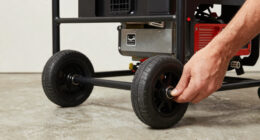
Orceed Red All Terrain Wheel Kit, Fit For Honda EU3000is Generator, Solid Tires, OE 06423-ZS9-020AH, 06423ZS9020AH
[Vehicle Fitment]: Fit for Honda EU3000is Generator.
As an affiliate, we earn on qualifying purchases.
Frequently Asked Questions
How Long Can a Generator Run Continuously?
You can run a generator continuously for as long as it has fuel and isn’t overloaded. Fuel consumption and power capacity influence runtime; smaller tanks may last a few hours, while larger tanks can provide power for days. Always monitor fuel levels and guarantee your generator’s power capacity matches your needs to prevent overheating or damage. Regular maintenance also helps extend your generator’s continuous run time effectively.
Are Inverter Generators Quieter Than Conventional Models?
Imagine a quiet lake at dawn—now, picture a whispering breeze. That’s what inverter generators sound like compared to conventional models. They’re generally quieter, with lower noise levels, making them ideal for camping or outdoor events. Plus, their reduced noise has a positive environmental impact by minimizing noise pollution. So, if you’re seeking a peaceful operation, inverter generators are the better choice for quieter, eco-friendlier power.
Which Generator Type Is More Fuel-Efficient?
Inverter generators are more fuel-efficient than conventional models because they adjust engine speed based on your power needs, reducing fuel consumption. This smart regulation means you use less fuel over time, making them ideal for longer use and saving you money. Conventional generators run at full speed regardless of load, wasting fuel when less power is needed. So, if fuel efficiency matters to you, inverter generators are the better choice.
Can Inverter Generators Power Heavy-Duty Appliances?
Inverter generators can power some heavy-duty appliances, but their appliance compatibility varies. They provide portable power suitable for sensitive electronics and moderate appliances, but for high-demand tools like large refrigerators or air conditioners, you might need a more robust, conventional generator. Always verify your appliance’s wattage and surge requirements to guarantee your inverter generator can handle the load safely without risking damage or insufficient power.
What Maintenance Is Required for Each Generator Type?
Ever wonder how much effort maintaining your generator takes? Both inverter and conventional models need regular oil changes to keep their engines running smoothly. You also should check and replace the fuel filter periodically to prevent clogging. While inverter generators generally require less maintenance due to their design, sticking to these basic tasks guarantees reliable power and prolongs their lifespan, no matter which type you own.

10 in. Heavy Duty Generator Wheel Kit
xtra large 10 in. flat-free tires are over 110% bigger* for mobility over rough terrain
As an affiliate, we earn on qualifying purchases.
Conclusion
Choosing between inverter and conventional generators comes down to understanding your power needs. Inverter models are perfect for sensitive electronics and offer quiet operation, while conventional ones provide more power for larger jobs. Remember, you get what you pay for, so don’t cut corners if reliability matters. By selecting the right generator, you’ll be well-equipped for any DIY project or emergency. In the end, it’s about playing your cards right and staying prepared for whatever comes your way.

8-Inch Never-Flat Generator Wheel Kit for Predator 4000 6500 8750 Watt Generators, Equipped With An Adjustable Handle
Package includes: 1 x 8-Inch Never-flat generator wheel kit, with installation hardware
As an affiliate, we earn on qualifying purchases.
Amazon Product B0FRRG9N1K
As an affiliate, we earn on qualifying purchases.