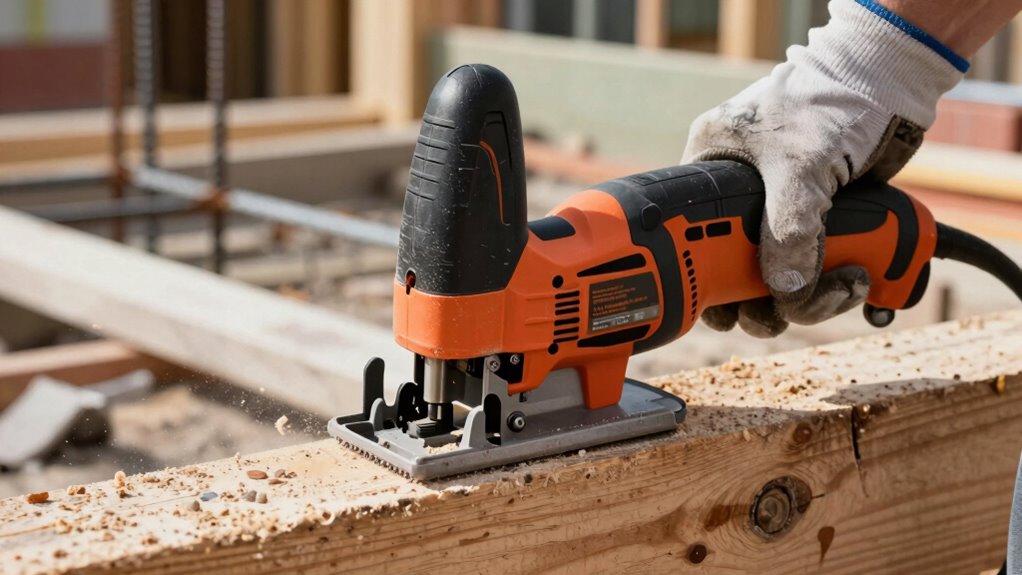
A good reciprocating saw setup for demolition involves choosing the right blade for your material and securely installing it with the teeth facing the cut direction. Make certain the saw is in top condition, with no damage to cords or internal parts, and use the appropriate speed for the task. Maintain a firm grip and wear safety gear for protection. Keeping your workspace clear helps guarantee safe, efficient cuts. If you want to maximize your tool’s performance, there’s more to learn about setup and safety tips.
Key Takeaways
- Select the appropriate blade type and size for the demolition material.
- Ensure the saw is thoroughly inspected, with secure blade installation and proper orientation.
- Use variable speed controls to match the material’s cutting requirements.
- Maintain a clean workspace and perform test runs for stability and responsiveness.
- Wear proper protective gear and perform regular maintenance for safety and optimal performance.

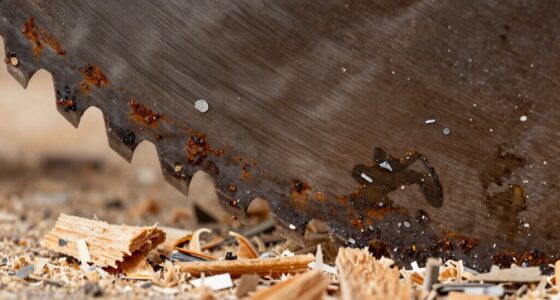
Setting up a reciprocating saw for demolition tasks is straightforward if you follow the right steps. First, verify your saw is in good condition by inspecting it thoroughly. Power tool safety is paramount, so always unplug the saw before changing blades or making adjustments. Check the cord or battery for any damage, and examine the blade for wear or cracks. A damaged blade or faulty cord can cause accidents or reduce efficiency, so replacing worn parts before you start is essential. Proper tool maintenance keeps your saw operating smoothly and extends its lifespan, which ultimately leads to safer, more effective demolition work.
Always inspect your reciprocating saw and replace damaged parts before starting demolition work for safety and efficiency.
Next, choose the right blade for your demolition task. Reciprocating saw blades come in various types designed for different materials—wood, metal, or demolition-specific blades with reinforced teeth. Securing the blade correctly is critical; most saws feature a quick-release mechanism or a screw that holds the blade in place. Verify the blade is tightly secured to prevent slipping or jamming during operation. When installing the blade, double-check that it’s oriented correctly, with teeth facing the direction of cut, and always follow the manufacturer’s instructions. Proper blade setup is crucial for clean cuts and your safety. Additionally, selecting the appropriate blade material compatibility ensures optimal cutting performance and durability.
Adjust the saw’s settings to optimize performance. Many reciprocating saws have variable speed controls—use these to match the material you’re cutting. Slower speeds are suitable for metal, while higher speeds work better for wood. Holding the saw firmly with both hands helps maintain control and reduces fatigue during extended demolition work. Always wear appropriate personal protective equipment—gloves, eye protection, and ear protection—before powering up the tool. Remember, power tool safety isn’t just about the tool itself; it involves a cautious approach to every step in the setup and operation. Regularly inspecting the internal components of your saw can help identify potential issues early, preventing unexpected breakdowns. Ensuring proper internal lubrication can also enhance the longevity and smooth operation of your saw. Furthermore, understanding the internal workings of your saw can help troubleshoot problems more effectively.
Once everything is in place, keep the workspace clear of debris and obstructions. Before making full cuts, do a few test runs to check the blade’s stability and the saw’s response. Regularly check and tighten any loose parts during your work to prevent accidents. Additionally, ensure your reciprocating saw is properly maintained, including inspecting the motor and internal components, to keep it running reliably. After finishing, clean the saw and blades, removing dust, debris, and any residual material. Proper tool maintenance not only keeps your reciprocating saw in top shape but also ensures ongoing safety and efficiency. Taking these steps results in a setup that’s reliable, safe, and ready for demanding demolition tasks, helping you work confidently and effectively through every project.
reciprocating saw blades for demolition
As an affiliate, we earn on qualifying purchases.
As an affiliate, we earn on qualifying purchases.
Frequently Asked Questions
What Safety Gear Is Essential for Demolition With a Reciprocating Saw?
You need to wear protective gloves and eye protection when demolishing with a reciprocating saw. Gloves shield your hands from sharp debris and accidental cuts, while eye protection keeps dust, flying particles, and sparks out of your eyes. Always guarantee your safety gear fits well and is in good condition. Wearing these essentials helps prevent injuries, allowing you to focus on the job safely and effectively during demolition work.
How Do I Choose the Right Blade for Heavy Demolition Work?
You’ll want to choose a blade type specifically designed for heavy demolition, like carbide-grit or aggressive tooth blades, which handle tough materials. Coincidentally, your cutting technique matters too—apply steady pressure and let the saw do the work. For thicker, stubborn materials, use longer blades with larger teeth to maximize efficiency. Picking the right blade and mastering your cutting technique makes certain of smoother, safer demolition progress.
What Maintenance Is Required to Keep the Saw in Optimal Condition?
To keep your reciprocating saw in top shape, regularly lubricate the blade to prevent rust and guarantee smooth operation. Keep dust management in mind by cleaning the saw after each use, removing debris that can clog components. Check and replace worn parts like brushes or seals, and inspect the cord or battery for damage. Proper maintenance extends the saw’s lifespan and maintains cutting efficiency during demolition projects.
Can I Use a Cordless Reciprocating Saw for Demolition Projects?
Did you know cordless reciprocating saws make up over 60% of demolition tool sales? Yes, you can definitely use a cordless reciprocating saw for demolition projects. Just guarantee it has a reliable power source and check blade compatibility for tough materials. A cordless model offers portability and convenience, especially on large sites. Make sure to use heavy-duty blades designed for demolition to get the best results.
How Do I Prevent the Saw From Overheating During Prolonged Use?
To prevent your reciprocating saw from overheating during prolonged use, focus on blade selection and overheating prevention. Choose a blade suited for the material you’re cutting, as a proper blade reduces strain. Take regular breaks to allow the saw to cool down, and avoid pressing too hard. These steps help manage heat buildup, ensuring your saw operates efficiently and safely without overheating or damaging the tool.
reciprocating saw safety gear kit
As an affiliate, we earn on qualifying purchases.
As an affiliate, we earn on qualifying purchases.
Conclusion
With the right reciprocating saw setup, you’re armed like a warrior ready to conquer demolition tasks. Choosing the proper blade, securing a firm grip, and maintaining steady control turn this powerful tool into an extension of your hand. Think of it as the key to revealing your project’s potential—making quick work of what once seemed intimidating. When you set up your saw correctly, demolition becomes less of a battle and more of a dance.
variable speed reciprocating saw
As an affiliate, we earn on qualifying purchases.
As an affiliate, we earn on qualifying purchases.
reciprocating saw blade installation tool
As an affiliate, we earn on qualifying purchases.
As an affiliate, we earn on qualifying purchases.