TL;DR
Landscaping and paving experts recommend plastic or rubber-edged shovels, shorter strokes and careful snow placement to protect surfaces such as gravel, pavers, decks and asphalt. Roof and stair clearing bring added fall risks; the source advises using a roof rake and stopping if a deck appears structurally unsafe.
A seasonal home-maintenance guide outlines how to clear snow from 11 tricky surfaces—including gravel, pavers, decks and roofs—while reducing damage and slip risks. Landscaping and paving professionals quoted in the guide advise choosing tools and techniques suited to each surface, rather than scraping every area down to bare ground.

Get business pricing on tools and workshop supplies
- Business-only prices and quantity discounts
- Tax-exempt purchasing
- Multiple users, one account, clear invoices
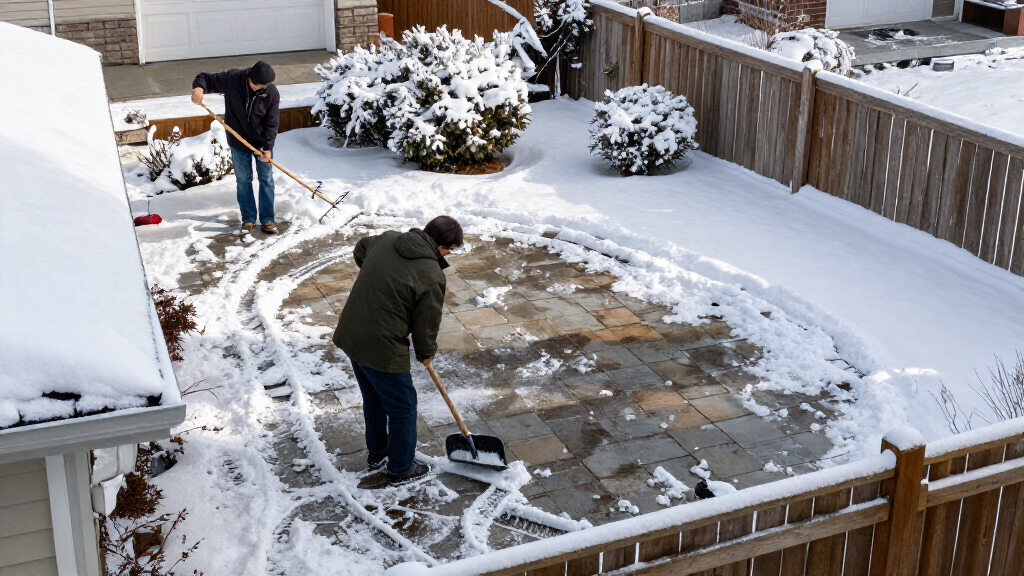
For gravel paths and driveways, grading and paving contractor Scott Flores recommends a plastic shovel held about an inch above the gravel, with short passes. Landscaping expert Jose Lopez says leaving a thin layer of snow is acceptable. On concrete, painted or sealed concrete, asphalt, and pavers, the guidance favors a plastic or rubber-edged blade over metal, which can scratch surfaces, chip coatings or catch paving edges.
Technique matters as much as the shovel. On sealed concrete, Flores advises a slight upward motion and leaving roughly half an inch of snow. For pavers, stone and brick, Lopez recommends short strokes, pushing at an angle and lifting the leading edge slightly. On asphalt, he cautions against forcing a shovel into cracks or striking the surface to break ice; use a deicer labeled as safe for that material instead.
Other advice focuses on where snow goes and how people move. Mark walkway edges beside lawns before snowfall, avoid piling snow on shrubs, and keep deicer runoff away from planted beds. On wood or composite decks, push snow along the boards and use a product recommended for the material. For stairs, use good-traction boots, adequate lighting and a small shovel to clear one step at a time. The roof section recommends a roof rake, but does not provide a complete set of roof-clearing instructions.
Shovel tricky surfaces with care
Choose tools and techniques for each surface to reduce damage and slip risks. Clear carefully rather than scraping every area bare.
Match the tool to the surface
Plastic blades or rubber edges help reduce scraping and catching on vulnerable paving.
Leave a thin layer
Hold a plastic shovel above the gravel and use short passes.
Protect the edges
Push at an angle with short strokes, lifting the leading edge slightly.
Follow the boards
Push snow along the boards and use only a material-approved deicer.
Plan where snow will go
A little preparation can protect walkways and nearby planting.
Mark borders beside lawns before snowfall.
Keep snow off shrubs and deicer runoff away from planted beds.
Use a deicer approved for the paving or deck material.
Reduce fall risks
- Wear good-traction boots.
- Use adequate lighting and a small shovel.
- Clear one step at a time.
- Watch for sagging or creaking under wet, heavy snow.
- Stop using an unsafe-looking deck and seek professional advice.
Roof guidance is limited
The source mentions a roof rake but does not give complete instructions for when or how to clear a particular roof.
Protecting Surfaces and People
Snow clearing is a recurring winter safety task, but the wrong tool or rushed technique can create repair costs as well as fall hazards. Snow may hide uneven paving, lawn edges and ice, while metal blades can scrape or catch on surfaces. The guide’s central practical point is to adjust the approach to the material and avoid trying to remove every trace of snow at any cost.
The advice also highlights risks beyond the pavement. Snow piled on plants can break branches, while deicer can affect both paving and nearby landscaping. On decks, signs such as sagging or creaking under wet, heavy snow may indicate a concern that should not be addressed by continuing to use the structure; Lopez recommends seeking professional advice in that situation.
Products Worth Considering

Philips Hue Smart Light Starter Kit with Bridge and 4 White and Color A19 Bulbs

Sonos One Two-Room Set Smart Speakers with Built-In Alexa, Black

Shark PowerDetect Robot Vacuum and Mop Combo with 60-Day Self-Emptying Base (AV2800ZE)
As an affiliate, we earn on qualifying purchases.
Advice for Eleven Surfaces
The source organizes its recommendations by surface, from gravel, concrete and asphalt to planting beds, decks, steps and roofs. Across those examples, it repeatedly favors plastic blades or rubber edges where scraping could damage the surface, and controlled, shorter movements near vulnerable borders or joints.
It also recommends planning before the first snowfall: mark the edges of walkways beside grass and decide where to pile snow so it does not cover sensitive plants. After snow melts, inspect paver and brick paths for loose pieces. The source quotes landscaping expert Jose Lopez, contractor Scott Flores, moving professional Leon Schwab and roofing contractor Andre Kazimierski. It provides no date, research methodology or independent testing details.
“Being mindful and taking a relaxed, careful approach will help you save money and keep everyone safe all winter long.”
— Jose Lopez, landscaping expert
Roof Advice Has Limits
The supplied guide ends partway through its roof section. It says that clearing large accumulations may sometimes be prudent and attributes a recommendation to roofing contractor Andre Kazimierski to use a roof rake, but it does not include the full advice or specify when removal is necessary. It also gives no snow-depth thresholds for roofs, no instructions for particular roof designs and no local weather or building-code guidance.
Several dollar figures in the source—such as estimates of potential damage or gravel cleanup—are attributed to a contractor, but the material provides no independent documentation or conditions behind those estimates. Readers should treat them as the contractor’s claims, not universal repair costs. The guide also does not identify particular deicer brands or establish that one product is safe for every coating or paving material.
Plan Before Snow Arrives
Before winter weather, identify the edges of walkways, choose a place to pile snow away from sensitive plants, and check which deicers are approved for the surfaces at home. Keep a plastic or rubber-edged shovel available for vulnerable paving and decking, and use shorter strokes near lawn borders, pavers and stairs.
During a storm, work carefully and reassess if conditions change. If a deck sags or creaks beneath wet, heavy snow, stop using it and seek professional advice. For roof clearing, the source’s partial guidance is not a complete safety plan; readers should get advice suited to their roof rather than treating the roof rake mention as a blanket instruction.
Key Questions
What shovel is best for pavers and concrete?
The guide recommends a plastic (poly-blade) or rubber-edged shovel to reduce the risk of scraping concrete or catching the edge of a paver. Short, controlled strokes can help protect joints and paving edges.
Should I clear a gravel driveway down to the stones?
No. Contractor Scott Flores recommends holding a plastic shovel about an inch above the gravel and clearing in short passes. Landscaping expert Jose Lopez says it is acceptable to leave a thin layer of snow.
How should I clear snow from a wooden or composite deck?
The guide advises using a plastic-blade shovel and pushing snow in the direction of the boards. It says a thin layer may be left if conditions make that safe and recommends only using a deicer approved for the deck material. If the deck sags or creaks under heavy, wet snow, stop using it and seek professional advice.
What does the source say about clearing snow from a roof?
The supplied material says a roof rake is recommended by roofing contractor Andre Kazimierski, but the roof section is incomplete. It does not provide enough detail to determine when or how a particular roof should be cleared.
Source: familyhandyman.com