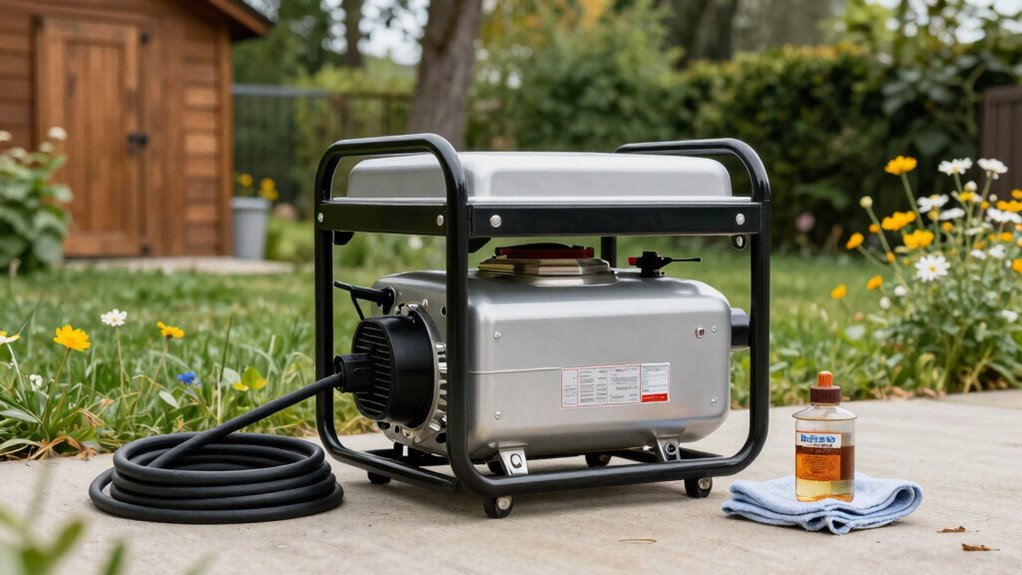

To maintain your generator between uses, add fuel stabilizer to prevent stale fuel and run it for 10-15 minutes to circulate the stabilizer. Regularly check and recharge the battery, clean terminals, and keep it in a dry, covered area. Inspect filters, spark plugs, and oil periodically, and start the generator occasionally to keep internal parts lubricated. Following these steps will help guarantee reliable starts and longer lifespan—keep going to discover even more essential tips.

Get business pricing on tools and workshop supplies
- Business-only prices and quantity discounts
- Tax-exempt purchasing
- Multiple users, one account, clear invoices
Key Takeaways
- Add fuel stabilizer and run the generator for 10-15 minutes before storage to keep fuel fresh.
- Regularly charge and maintain the battery, and keep terminals clean to ensure reliable starts.
- Store the generator in a dry, covered area and keep it clean to prevent dust and moisture damage.
- Conduct periodic inspections of oil, air filters, and spark plugs to catch issues early.
- For long-term storage, drain the fuel and disconnect the battery to prevent corrosion and varnish buildup.
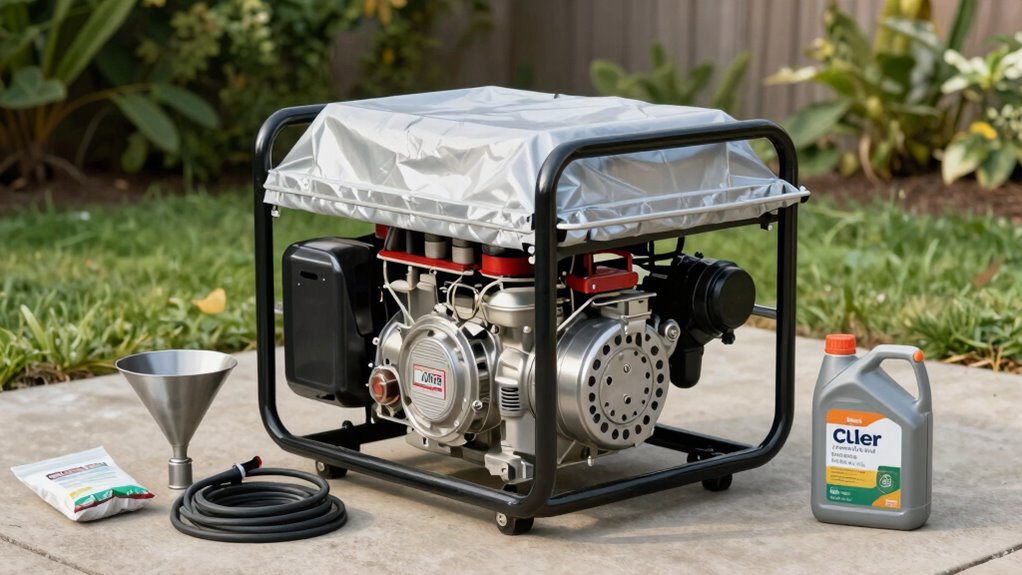
Maintaining your generator properly between uses is vital to guarantee it’s ready when you need it most. One of the key steps is fuel stabilization. If your generator sits unused for weeks or months, stale fuel can clog the carburetor and cause starting issues. To prevent this, you should add a fuel stabilizer to the tank before storage. Run the generator for about 10-15 minutes to circulate the stabilizer through the system. This process ensures the fuel remains fresh and prevents deposits from forming, which could impair performance later. Additionally, if you plan to store your generator for an extended period, consider draining the fuel entirely to avoid potential gum and varnish buildup inside the fuel system. Proper storage conditions, such as keeping the generator in a dry, covered area, also help preserve its longevity.
Another essential aspect is battery upkeep. If your generator relies on a battery for starting, you need to maintain it properly during periods of disuse. Check the battery’s charge level regularly and recharge it as needed using a compatible charger. Leaving a battery uncharged for long stretches can lead to sulfation, reducing its capacity and lifespan. Keep the terminals clean and free of corrosion by inspecting and applying a protective battery terminal spray. If your generator has a battery disconnect switch, use it to prevent parasitic drain, which can drain the battery even when the generator isn’t in use. If you won’t be using the generator for several months, remove the battery and store it in a cool, dry place to prolong its life. Regularly testing the battery’s health is also recommended to catch potential issues early. Proper battery maintenance can significantly extend the operational life of your generator. Incorporating routine inspections into your maintenance schedule can help identify small issues before they become major problems.
Besides fuel stabilization and battery upkeep, other maintenance tips include keeping the generator in a clean, dry environment and covering it to prevent dust and moisture buildup. Regularly inspect air filters, spark plugs, and oil levels to ensure everything is in good working order before seasonal storage. Starting the generator periodically, even if you don’t need to use it, helps keep the internal components lubricated and functional. Always follow the manufacturer’s instructions for storage and maintenance routines, as neglecting these steps can lead to starting failures and costly repairs down the line. Additionally, understanding fuel stability and how it affects generator performance can help you plan more effective maintenance routines. Proper storage conditions are equally important as they can significantly extend the life of your generator and ensure reliable operation when needed.
Products Worth Considering

Dyson V8 Cyclone Cordless Vacuum

TCL QM64L 85-Inch QD-Mini LED 4K Smart Fire TV

Sonos Era 100 SL Compact, Microphone-Free Speaker – Black
As an affiliate, we earn on qualifying purchases.
Frequently Asked Questions
How Often Should I Run My Generator During Storage?
You should run your generator every 4 to 6 weeks during storage. This keeps the fuel fresh, improves fuel efficiency, and prevents the carburetor from gumming up. During each run, let it operate for about 15-30 minutes to help reduce noise and guarantee all parts stay lubricated. Regularly starting your generator also helps identify potential issues early, keeping it ready to use when you need it.
What Type of Fuel Stabilizer Is Best for Long-Term Storage?
Did you know that using a high-quality fuel stabilizer can extend fuel shelf life up to 12 months? For long-term storage, choose a stabilizer designed for fuel preservation, ensuring your generator starts smoothly later. Always follow storage best practices by filling the tank, adding stabilizer, and running the engine briefly. This keeps the fuel fresh, prevents corrosion, and guarantees reliable operation when you need it most.
Can I Leave the Oil in the Generator During Long Storage Periods?
You should drain or change the oil before long storage periods to prevent degradation, as oil preservation is crucial for your generator’s health. During storage, use proper storage techniques by keeping the generator in a cool, dry place and covering it. Leaving old oil in the generator can cause sludge buildup and corrosion, so always drain or replace the oil to guarantee it remains in good condition and ready for use when needed.
How Do I Prevent Rust on My Generator’s Metal Parts?
To prevent rust on your generator’s metal parts, practice proactive protection. Regularly wipe surfaces with a rust-resistant spray and apply a metal treatment that creates a barrier against moisture. Keep the generator in a dry, well-ventilated space, avoiding dampness that invites corrosion. Cover it with a breathable cover to shield against dust and humidity. These steps help combat corrosion prevention and preserve your generator’s metal integrity for lasting performance.
Is It Necessary to Service the Generator Before Storing It?
Yes, you should service your generator before storing it. Start with battery maintenance by disconnecting or charging the battery to prevent corrosion. Check the cooling system and clean or drain any excess fluids to avoid corrosion or damage. Change the oil and filter, and inspect for rust or debris. Proper servicing guarantees the generator stays in good condition, ready for use when you need it again, extending its lifespan.
Conclusion
To keep your generator in tip-top shape, stick to regular maintenance like oil changes and fuel stabilizer. Don’t forget to run it periodically, even if you’re just a modern-day Sisyphus, pushing the boulder of proper upkeep uphill. Think of it as your trusty steed—neglect it, and you risk being caught in a bind when the power’s out. Staying proactive guarantees your generator’s ready to roll, no matter what the future holds.