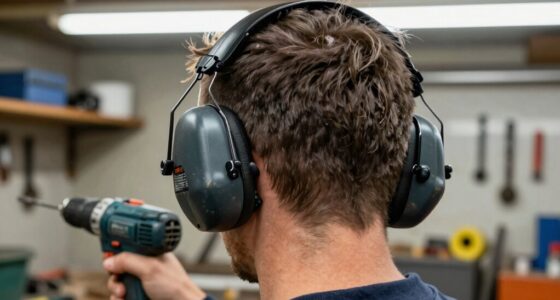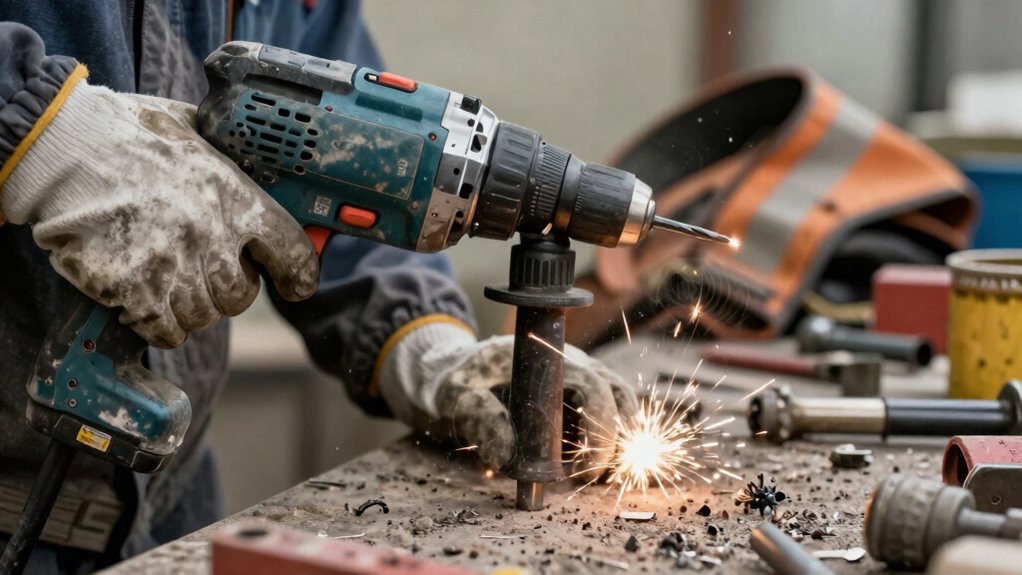

If you notice sudden loud noises, high-pitched screeches, or noise levels that exceed safety standards, your tool may be unsafe. Feel for increased vibration, numbness, or loss of grip; these signs suggest mechanical or ergonomic issues. Unusual tool behavior or discomfort during use can also indicate problems. Regular inspections and proper maintenance help prevent hazards. Keep an eye on these signs, and you’ll discover how to guarantee safer working conditions.

Get business pricing on tools and workshop supplies
- Business-only prices and quantity discounts
- Tax-exempt purchasing
- Multiple users, one account, clear invoices
Key Takeaways
- Listen for sudden loud noises, high-pitched screeches, or persistent sounds that exceed safe noise levels.
- Feel for increased vibration, numbness, or loss of grip indicating unsafe vibration levels.
- Observe unusual tool behavior, handling difficulty, or ergonomic discomfort during operation.
- Regularly inspect tools for mechanical issues and compare vibration levels to manufacturer specifications.
- Follow safety standards, monitor noise/vibration exposure, and replace or repair tools exceeding safe limits.
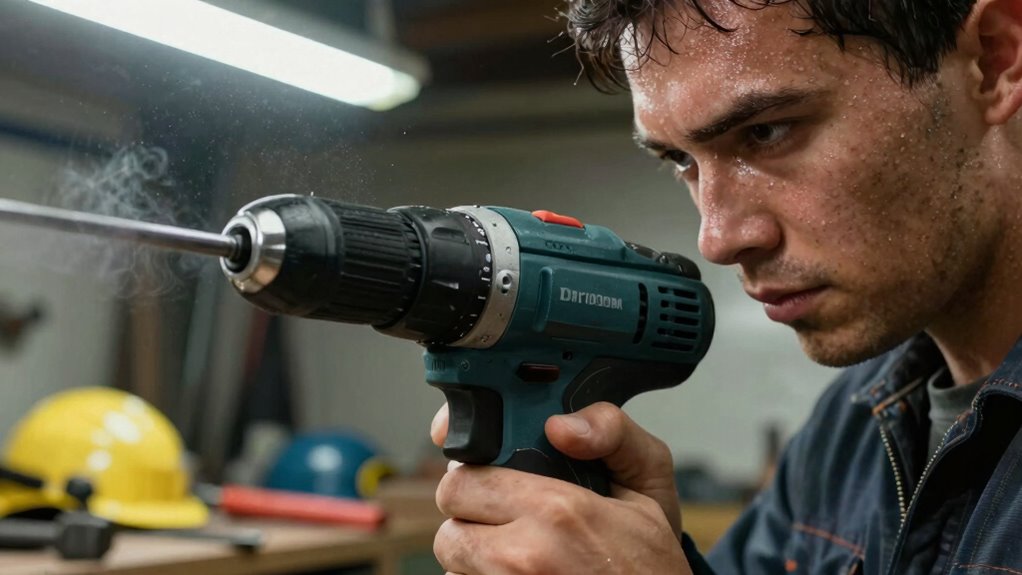
Understanding the signs of unsafe tool noise and vibration is essential for your safety on the job. When working with power tools or equipment, you need to be alert to the sounds and sensations that indicate potential hazards. Excessive noise isn’t just annoying; it can cause hearing loss over time, especially if it exceeds established noise level standards. Recognizing these signs early helps you take necessary precautions before injury occurs. Pay attention to how loud the tools feel and sound during operation. If a tool suddenly becomes louder than usual or produces a high-pitched screech, it’s a warning sign that something’s wrong. Similarly, if you notice increased vibration, it could indicate mechanical issues or improper handling, which might lead to musculoskeletal problems or tool failure. Being aware of mechanical issues and their impact on safety can help prevent accidents. Ergonomic considerations play a vital role in assessing vibration levels. When a tool produces significant vibrations, it puts strain on your hands, arms, and shoulders, increasing the risk of conditions like hand-arm vibration syndrome (HAVS). If you feel your hands going numb or tingling, or if your grip becomes harder, these are signs that the vibration might be unsafe. Using ergonomic tools designed to minimize vibration can help, but you still need to be vigilant. Familiarize yourself with the typical vibration levels for your equipment and compare them to the manufacturer’s specifications. If your tool’s vibration exceeds recommended levels, it’s time to stop and assess whether repairs or replacements are necessary. Additionally, proper maintenance of tools can significantly reduce unexpected noise and vibration issues. Regular maintenance, proper tool selection, and moderation of exposure time can help keep noise levels within safe limits. It’s also important to stay informed about noise level standards to ensure you’re working within safe parameters and protecting your hearing health. Being proactive about tool inspection can further help identify issues before they escalate into safety hazards. Moreover, understanding how vibration exposure accumulates over time can help you manage risks more effectively.
Products Worth Considering

Philips Hue Festavia Permanent Outdoor String Lights, 80 Lights, 150 ft

Google Nest Learning Thermostat (4th Gen) with Nest Temperature Sensor (2nd Gen), Obsidian

Google Nest Smart Thermostat, Programmable Wi-Fi, Charcoal
As an affiliate, we earn on qualifying purchases.
Frequently Asked Questions
What Are the Long-Term Health Effects of Exposure to Unsafe Tool Noise?
Long-term exposure to unsafe tool noise can lead to hearing loss, making it hard to hear conversations or alarms over time. You might also experience increased occupational stress, which affects your overall well-being and job performance. Constant noise exposure can cause fatigue and anxiety. Protect your ears with hearing protection and take breaks to reduce stress. Ignoring these risks can seriously impact your health and quality of life in the long run.
Can Vibration Exposure Cause Permanent Damage?
Vibration exposure can cause permanent damage if it exceeds safe vibration thresholds, especially with prolonged contact. About 20% of workers exposed to high vibration levels develop hand-arm vibration syndrome, leading to permanent nerve and tissue damage. Your noise sensitivity can increase risk, making it harder to detect harmful vibrations. Always monitor tool vibration levels and take precautions, as ignoring these risks can lead to lasting health issues.
How Often Should Tools Be Inspected for Safety?
You should inspect your tools before each use to guarantee safety. Regular tool maintenance is essential, so follow your workplace’s safety protocols for scheduled inspections. Check for any signs of wear, damage, or unusual noise and vibration. Promptly address issues to prevent accidents. Consistent inspection helps catch problems early, maintaining safe operation and reducing risks. By staying diligent, you protect yourself and others while working efficiently.
Are There Specific Training Programs for Recognizing Unsafe Vibrations?
Think of training awareness as your personal lighthouse guiding you through foggy waters of vibration hazards. Yes, there are specific programs designed to help you recognize unsafe vibrations, teaching you to listen for warning signs and feel the subtle shifts in your tools’ behavior. These programs sharpen your senses, making you more attuned to vibration hazards, so you can act before danger strikes, keeping your work environment safe and sound.
What Personal Protective Equipment Best Reduces Noise and Vibration Risks?
You should wear hearing protection like earplugs or earmuffs for noise reduction, and padded gloves or anti-vibration gloves for vibration mitigation. These PPE options help minimize exposure to harmful noise and vibrations, protecting your hearing and reducing strain on your hands. Make sure the equipment fits well and is rated for the specific noise and vibration levels you encounter. Always use PPE consistently to stay safe during tool operation.
Conclusion
By paying close attention to unusual noises and excessive vibrations, you can spot unsafe tool conditions early—sometimes right when you least expect it. It’s almost like the tools are giving you clues, whispering warnings that shouldn’t be ignored. When you notice these signs, take action before an accident happens. Staying vigilant isn’t just smart; it’s a coincidence waiting to happen that keeps you safe and your work smooth, every single time.