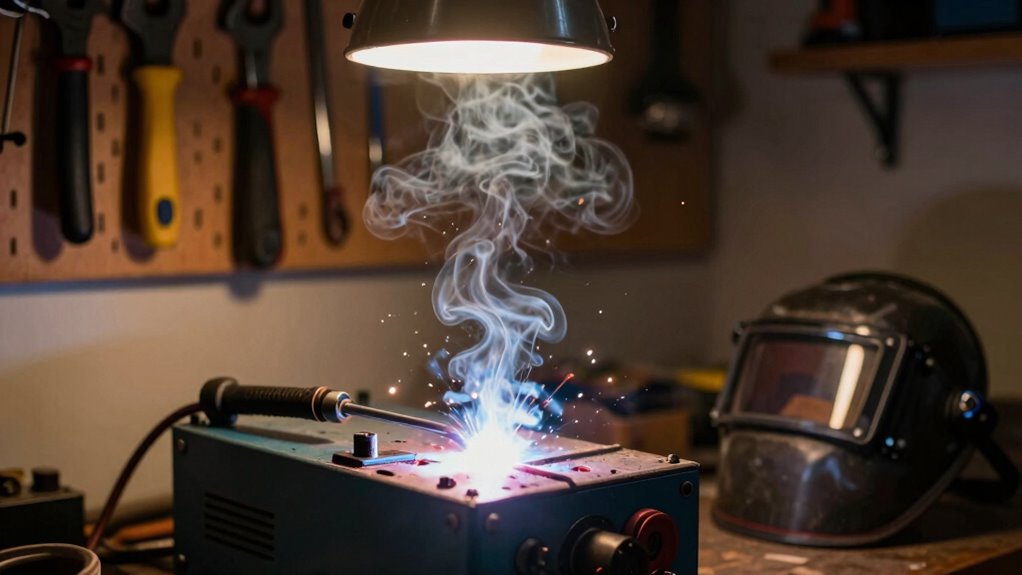

Welding fumes in your home shop are often underestimated, but they pose serious health risks like lung problems, headaches, and fatigue. Even occasional welding produces hazardous metals and gases that can accumulate without proper ventilation. Good airflow controls airborne contaminants, protecting your well-being. Ignoring these risks can lead to long-term health issues and compromised safety. To keep yourself safe, it’s essential to prioritize fume control—discover how you can improve your workspace for better health.

Get tools and workshop supplies delivered free — and shop member deals
- Fast, free delivery on millions of items
- Access to Prime Big Deal Days deals on October 6–7
- Prime Video, Amazon Music and more included
Key Takeaways
- Welding fumes contain toxic metals and gases that pose serious health risks even with infrequent exposure.
- Proper ventilation effectively removes harmful fumes, preventing long-term respiratory and overall health issues.
- Inadequate airflow in home shops increases fume inhalation, compromising indoor air quality and safety.
- Prioritizing fume control demonstrates a commitment to safer, healthier welding practices at home.
- Enhancing air quality management reduces health-related costs and promotes sustainable, safe workshop environments.
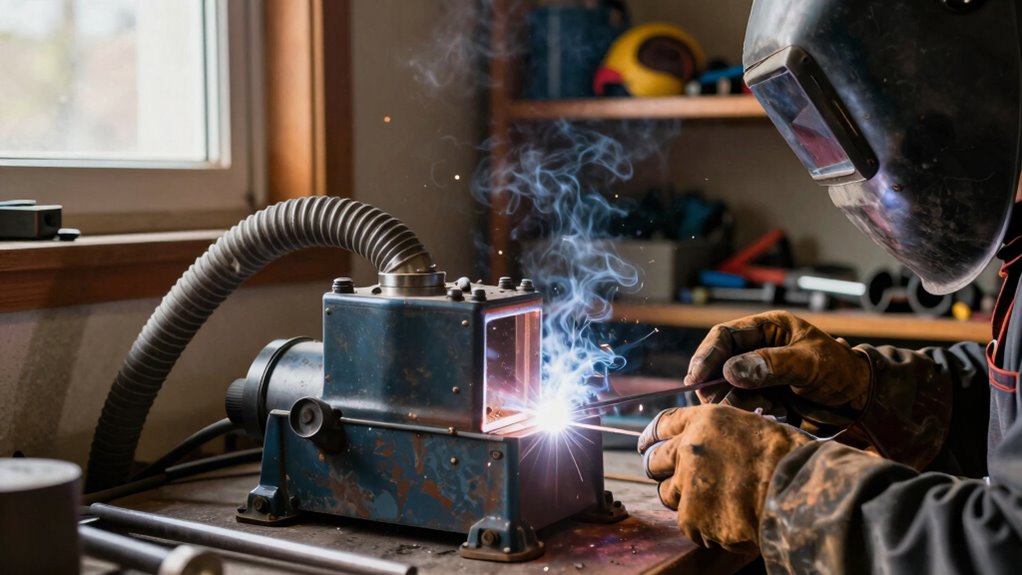
Have you ever considered the health risks posed by welding fumes in your home shop? Many hobbyists overlook the dangers that come with welding, assuming that because it’s done on a small scale, it’s relatively safe. However, the fumes generated during welding contain hazardous metals and gases that can impact your health over time. Exposure to these fumes can lead to respiratory problems, irritation, or even long-term conditions like occupational lung disease. It’s essential to recognize that even in a home workshop, your health is vulnerable if proper precautions aren’t in place.
Industrial health standards highlight the importance of controlling airborne contaminants, and that applies just as much in a home environment as it does in a factory. The key to minimizing your exposure is implementing effective ventilation systems. These systems help to remove fumes at their source, preventing them from accumulating in your workspace. A well-designed ventilation setup doesn’t have to be complicated or expensive. Simple exhaust hoods, local exhaust ventilation, or even portable air filtration units can significantly reduce harmful airborne particles. Proper ventilation not only protects your lungs but also helps maintain a cleaner workspace, making it safer and more comfortable to work in. Furthermore, understanding the importance of proper ventilation is crucial for creating a safer and healthier environment in your home shop.
It’s tempting to think that if you weld occasionally, you don’t need to invest in ventilation. But even infrequent welding can produce enough fumes to cause health issues over time. Ignoring proper airflow and fume extraction increases the risk of inhaling dangerous particles that settle into your lungs. Additionally, poor indoor air quality affects not just your respiratory health but also your overall well-being, causing headaches, fatigue, and irritation. Because of this, paying attention to your ventilation systems isn’t just about compliance; it’s about prioritizing your health and safety. Additionally, understanding the importance of air quality management in the environment reminds us that sustainable practices, including proper air quality management, contribute to a healthier planet overall. Incorporating air quality control measures in your workspace can make a significant difference in minimizing health risks. Remember, the goal isn’t just to meet safety standards but to actively reduce health risks associated with welding fumes. Taking these steps shows you’re serious about your health and committed to creating a safer, healthier home shop environment.
As an affiliate, we earn on qualifying purchases.
Frequently Asked Questions
Are There Budget-Friendly Welding Fume Control Options for Hobbyists?
Yes, there are budget-friendly options for hobbyists. You can use affordable filters like activated carbon or particulate masks to reduce fumes. DIY ventilation setups, such as portable exhaust fans or simple ducting systems, can effectively vent fumes outside. Combining these solutions helps you create a safer welding environment without breaking the bank, making it easier to maintain health and safety while pursuing your projects at home.
How Often Should Welding Fume Extraction Equipment Be Maintained?
You should maintain your air filtration and welding fume extraction equipment regularly, ideally following a weekly maintenance schedule. Check filters for dirt and debris, clean or replace them as needed, and guarantee the system operates efficiently. Regular maintenance keeps your equipment functioning properly, reduces health risks, and extends its lifespan. Staying consistent with your maintenance schedule is essential for effective fume control and a safer home welding environment.
Can DIY Fume Control Solutions Be Effective in Home Shops?
DIY fume control solutions can be effective if you focus on air filtration and source capture. You can improve your home shop’s safety by creating simple, efficient setups like local exhaust systems or using portable air filters. These methods actively remove welding fumes at their source and filter the air you breathe, reducing health risks. With proper design and maintenance, DIY solutions can markedly improve your welding environment.
What Are the Health Risks of Prolonged Welding Fume Exposure?
Prolonged exposure to welding fumes can pose serious health hazards. Welding fumes contain harmful chemicals and metals that can cause respiratory issues, lung diseases, and even increase cancer risk. You might not notice immediate effects, but over time, these fumes build up and impact your health. Wearing proper ventilation and masks considerably reduce these risks, helping protect you from the dangerous health hazards associated with welding fumes.
Are There Portable Fume Extraction Units Suitable for Small Spaces?
Yes, portable units are perfect for small spaces. They’re designed to deliver direct, dependable removal of welding fumes, making your workspace safer and cleaner. Compact and convenient, these units fit snugly into tight corners or small workshops, providing efficient extraction without taking up much room. With portable fume extractors, you can easily guarantee safer, cleaner welding environments—no matter how limited your space.
portable air filtration unit for welding fumes
As an affiliate, we earn on qualifying purchases.
As an affiliate, we earn on qualifying purchases.
Conclusion
Think about it—your home shop might seem safe now, but ignoring welding fume control can lead to serious health issues over time. Don’t wait until irritation or worse symptoms appear; take proactive steps to improve ventilation and use proper safety equipment. After all, isn’t your health worth the extra effort? Prioritize fume control today, so you can keep welding safely and enjoy your hobby for years to come.
local exhaust ventilation system for workshop
As an affiliate, we earn on qualifying purchases.
As an affiliate, we earn on qualifying purchases.
welding helmet with fume protection
As an affiliate, we earn on qualifying purchases.
As an affiliate, we earn on qualifying purchases.
Fall yard work Picks
leaf blowers
As an affiliate, we earn on qualifying purchases.