
You should lubricate gears, pivots, and sliding parts that experience friction regularly, using lightweight oil or specialized lubricants. Be sure to apply sparingly and clean off excess to prevent dust buildup. Avoid lubricating motor brushes, electrical contacts, sealed bearings, or parts meant to stay dry. Proper maintenance helps extend your tools’ life and keeps them working smoothly. To learn exactly which parts to care for and how to do it properly, keep exploring these tips.
Listen free for 30 days with Audible
Thousands of audiobooks and originals — cancel anytime.
As an affiliate, we earn on qualifying purchases.
Key Takeaways
- Lubricate gears, pivots, and sliding parts that experience friction regularly with appropriate lightweight oils.
- Avoid lubricating motor brushes, electrical contacts, sealed bearings, and sealed components.
- Use lubricants sparingly and precisely to prevent dust attraction and overheating.
- Follow manufacturer instructions for specific lubrication points and recommended lubricants.
- Regularly inspect and clean tools to maintain proper lubrication and prevent damage.
Maintaining your power tools is vital for their longevity and peak performance, but knowing what parts to lubricate can be confusing. A proper maintenance schedule helps you stay organized and guarantees you don’t overlook critical components. When it comes to lubrication, understanding the right lubricant types is key. Different parts require specific lubricants, and using the wrong one can cause damage rather than prevent it.
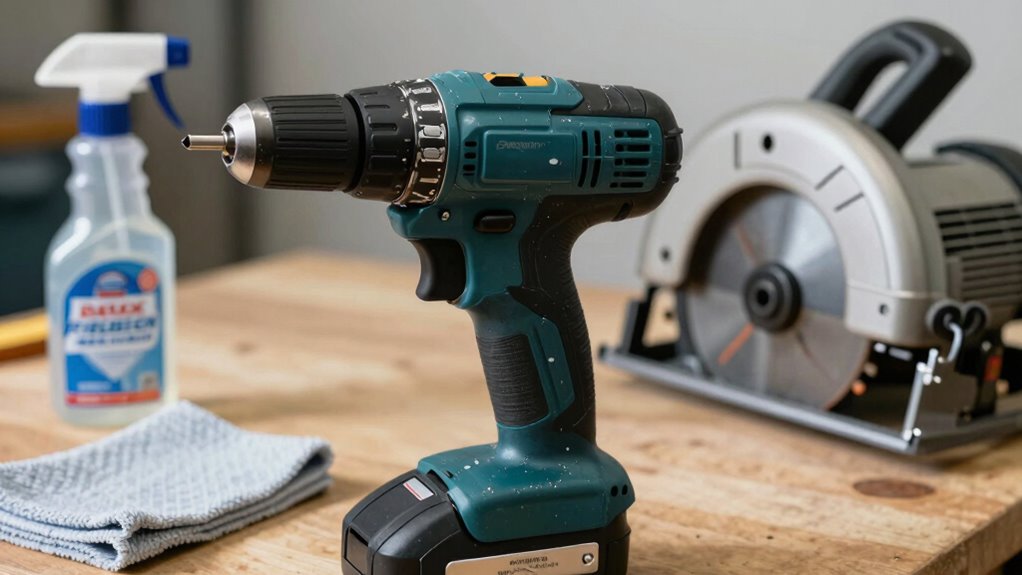
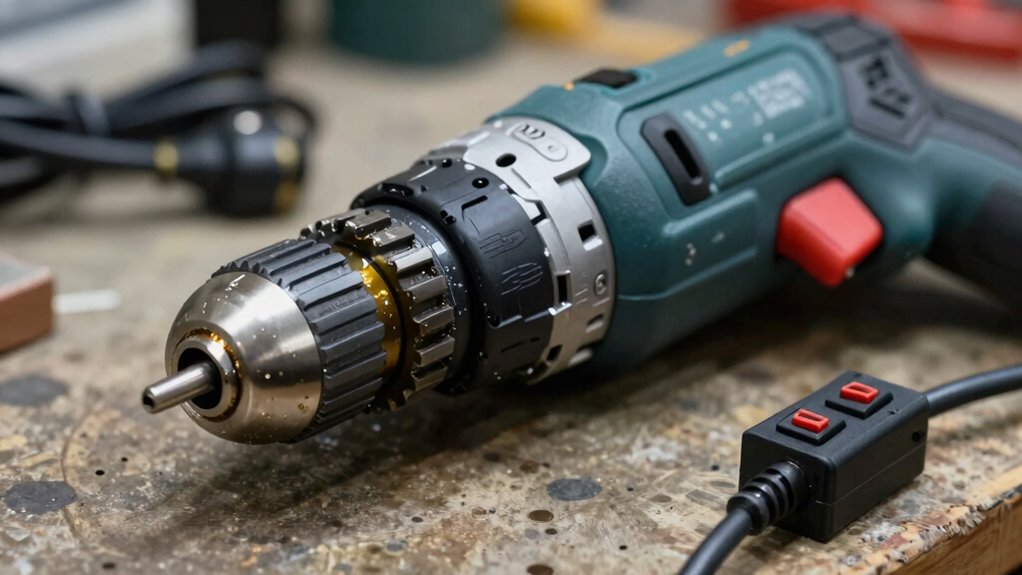
Start by focusing on moving parts that experience friction, such as gears, pivots, and sliding mechanisms. These components benefit from regular lubrication to reduce wear and prevent overheating. For most power tools, a lightweight machine oil or a specialized lubricant designed for power tools works best. These lubricants penetrate small crevices and provide a thin protective film that minimizes metal-on-metal contact. Remember, a little goes a long way; applying excessive lubricant can attract dust and debris, which can accelerate wear.
Lubricate gears, pivots, and sliding parts with lightweight oil to reduce wear and prevent overheating. Use sparingly.
Avoid lubricating parts that are meant to stay dry or sealed. For example, motor brushes, electrical contacts, and sealed bearings shouldn’t be greased or oiled. Introducing lubricant into these areas can interfere with electrical conductivity or cause contamination, leading to malfunction or failure. Always refer to your tool’s user manual or manufacturer recommendations when in doubt. They often specify which parts need lubrication and which should stay dry.
In your maintenance schedule, plan to lubricate your power tools after each use or at regular intervals—like every few months—especially if you use them frequently or in dusty environments. Consistency keeps components moving smoothly and extends the lifespan of your tools. When applying lubricant, do so sparingly and precisely, focusing on the parts that require it. Wipe away excess to prevent dust accumulation, which can cause abrasion and damage. Proper lubrication techniques can make a significant difference in the effectiveness of your maintenance routine. Additionally, understanding gadget reviews and the proper care of electronic components can help ensure your tools remain in optimal condition over time. Regular inspections and cleaning practices also contribute to the longevity and reliable performance of your power tools.
While lubrication is vital for many parts, some components should be left alone. Avoid lubricating the motor’s internal parts unless specifically instructed; these are usually sealed and require no additional grease or oil. Over-lubricating can lead to overheating or slippage, reducing your tool’s efficiency. Also, steer clear of applying lubricant directly to the electrical parts, as this can cause short circuits or corrosion. Proper maintenance practices and routine checks can further enhance your care routine and prevent unnecessary damage.
As an affiliate, we earn on qualifying purchases.
Frequently Asked Questions
How Often Should I Lubricate My Power Tools?
You should lubricate your power tools according to the maintenance schedule, typically every few months or after heavy use. Check the manufacturer’s guidelines for specific intervals. Use appropriate lubricant types like oil or grease designed for your tool’s parts. Regular lubrication reduces wear and keeps the tool running smoothly. Remember, over-lubricating can cause issues, so follow the recommended frequency and use the correct lubricants for maximum performance.
Can I Use Household Oil on Power Tools?
Using household oil on power tools might seem tempting, but it’s best to avoid it. Household oils often lack the specialized properties needed for power tool maintenance, which can lead to gumming up or damage over time. Instead, go for the manufacturer-recommended lubricants. Proper lubrication ensures your tools run smoothly, lasts longer, and performs better. Think of it as giving your power tools a tailored spa day they truly deserve.
Is It Necessary to Lubricate Electric Components?
You don’t need to lubricate electric components, as electric component maintenance typically involves keeping parts clean and dry, not lubricated. Many lubrication myths suggest oiling electric parts helps, but it can actually cause damage or short circuits. Instead, focus on proper cleaning and ensuring connections are secure. For long-lasting performance, follow manufacturer guidelines and avoid unnecessary lubrication on electrical parts, which can lead to more harm than good.
What Are Signs My Power Tool Needs Lubrication?
You’ll notice your power tool needs lubrication when it starts making unusual noises, feels less smooth, or shows signs of overheating. Use proper lubrication techniques, like applying the right amount at recommended intervals, to keep it running effectively. Avoid common lubrication mistakes such as over-lubricating or using the wrong type of lubricant, which can cause damage. Regular maintenance ensures your tool stays in good shape and performs at its best.
Should I Lubricate Power Tools After Each Use?
Absolutely, you should lubricate your power tools after each use—because who doesn’t love a shiny, well-oiled machine? Regular tool maintenance keeps everything running smoothly and extends lifespan. Mastering lubrication techniques ensures you don’t overdo it or miss spots. Think of it as a spa day for your tools—skip it, and they’ll start complaining (or breaking down). So yes, make lubrication part of your routine!
lightweight machine oil for power tools
As an affiliate, we earn on qualifying purchases.
As an affiliate, we earn on qualifying purchases.
Conclusion
Remember, knowing what to lubricate and what to leave alone keeps your power tools running smoothly, like a well-tuned orchestra. Don’t be tempted to over-lubricate or ignore essential components—each part has its role, like players in a symphony. By taking care of your tools properly, you guarantee they perform at their best and last longer. So, treat your power tools with respect, and they’ll reward you with reliable performance every time—music to your ears!
power tool maintenance lubricant
As an affiliate, we earn on qualifying purchases.
As an affiliate, we earn on qualifying purchases.
specialized lubricant for power tools
As an affiliate, we earn on qualifying purchases.
As an affiliate, we earn on qualifying purchases.
Flea & tick season Picks
flea and tick prevention
As an affiliate, we earn on qualifying purchases.