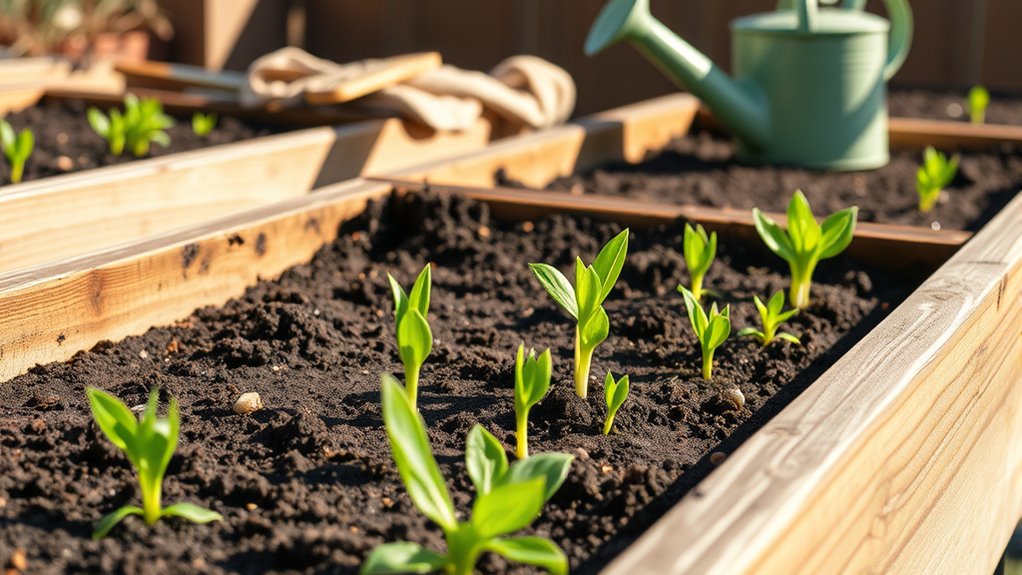

To build raised garden beds in early spring, start by evaluating your soil and removing weeds, roots, and debris. Use sturdy tools like a garden spade, level, and measuring tape for precise measurements, and a drill or impact driver for assembly. Choose weather-resistant materials like cedar or composite for durability. Make certain your beds are level and square during construction for a professional look. Keep safety gear handy, and follow these steps carefully to set a strong foundation for a successful garden season—you’ll discover more helpful tips along the way.
Key Takeaways
- Prepare the soil by removing weeds, debris, and mixing in compost to ensure healthy plant growth.
- Choose weather-resistant materials like cedar or composite for longevity in early spring conditions.
- Use a level, measuring tape, and square during assembly for precise, square beds.
- Assemble beds with a drill or impact driver, securing sides firmly and checking for levelness.
- Wear safety gear and plan construction early in spring when soil is warm and workable.

Are you ready to transform your outdoor space with a simple yet effective gardening solution? Building raised garden beds is an excellent way to do it, especially in early spring when the soil is just starting to warm up. Before you start assembling your beds, focus on soil preparation. Good soil is the foundation of healthy plants, so take the time to assess what’s currently in your yard. Remove any weeds, roots, or debris, and consider mixing in compost or organic matter to boost fertility. This step guarantees your plants will have the nutrients they need to thrive. When it comes to tool selection, pick sturdy, sharp tools like a garden spade, a level, and a measuring tape. These will help you dig, level, and measure precisely, making the process smoother and more efficient. If you’re working with compacted or clayey soil, a pickaxe or garden fork can loosen the earth, making it easier to work with. Preparing the soil properly right from the start saves you headaches later, as it improves drainage and prevents waterlogging, which can be detrimental to your plants.
Once your soil is ready, selecting the right tools becomes vital. A high-quality drill or screwdriver will be necessary if you’re assembling wood or other materials for your raised beds. Choose weather-resistant materials like cedar, composite, or pressure-treated wood to guarantee longevity. When measuring and cutting, precision is key, so have a square and a level on hand to make sure your bed frames are square and even. Using a level during assembly guarantees that your beds will sit flat, preventing water from pooling on one side. If you’re building multiple beds, mark your measurements carefully to keep everything uniform. An impact driver can make screwing the sides together faster and easier, especially if you’re working alone. Additionally, gloves and safety goggles are essential for protecting yourself during the process.
Frequently Asked Questions
What Is the Ideal Soil Mix for Early Spring Planting?
You should use a balanced soil mix that combines high-quality compost, garden soil, and coarse sand or perlite for drainage. Test your soil to check nutrient levels and pH, ensuring ideal conditions. Prioritize compost quality, choosing well-decomposed, nutrient-rich compost to boost plant growth. This mix provides the necessary nutrients and good drainage, creating a healthy environment for your early spring plants to thrive.
How Deep Should the Raised Beds Be for Spring Vegetables?
You should make your raised beds at least 12 to 18 inches deep to support spring vegetables. This depth allows for proper compost layering and provides enough space for roots to grow. If you’re planting deep-rooted crops like carrots or potatoes, consider a bed height of up to 24 inches. Ensuring adequate depth promotes healthy growth, improves drainage, and makes maintenance easier during the growing season.
Can I Build Raised Beds on Uneven Ground?
Yes, you can build raised beds on uneven ground, but it’s like trying to level a wild sea—ground leveling is essential for bed stability. You’ll want to use lumber or bricks to create a sturdy frame, then fill any gaps beneath with soil or gravel. This approach guarantees your garden remains steady, prevents shifting, and promotes healthy plant growth, even on tricky terrain.
What Are the Best Tools for Assembling Raised Garden Beds?
You’ll want sturdy tools for assembling your garden bed, like a power drill with screwdriver bits, a measuring tape, and a level. These tools help you work efficiently with different garden bed materials, ensuring precise assembly. Use proper assembly techniques, such as pre-drilling holes and securing corners tightly, to create a stable, long-lasting structure. Having the right tools and techniques makes the process smoother and results in a strong, durable garden bed.
How Do I Prevent Early Spring Weeds in New Beds?
To prevent early spring weeds in your new beds, start with effective weed control by removing any existing weeds and their roots. Then, apply a thick layer of mulch, such as straw or wood chips, around your plants. Mulch application blocks sunlight, preventing weed seeds from germinating. Regularly check your beds and add more mulch as needed to maintain weed suppression throughout the season.
Conclusion
Just like the earth’s ancient builders, you’ve now laid the foundation for a thriving garden. With your raised beds in place, you’re channeling the spirit of Daedalus—crafting a sturdy, nourishing sanctuary for your plants to flourish. As spring awakens, remember that your efforts are the first chapter in a season of growth and bounty. So, step back, admire your work, and prepare to watch your garden soar, rooted in your vision and care.