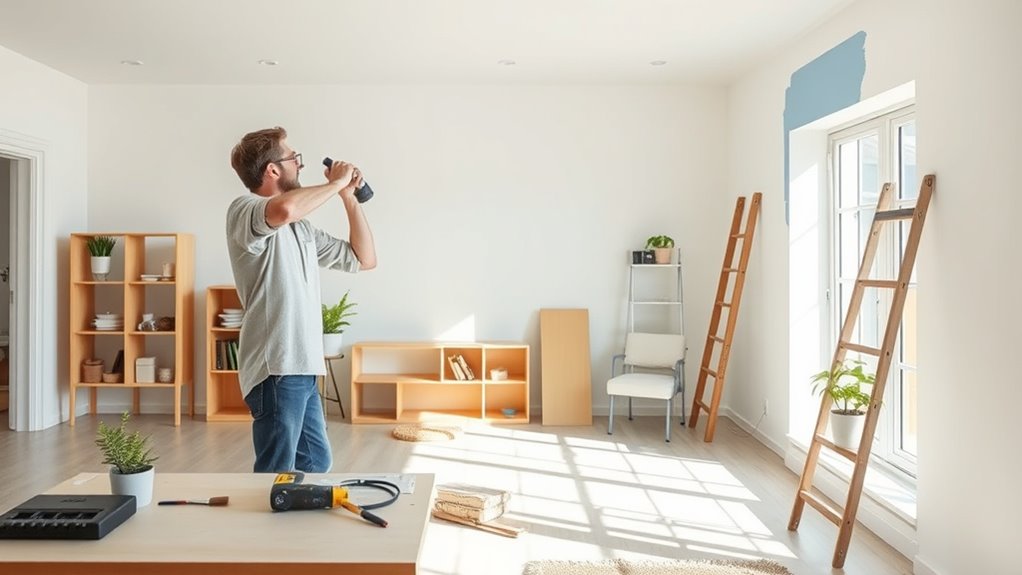

Start this year by tackling easy, budget-friendly DIY home improvements that boost style and sustainability. Refresh your space with a fresh coat of modern paint or swap out old fixtures for a quick, noticeable upgrade. Incorporate eco-friendly materials like recycled decor or energy-efficient lighting to care for the environment. Upcycling furniture and customizing decor from natural items can personalize your home without breaking the bank. Keep exploring for more simple ideas to transform your space effortlessly.
Listen free for 30 days with Audible
Thousands of audiobooks and originals — cancel anytime.
As an affiliate, we earn on qualifying purchases.
Key Takeaways
- Refresh your space with budget-friendly updates like painting walls in modern colors for an instant facelift.
- Incorporate eco-conscious materials such as recycled decor and energy-efficient lighting to create healthier, sustainable home environments.
- Upcycle and repurpose old furniture or containers, like sanding furniture or transforming crates into shelves, to save money and add personal style.
- Make simple improvements like updating window treatments or adding DIY artwork with natural or recycled materials for a fresh look.
- Integrate smart technology and energy-efficient solutions, such as smart thermostats and LED lighting, to enhance home efficiency and comfort.
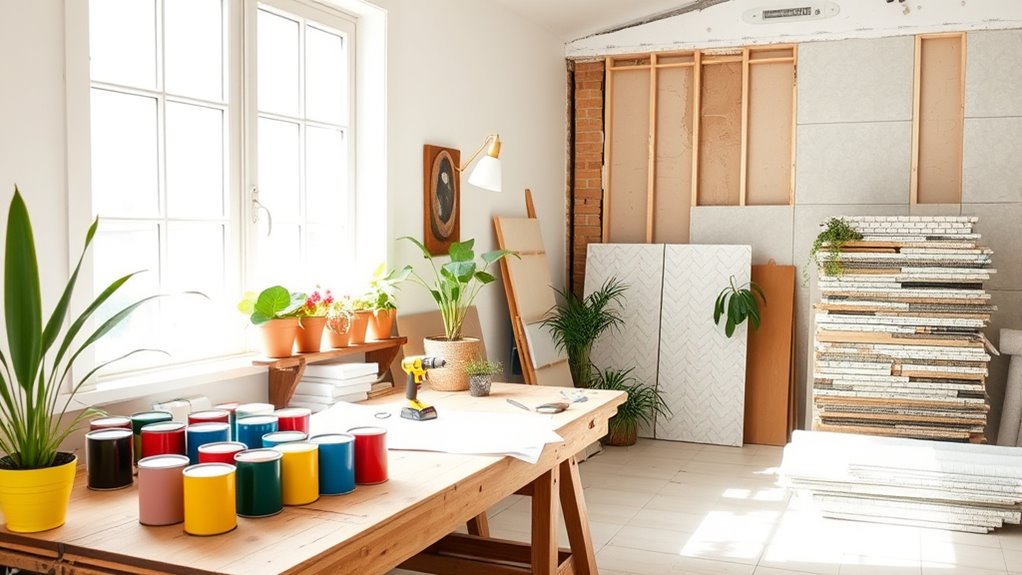
Are you ready to transform your living space without breaking the bank? If so, tackling DIY home improvements is a perfect way to refresh your environment while staying within your budget. You don’t need to be an expert to make meaningful changes—just a willingness to learn and some basic tools. Starting with budget-friendly upgrades allows you to enhance your home’s appearance and functionality without overspending. For example, painting walls in fresh, modern colors can instantly brighten a room and give it a new vibe at a fraction of the cost of new furniture or renovations. Additionally, swapping out outdated fixtures like cabinet handles, faucets, or lighting can make a noticeable difference without requiring major construction. These small changes are simple, affordable, and highly effective, especially when you choose eco-conscious renovations. Choosing eco-friendly materials, low-VOC paints, or recycled decor not only benefits the environment but also creates a healthier living space for you and your family.
When considering budget-friendly upgrades, focus on repurposing items you already own. Old wooden crates can become stylish shelves, while glass jars make excellent storage containers or vases. Upcycling furniture is another fantastic way to add character to your home without spending much. Sanding and repainting an old dresser or table breathes new life into it, saving you money compared to purchasing new pieces. Plus, it’s a rewarding process that adds a personal touch to your decor. If you’re interested in eco-conscious renovations, look for sustainable options like bamboo flooring, reclaimed wood accents, or energy-efficient lighting. Not only do these choices reduce your carbon footprint, but they also often lead to long-term savings on utility bills.
Another easy project is updating your window treatments—curtains or blinds—using eco-friendly fabrics or recycled materials. This simple swap can improve privacy and control natural light, making your home more comfortable. You might also consider creating your own artwork or decorative pieces using natural or recycled materials, which adds a unique touch and keeps costs low. Remember, DIY projects don’t have to be complicated; even small improvements can have a big impact. The key is to plan ahead, gather your supplies, and take your time. As you progress, you’ll gain confidence and discover more ways to personalize your space while sticking to your budget and sustainability goals. Incorporating home improvement technology such as energy-efficient lighting or smart thermostats can further enhance your home’s efficiency and comfort. This year, make a commitment to smart, eco-conscious renovations that elevate your home’s style, comfort, and value—all without overspending.
energy-efficient LED light bulbs
As an affiliate, we earn on qualifying purchases.
As an affiliate, we earn on qualifying purchases.
Frequently Asked Questions
What Safety Gear Is Essential for DIY Home Projects?
For DIY home projects, safety gear essentials include safety goggles, gloves, and a dust mask to protect your eyes, hands, and lungs. Hearing protection like earplugs or earmuffs is vital for noisy tasks. Follow protective equipment tips by always inspecting gear before use and wearing it properly. Don’t forget sturdy footwear and a helmet if you’re working at heights. Staying safe helps you enjoy your projects without accidents.
How Can I Estimate Project Costs Accurately?
To estimate project costs accurately, start by creating a detailed budget plan that includes all necessary materials, tools, and potential extras. Research and source materials early to get current prices, which helps prevent unexpected expenses. Keep a buffer for unforeseen costs, and track your spending closely throughout the project. This approach guarantees you stay within your budget and avoid surprises, making your DIY home improvement smoother and more manageable.
What Permits Might Be Required for Major Renovations?
Did you know that over 60% of major renovations require permits? You’ll likely need building permits for structural changes, electrical upgrades, or plumbing work. Check local zoning regulations to see if any restrictions apply. Failing to acquire the necessary permits can lead to fines or delays, so always consult your city or county building department before starting your project. This ensures your renovation complies with all building codes and zoning laws.
How Do I Choose the Right Tools for Each Project?
To select the right tools for each project, focus on power tool selection based on the task, like drills for drilling or saws for cutting. Use measurement techniques such as a tape measure or a level to guarantee accuracy. Consider your skill level and project scope, and always prioritize safety. Research specific tools beforehand, read reviews, and opt for versatile, reliable options to make your DIY projects successful and enjoyable.
What Are Common DIY Mistakes to Avoid?
Avoid common DIY mistakes by planning carefully and following painting tips to prevent drips and uneven coverage. Don’t rush furniture assembly—read instructions thoroughly and don’t force parts together, which can cause damage. Keep your workspace organized, use the right tools, and double-check measurements. Remember, patience and attention to detail save time and frustration, ensuring your project turns out just as you envisioned.
As an affiliate, we earn on qualifying purchases.
Conclusion
This year, embrace the opportunity to refresh, renew, and reinvent your home. Tackle that peeling paint, organize that cluttered closet, upgrade your fixtures, brighten your space with new paint, and create a cozy nook. Each project brings a sense of accomplishment, a touch of personality, and a fresh start. With every improvement, you build a space that’s more comfortable, more inviting, and more uniquely yours. So get started, stay motivated, and watch your home transform this year.
As an affiliate, we earn on qualifying purchases.
As an affiliate, we earn on qualifying purchases.
Flea & tick season Picks
flea and tick prevention
As an affiliate, we earn on qualifying purchases.