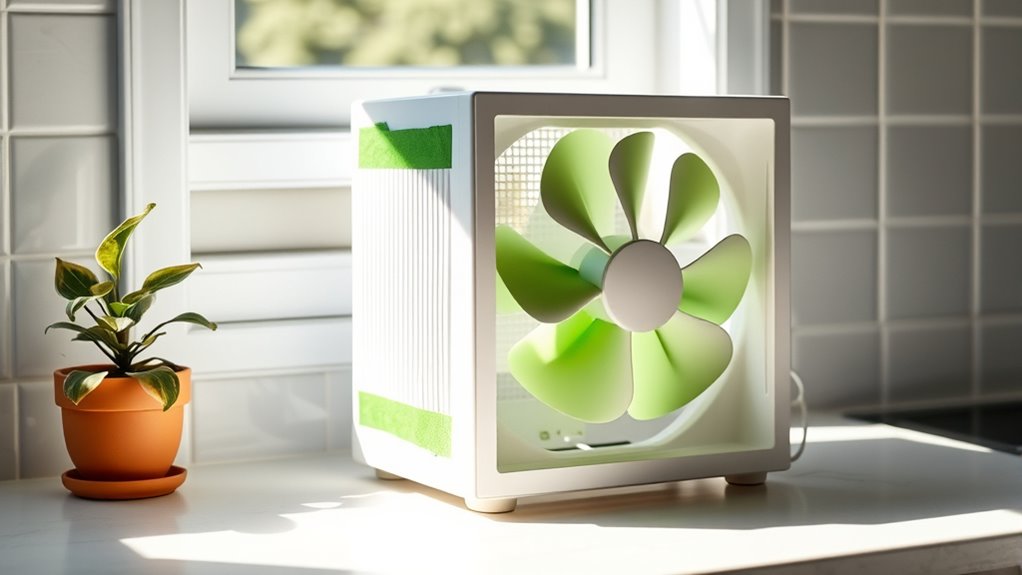

To prep for spring allergies, build your own air filters with materials like HEPA-like filters or activated charcoal layered inside a box fan or frame. Regularly check and replace filters to keep allergens like pollen, dust, and pet dander out of your home. Using washable fabrics and proper sealing boosts efficiency. Staying on top of maintenance helps your DIY setup stay effective. Keep going to discover simple hacks for cleaner, allergy-free indoor air.
Key Takeaways
- Regularly replace or clean DIY filter materials like HEPA-like fabrics and activated charcoal to maintain allergen removal efficiency.
- Use layered filters inside a box fan or reusable frame for effective trapping of pollen, dust, and pet dander.
- Incorporate natural filtration methods, such as washable fabrics and tightly woven materials, to enhance allergen barriers.
- Monitor filter performance and upgrade materials periodically to ensure consistent indoor air quality during allergy season.
- Customize DIY filters with high-efficiency materials to target specific allergens and improve overall air purification at home.
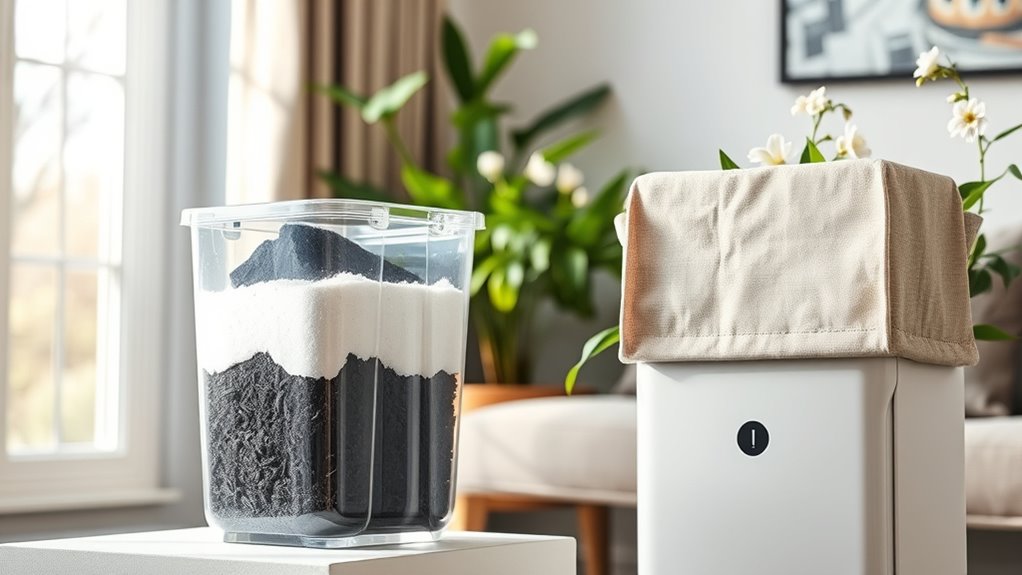
Are you tired of spending a fortune on commercial air purifiers? If so, you’re not alone. Spring allergies can make breathing uncomfortable, and buying expensive machines isn’t always the best solution. Luckily, you can create effective DIY home air filters with simple materials and some basic know-how. The key is understanding air purifier maintenance and how to choose the right DIY filter materials to trap pollen, dust, pet dander, and other irritants. With a little effort, you can considerably improve your indoor air quality without breaking the bank.
First, it’s essential to understand that air purifier maintenance isn’t just about cleaning the device itself; it also involves regularly replacing or upgrading the filter materials inside. Store-bought filters are designed for maximum performance, but DIY options can work just as well when selected carefully. When choosing DIY filter materials, look for items with high filtration efficiency, like activated charcoal, HEPA-like filters made from household items, or even tightly woven fabrics. Charcoal is excellent at absorbing odors and pollutants, while HEPA filters trap tiny particles that cause allergy symptoms. You can repurpose materials like vacuum cleaner bags, air conditioner filters, or even cut-up HEPA filters from old appliances, ensuring they are clean and free of dust before use.
Regularly replace or upgrade DIY filters with high-efficiency materials like activated charcoal and repurposed HEPA filters for optimal air quality.
Creating your own air filter involves layering these DIY filter materials in a manner that maximizes airflow while trapping allergens. For example, you could attach a piece of activated charcoal cloth or a cut-to-size HEPA filter material inside a reusable air purifier frame or a simple box fan. Secure the filter materials tightly so they don’t shift and create gaps, which can reduce effectiveness. It’s also a good idea to add a washable fabric layer on the outside for extra filtration and easy cleaning. Make sure to check the filter regularly—this is part of air purifier maintenance—and replace or clean it as needed. When you notice a drop in performance or visible dust accumulation, it’s time for a refresh. Additionally, understanding the role of natural filtration can help you select materials that work harmoniously with your existing setup.
Using DIY filter materials not only saves money but also allows you to customize your air purifiers for your specific allergy needs. You can experiment with different layers or materials to find what works best in your home environment. Remember, the goal is to create a barrier that captures pollen and dust effectively while maintaining good airflow. Periodic maintenance ensures your DIY air filter remains efficient throughout allergy season. With a little effort, you’ll breathe easier and enjoy a healthier, allergen-reduced indoor space during spring.
Frequently Asked Questions
Can DIY Filters Effectively Replace Commercial Air Purifiers?
DIY filters can sometimes effectively replace commercial air purifiers, especially for small spaces, if you focus on filter efficiency with high-quality materials like activated charcoal or HEPA filters. However, they often fall short regarding consistent performance and safety. When comparing costs, DIY options are cheaper initially, but a commercial purifier offers better long-term reliability and filtration efficiency, making it a smarter investment overall.
How Often Should I Replace or Clean My Homemade Filter?
You should check your homemade filter every 2 to 4 weeks for filter maintenance. Replace or clean it based on how dirty it looks; a clogged filter reduces air quality and airflow. Establish a replacement schedule to keep your DIY setup effective. If you notice decreased airflow or accumulated dirt, it’s time for a fresh filter. Regular maintenance guarantees your homemade filter continues to protect against allergens efficiently.
Are There Specific Materials Best Suited for DIY Air Filters?
Did you know that using HEPA-grade filter material can capture up to 99.97% of airborne particles? For your DIY assembly, opt for high-quality materials like activated carbon or dense polyester filters, which effectively trap allergens. Avoid cheap, flimsy materials that won’t last or filter well. Choose sturdy, breathable filter material, assemble it securely, and replace or clean it regularly to keep your indoor air clean and allergy-free.
Will Homemade Filters Remove All Pollen and Allergens Completely?
Homemade filters won’t remove all pollen and allergens completely, but they can substantially reduce airborne particles. Using a filter material like HEPA-grade or tightly woven fabric improves airflow efficiency and traps more allergens. Keep in mind, DIY filters are less effective than commercial HEPA filters, but they can still help improve indoor air quality during allergy season. Regularly replacing or cleaning your filter material enhances overall effectiveness.
Can DIY Air Filters Be Safely Used Around Children and Pets?
You can safely use DIY air filters around children and pets if you prioritize DIY safety. About 80% of homemade filters use non-toxic, pet-safe materials, making them suitable for households. Always guarantee the filter is properly assembled, free of sharp edges, and placed out of reach to prevent accidents. Regularly check the filter for wear, and avoid using harmful chemicals. With these precautions, DIY air filters can help improve air quality safely.
Conclusion
Now you’re ready to tackle spring allergies with these simple DIY air filter hacks. Did you know that indoor air can be up to five times more polluted than outdoor air? By creating your own filters, you reduce allergens and breathe easier. Staying proactive with these easy solutions can markedly improve your home’s air quality. So, give these hacks a try and enjoy the season with fewer allergy symptoms and fresher, cleaner air all around.