To prevent spring floods, regularly test and maintain your sump pump, ensuring it’s free of debris and backed up with a battery-powered system for storm resilience. Keep gutters and downspouts clear, directing water at least 3-4 feet away from your foundation with extensions or splash blocks. Proper grading around your home also helps water flow away naturally. Staying proactive with these tips can make a big difference; discover how to better prepare your home further.
Key Takeaways
- Regularly test and maintain sump pumps, upgrading to battery-backed models for storm resilience.
- Keep gutters and downspouts clear of debris and extend downspouts at least 3-4 feet from the foundation.
- Properly grade landscaping to direct water away from the home’s foundation.
- Install rain gardens or permeable pavers to absorb excess stormwater and reduce drainage load.
- Conduct routine inspections of drainage systems and add backup power sources to ensure continuous operation during outages.

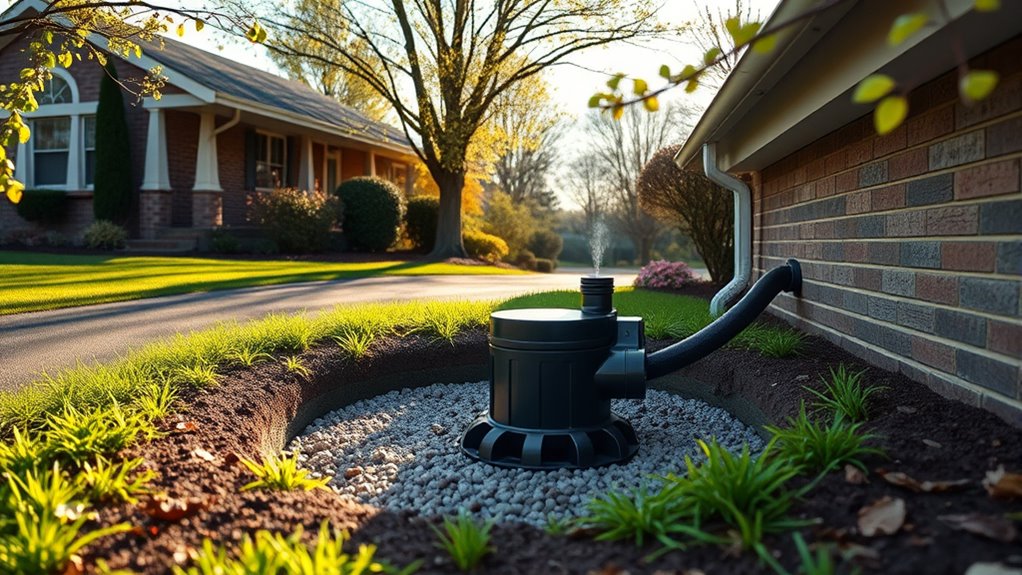
Spring floods can cause significant damage if not prepared for in advance. As the season shifts and heavy rains become more frequent, your focus should be on effective stormwater management and flood preparedness. Taking proactive steps now can save you from costly repairs and stress later. One of the most practical ways to protect your home is by ensuring your sump pump is functioning properly. Your sump pump acts as a critical line of defense against flooding by removing excess water that accumulates in your basement or crawl space. Regularly test your sump pump by pouring water into the sump basin to confirm it activates and drains correctly. If it’s old, consider upgrading to a more reliable, battery-backed model, especially since power outages during storms are common. Installing a backup power source guarantees your sump pump keeps working even when the electricity fails, providing continuous flood protection.
Beyond your sump pump, managing stormwater runoff from your property is equally essential. Proper grading around your house directs excess water away from your foundation, reducing the risk of basement flooding. Ensure that the landscape slopes downward, at least a few feet away from your home’s foundation, to facilitate natural drainage. Also, installing a rain garden or permeable pavers can absorb runoff, lessening the burden on your drainage systems. Keeping your property’s drainage channels clear of debris is another simple yet effective step. Regularly inspect and remove leaves, twigs, and dirt from gutters and downspouts, especially before heavy rains. Clogged gutters can cause water to overflow, pooling near your foundation and increasing flood risk.
Your gutters are a fundamental part of your stormwater management plan, and their maintenance is essential for flood preparedness. Seamless gutters and properly positioned downspouts help channel rainwater away from your home’s foundation. Extend downspouts at least three to four feet away from your house to prevent water from seeping into your basement or basement walls. Consider installing splash blocks or flexible extensions to direct water further away. During stormy weather, stay vigilant and monitor your gutters and drainage systems. Promptly clear any blockages and make sure water flows freely. These small actions can prevent minor issues from escalating into major flooding problems.
Frequently Asked Questions
How Often Should I Test My Sump Pump During Spring?
You should test your sump pump at least once a month during spring to make certain it’s working properly. Regular testing helps extend its lifespan and catches potential failures early. When testing, pour water into the sump pit to see if the pump activates and drains effectively. Increased testing frequency during heavy rain or if your pump is older is wise. This way, you stay ahead of any issues and protect your home from flooding.
What Materials Are Best for Gutter Guards?
Did you know that 75% of homeowners experience clogged gutters? For gutter guards, durable materials like aluminum or stainless steel mesh work best, preventing debris buildup effectively. When choosing gutter guard materials, consider metal options for longevity and corrosion resistance. Combine these with effective sump pump testing, especially during spring, to keep water flowing smoothly and prevent flooding. Proper materials and maintenance make all the difference.
Can Gutter Maintenance Prevent Basement Flooding?
Yes, gutter maintenance helps prevent basement flooding. You should regularly clean your gutters to avoid clogs that cause overflow. Installing rain barrel systems can reduce runoff, while proper landscape grading directs water away from your foundation. These steps guarantee water flows smoothly through your gutters, minimizing the risk of basement flooding during heavy rains. Consistent maintenance and proper yard setup are essential for protecting your basement from water damage.
How Do I Choose the Right Size Sump Pump?
To select the appropriate size sump pump, consider your home’s sump basin size and the amount of water your area typically receives during heavy rains. Look for a pump with sufficient sump pump capacity to handle peak water flow. When installing, follow pump installation tips like ensuring proper drainage and secure wiring. This guarantees your sump pump efficiently prevents basement flooding during spring storms, giving you peace of mind.
Are There Eco-Friendly Options for Gutter Cleaning?
Think of your gutters as the garden’s guardians, protecting it from stormy threats. Yes, eco-friendly options exist for gutter cleaning. You can use biodegradable solutions that break down naturally, reducing environmental impact. Eco-friendly cleaning methods include gentle, plant-based cleaners and manual tools like gutter scoops and brushes. These options keep your gutters clear while caring for the planet, making your home a greener, safer haven during spring showers.
Conclusion
By taking proactive steps with sump pumps and gutter maintenance, you can considerably reduce your risk of spring floods. Did you know that clogged gutters are responsible for over 70% of basement flooding? Staying vigilant and maintaining your drainage systems not only protects your home but also saves you money and stress. Don’t wait for the next heavy rain—act now to keep your property safe and dry all season long.