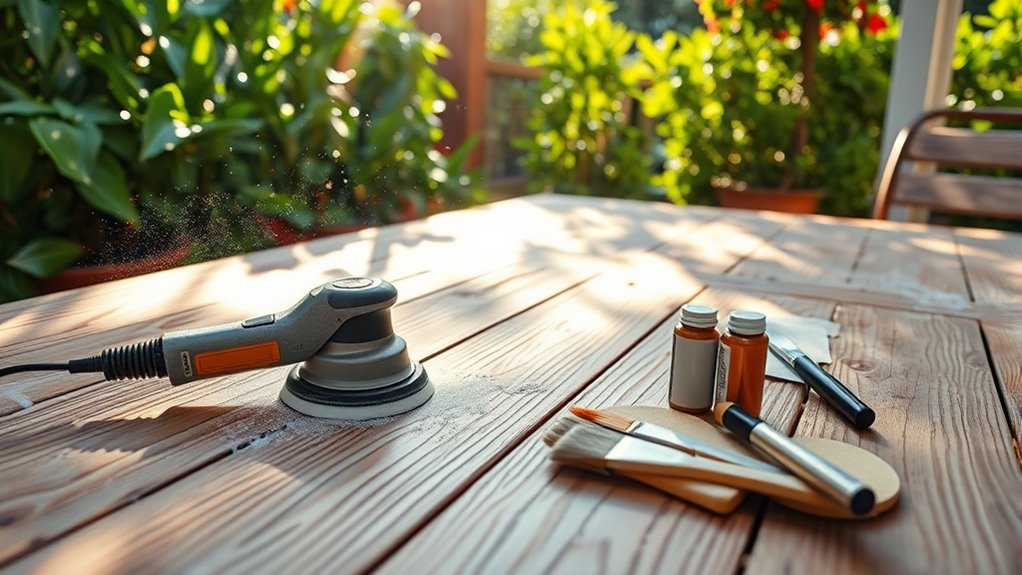

To refinish outdoor furniture, gather essential tools like a soft brush, sandpaper, and clean rags, along with high-quality teak oil or sealant. Start by cleaning thoroughly to remove dirt and grime, then lightly sand to smooth surfaces and remove scratches. Apply a protective finish following the manufacturer’s instructions, reapplying periodically for lasting results. With these tips and tools, you’ll revive your patio furniture and create a beautiful outdoor space—keep exploring for detailed guidance.
Key Takeaways
- Use gentle cleaners and soft brushes to thoroughly clean outdoor furniture, especially in crevices, before refinishing.
- Lightly sand surfaces to remove scratches and rough patches, restoring smoothness and preparing for new finishes.
- Apply high-quality teak oil, sealant, or paint following manufacturer instructions to protect and enhance outdoor furniture.
- Refinish every 6 to 12 months to maintain appearance, prevent weathering, and extend furniture lifespan.
- Incorporate decorative paint or stain updates to refresh patio aesthetics and create a cohesive outdoor look.
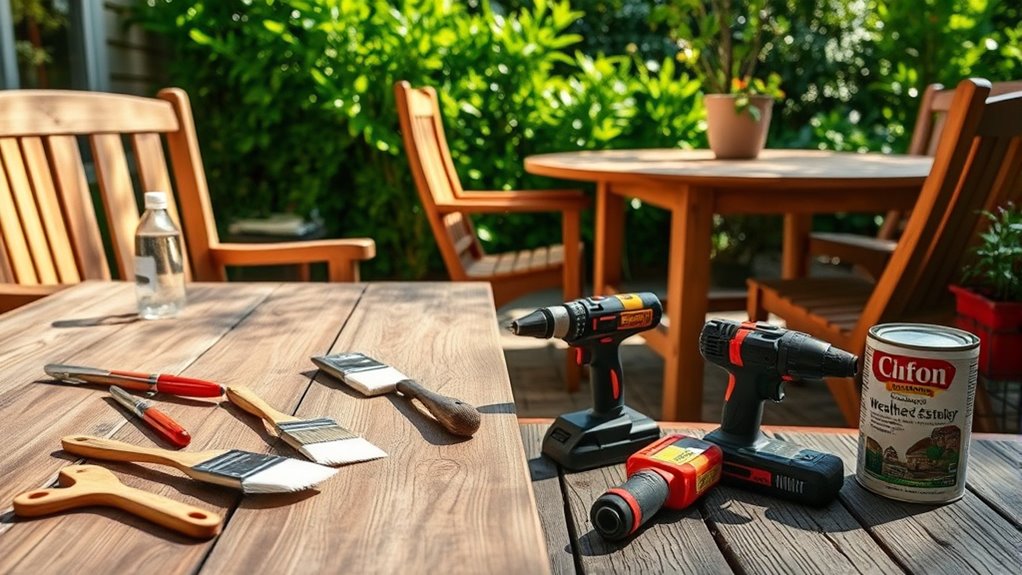
Over time, outdoor furniture can become worn, faded, and scratched, but with a little effort, you can restore its beauty and extend its lifespan. If you have teak furniture, proper teak maintenance is key to keeping it looking its best. Teak is naturally durable, but exposure to sun, rain, and dirt can dull its rich color and lead to surface imperfections. To revive your teak pieces, start by cleaning them thoroughly with a gentle cleaner designed for teak or outdoor wood. Use a soft brush or sponge to remove dirt and grime, making sure to get into crevices. Rinse well and let it dry completely before moving on. This initial step is essential for preparing the surface for refinishing and ensuring your patio decor remains attractive.
Once cleaned, you can choose to refinish your teak furniture to restore its original glow or give it a new look. Applying a teak oil or sealant not only enhances its appearance but also provides protection against weathering. When selecting a product, look for high-quality oils formulated specifically for outdoor teak, and follow the manufacturer’s instructions carefully. Regular teak maintenance, including oiling every six to twelve months, helps prevent gray patina and keeps the wood nourished. If your goal is to preserve the natural color, periodic cleaning combined with light sanding can remove surface scratches and rough patches, making your furniture look fresh and inviting.
In addition to teak maintenance, refinishing your outdoor furniture offers the opportunity to update your patio decor. Consider sanding down painted or stained surfaces and applying a new coat of paint or stain in a color that complements your outdoor space. For metal or wicker furniture, look for appropriate refinishing techniques—such as touch-up paint or protective coatings—that address rust or damage. When you refresh the look of your furniture, it instantly elevates the overall aesthetic of your patio, making it a more inviting space for gatherings or relaxing afternoons.
Frequently Asked Questions
How Long Does Refinishing Outdoor Furniture Typically Last?
Refinishing outdoor furniture with weatherproof coatings can last between 3 to 5 years, depending on climate and maintenance. You should reapply coatings when you notice signs of wear, such as chipping or fading, to maximize furniture longevity. Regular cleaning and prompt touch-ups help preserve your furniture’s appearance and durability, ensuring your patio stays inviting and protected from the elements for years to come.
Can I Refinish Furniture Made of Plastic or Resin?
You can absolutely refinish furniture made of plastic or resin. For example, if you have a resin patio chair, you might perform plastic restoration by sanding, cleaning, and applying a suitable spray paint designed for outdoor plastics. Resin refurbishment involves using specific primers and paints that adhere well to the surface. Just verify you choose products labeled for outdoor use to ensure durability and a smooth finish.
What Safety Gear Should I Use During Refinishing?
When refinishing outdoor furniture, you should always wear protective gloves to prevent skin irritation from chemicals and a respirator mask to avoid inhaling fumes from paints or adhesives. These safety gear pieces keep you safe from harmful substances. Make sure your gloves fit well and the mask seals properly around your face. Working in a well-ventilated area also helps reduce inhalation risks, ensuring a safer refinishing process.
Is It Necessary to Remove Old Paint Before Refinishing?
Think of your furniture as a blank canvas waiting to be reborn. You should definitely remove old paint before refinishing because paint stripping ensures a smooth surface. Proper surface preparation helps the new finish adhere better and lasts longer. Skipping this step is like trying to paint on a rough wall—your results won’t look right or hold up well. So, take the time to strip old paint for a flawless, durable finish.
How Do I Prevent Future Weather Damage After Refinishing?
To prevent future weather damage, you should apply a protective sealant or weatherproof coating after refinishing. These products create a barrier against moisture, UV rays, and temperature changes. Make sure to choose a sealant suitable for outdoor furniture and follow the manufacturer’s instructions for proper application. Reapply the coating periodically, especially after harsh weather, to keep your furniture looking great and protected for years to come.
Conclusion
Refinishing your outdoor furniture not only revives its appearance but also extends its life, making your patio a stylish retreat. While some might worry it’s too time-consuming, a few simple tools and tips make the process manageable and rewarding. With patience and the right approach, you’ll enjoy a beautiful, refreshed space without breaking the bank. Remember, investing a little effort now guarantees your furniture stays stunning and functional for years to come.