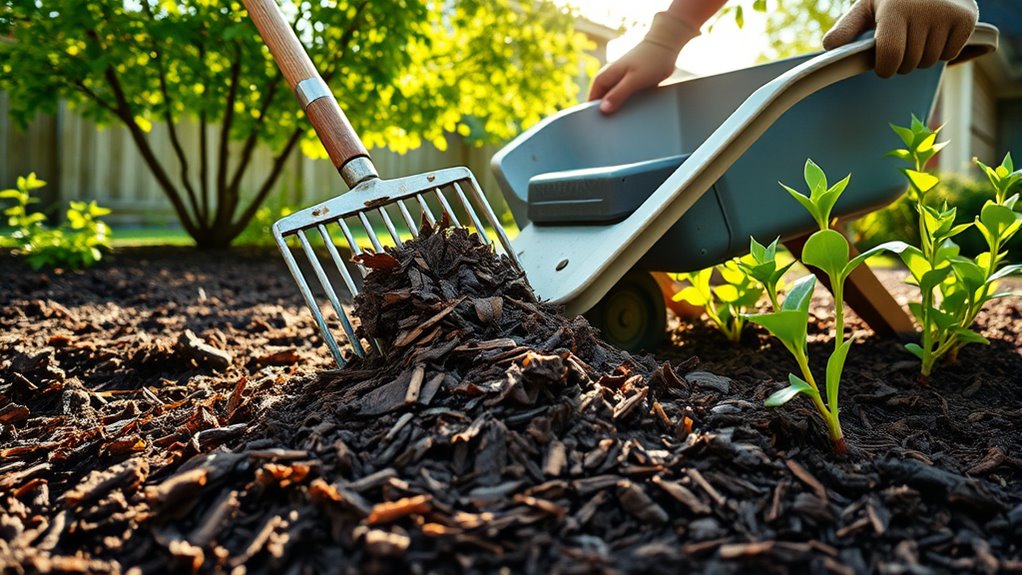

To spread mulch easily, gather essential tools like a shovel or pitchfork to transfer mulch, a wheelbarrow for transportation, and a rake for even distribution. Use these tools to layer mulch between 2-4 inches deep, keeping it away from plant stems. Maintaining proper technique guarantees a tidy, healthy landscape. If you keep exploring, you’ll discover tips to streamline your mulch spreading process even further.
Key Takeaways
- Use a shovel or pitchfork to transfer mulch evenly from bags or piles.
- Employ a garden rake to level soil and spread mulch uniformly.
- Utilize a wheelbarrow for easy transport of larger mulch quantities.
- Maintain a mulch depth of 2 to 4 inches with a tamper or rake.
- Replenish mulch annually to ensure continued coverage and landscape health.
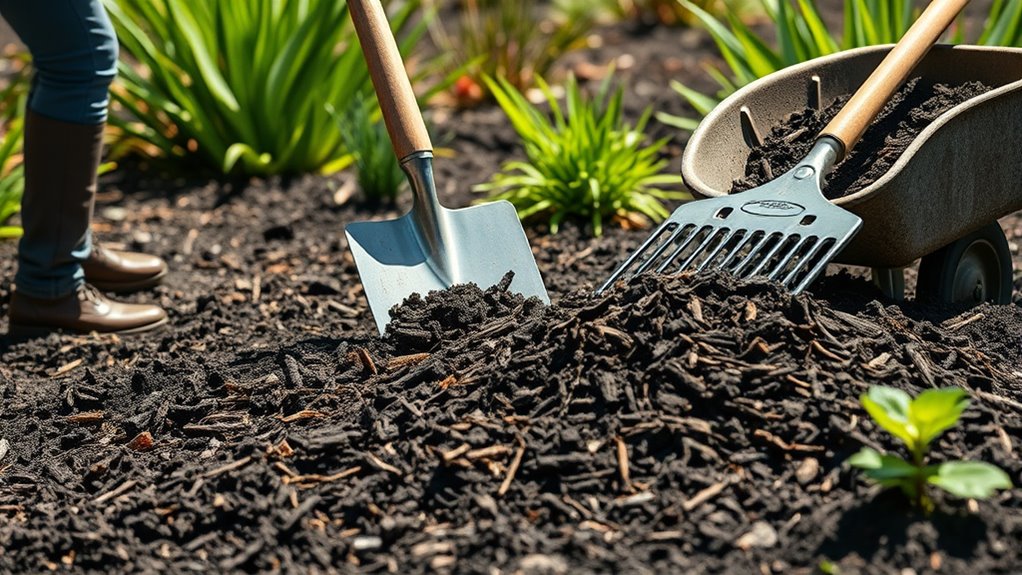
Have you ever wondered how to give your garden a polished, healthy look? Spreading mulch is a simple yet effective way to enhance your landscape, control weeds, and retain moisture. To do it right, you need to understand the different mulch types and proper application techniques. This knowledge helps you select the best mulch for your garden’s needs and apply it efficiently, making your spring landscaping efforts more successful.
First, familiarize yourself with the various mulch types available. Organic mulches like bark, wood chips, straw, and shredded leaves decompose over time, enriching the soil with nutrients. Inorganic options such as rubber or gravel last longer and require less maintenance but don’t improve soil quality. Choosing the right mulch depends on your garden’s specific needs, aesthetic preferences, and climate conditions. For example, bark mulch offers a clean, natural look and is excellent for flower beds, while rubber mulch provides durability for playgrounds or high-traffic areas. Knowing the pros and cons of each type helps you make an informed decision that benefits your landscape in the long run.
Organic mulches decompose and enrich soil, while inorganic options last longer with less maintenance.
Once you’ve selected the appropriate mulch, focus on application techniques that ensure even coverage and maximum efficiency. Start by preparing the area—remove weeds, debris, and any existing mulch to create a clean surface. Use a garden rake to level the soil and break up compacted patches, which helps the mulch adhere better and prevents uneven settling. When spreading, aim for a layer about 2 to 4 inches thick; this depth effectively suppresses weeds, conserves moisture, and insulates plant roots. Be careful around plant stems and tree trunks—leave a small space free of mulch to prevent rot and pest issues. Apply mulch in a circular or broad layer, avoiding piling it against plant bases, which can cause problems like rot or disease.
Next, master the application techniques for even distribution. Use a shovel or pitchfork to transfer mulch from your bag or pile, spreading it out in a thin, consistent layer. For larger areas, a wheelbarrow helps transport mulch efficiently, while a garden rake ensures an even, smooth surface. Regularly check the depth as you go, adding more mulch where needed to maintain that 2 to 4-inch layer. This careful approach prevents compaction, which can hinder water penetration and root growth. Proper application techniques also include invigorating the mulch annually or as it decomposes, keeping your garden looking neat and healthy all season long. Additionally, choosing the right mulch type can significantly impact the longevity and appearance of your landscape.
Frequently Asked Questions
What Is the Ideal Mulch Depth for Different Garden Beds?
You should aim for a mulch depth of 2-3 inches for most garden beds, ensuring good soil moisture management and weed suppression. For flower beds or vegetable gardens, stick to about 2 inches, while for ornamental or tree beds, 3 inches helps protect roots and retain moisture. Use different mulch types like bark, straw, or shredded leaves, adjusting depth to optimize soil health and moisture retention effectively.
How Do I Prevent Mulch From Smothering Plant Roots?
Think of mulch as a cozy blanket—too thick, and it’ll smother your plants. To prevent this, make sure you use organic mulch at the correct depth, typically 2-3 inches. Regular mulch aeration avoids compaction, allowing roots to breathe. Keep mulch a few inches away from plant stems and roots, and refresh it annually. This way, your garden stays healthy, and your plants thrive instead of suffocate.
Can I Reuse Old Mulch for New Landscaping Projects?
Yes, you can reuse old mulch for new landscaping projects. First, consider mulch composting to enrich its nutrients. Remove any mold or pests, then break up clumps. Reusing mulch also allows you to experiment with different mulch color options to match your landscape aesthetic. Just guarantee the old mulch is still healthy and free of disease, and mix in fresh mulch if needed for better appearance and soil health.
What Safety Precautions Should I Take When Spreading Mulch?
When spreading mulch, always wear protective gear like gloves and a mask to avoid irritation from dust and debris. Use safe lifting techniques by bending your knees and keeping your back straight to prevent injury. Make sure the area is clear of obstacles, and take regular breaks to avoid fatigue. These precautions keep you safe and make your mulch spreading more efficient and enjoyable.
How Often Should I Replenish Mulch in My Garden?
You should replenish your mulch every 1 to 2 years to maintain its effectiveness. Did you know that mulch can decompose up to 50% in that time? Regular replenishment keeps your mulch looking fresh and supports pest control strategies by reducing habitat for pests. It also helps with mulch color maintenance, ensuring your garden stays vibrant and healthy. Keep an eye on decomposition and replace as needed for ideal garden health.
Conclusion
With the right tools in hand, spreading mulch becomes as smooth as a gentle breeze. You’ll find it easier to create a tidy, healthy garden that blooms beautifully. Think of your tools as your trusted companions, guiding you like stars guiding a ship through calm waters. So, grab your shovel and rake, and enjoy the process—because maintaining your landscape should be as effortless as a walk in the park. Happy mulching!