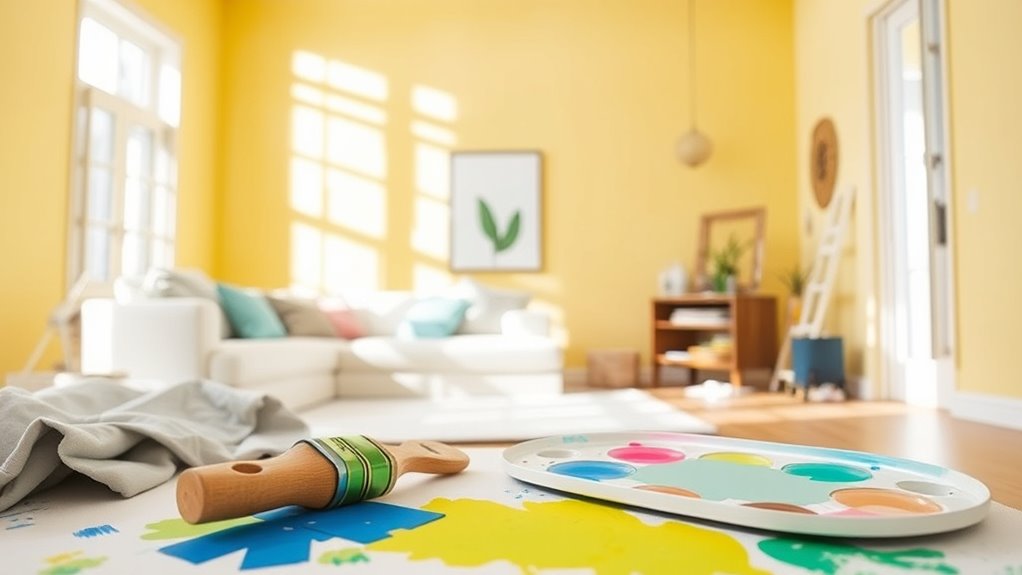

Spring is the perfect time to refresh your walls with vibrant or calming new colors. Use high-quality tools like rollers for a smooth finish and tape for crisp lines. Prepare your walls by cleaning, filling holes, and applying primer to guarantee longevity. Try creative techniques like sponging, color blocking, or geometric patterns to add personality. With these simple steps, you’ll create a fresh, inviting space—just keep going to discover even more ideas and tips!
Key Takeaways
- Choose bright, cheerful colors like pastels to energize your space for spring.
- Prepare walls thoroughly by cleaning and applying primer for a smooth, durable finish.
- Use high-quality tools and tape for clean lines and professional-looking results.
- Incorporate textured techniques like sponging or rag rolling to add visual interest.
- Consider color blocking or stripes for an eye-catching accent wall that refreshes the room.
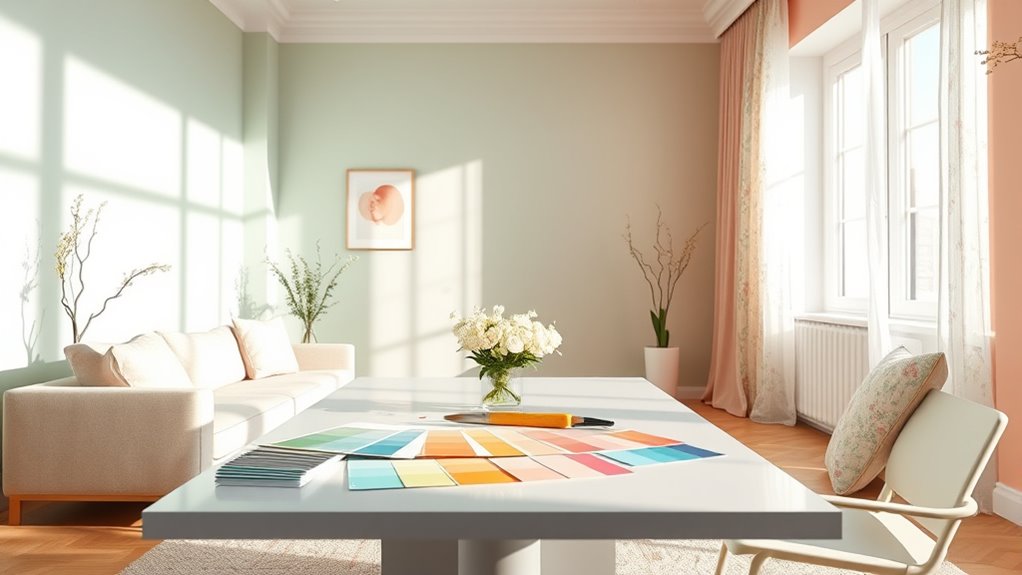
Are you ready to refresh your home’s look? Spring is the perfect time to breathe new life into your walls, and choosing the right paint can make all the difference. To start, think about your desired color palette. Bright, cheerful hues like soft yellows, fresh greens, or pastel blues can instantly uplift a space, creating a lively and inviting atmosphere. Alternatively, for a more calming vibe, consider muted tones such as warm beiges or cool greys. The key is to select colors that reflect your personality and complement your existing decor. Once you’ve nailed down your palette, it’s time to focus on your painting techniques, which can profoundly impact the finished look.
If you’re aiming for a smooth, modern finish, using a high-quality roller and a steady hand will help you achieve even coverage without streaks. For accent walls, consider techniques like color blocking or stripes to add visual interest. Tape off sections carefully for crisp lines, and use painter’s tape to create geometric patterns or borders if you want a more intricate design. Don’t forget to prep your walls properly—clean them thoroughly and fill any holes or cracks to ensure a flawless surface. Applying a primer before your chosen paint can also improve adhesion and longevity, especially if you’re covering a darker color or a textured wall. Additionally, understanding painting techniques can help you achieve professional-looking results and customize your walls further.
For a more textured or layered look, you might experiment with sponging, rag rolling, or dry brushing. These painting techniques add depth and dimension, giving your walls a unique character. For example, sponging involves dabbing a sponge into a slightly different shade and pressing it onto the wall, creating a subtle, mottled effect. Rag rolling uses a crumpled rag to apply paint in a swirling motion, resulting in a rich, textured appearance. When you’re using these techniques, keep your strokes controlled and work systematically to ensure the pattern looks intentional and cohesive.
Frequently Asked Questions
What Are the Best Eco-Friendly Paint Options for Spring?
You should choose eco-friendly paint options that prioritize sustainability and health. Look for paints made with sustainable pigments, which reduce environmental impact and avoid harmful chemicals. Pair them with biodegradable primers to guarantee your project remains eco-conscious from start to finish. These options help you create a beautiful space while minimizing your carbon footprint, making your spring painting project both stylish and environmentally responsible.
How Can I Prevent Paint From Peeling in Humid Weather?
To prevent paint from peeling in humid weather, you should start with proper paint preparation by cleaning and sanding the surfaces. Applying a moisture barrier or primer designed for high humidity helps protect the paint. Make sure to use high-quality, moisture-resistant paint and allow adequate drying time. Ventilate the area during and after painting to reduce excess moisture, ensuring your walls stay fresh and peeling-free even in damp conditions.
What Tools Are Essential for DIY Wall Painting Projects?
For your DIY wall painting projects, you’ll need essential tools like a good brush, where brush selection matters for smooth strokes and detailed work. Use painter’s tape to mask off edges and prevent paint from bleeding onto unwanted areas. Also, gather a paint roller, tray, and drop cloths. With these tools, you’ll achieve crisp lines and a professional finish, making your walls look fresh and vibrant.
How Long Should I Wait Between Coats of Paint?
You should wait about 2 to 4 hours between coats of paint, but always check the paint’s drying time on the label, as it varies. Proper surface preparation helps the first coat dry evenly, ensuring a smooth finish. Avoid rushing; giving each coat enough time to dry prevents streaks and peeling. Patience with drying time and surface prep results in a professional-looking, lasting paint job.
What Are Some Creative Accent Wall Ideas for Spring?
Your walls can transform into eye-catching masterpieces with creative accent ideas. Think about bold color blocking or sleek geometric patterns that pop against neutral backgrounds. You’ll feel like an artist creating a masterpiece in your own space. Use painter’s tape for clean lines and experiment with contrasting shades. These ideas make your spring decor vibrant and fresh, turning a simple wall into the room’s focal point and a true conversation starter.
Conclusion
Now’s the perfect time to embrace change and refresh your space with vibrant spring hues. Just like nature blooms anew, your walls can too, transforming your home into a sanctuary of renewal. Don’t let this season pass you by—grab your paintbrush and make your walls spring to life. After all, isn’t it time your home reflected the beauty and energy of the season outside? Let your creativity blossom and enjoy your stunning new look.