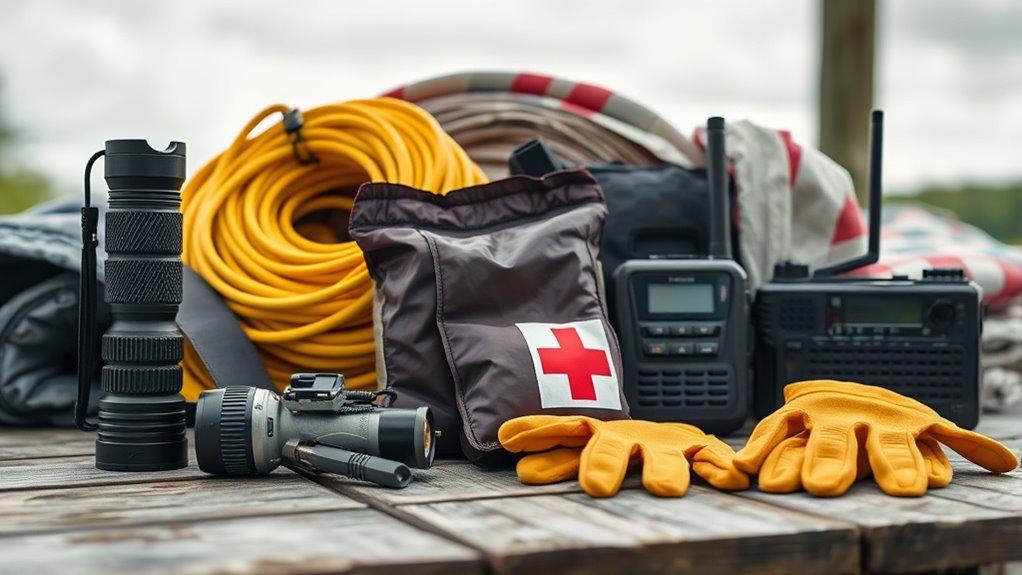

To prepare for spring storms, gather essential tools like a battery-powered radio, flashlights, extra batteries, and basic first aid supplies. Make certain your emergency kit includes non-perishable food, bottled water, and medications. Secure outdoor items and trim trees near your home to minimize damage. Develop a safety plan with clear escape routes and safe zones, then practice drills regularly. Staying proactive helps you stay safe; explore more tips to guarantee you’re ready.
Key Takeaways
- Assemble an emergency kit with non-perishable food, water, first aid supplies, flashlights, batteries, and medications.
- Create and practice a safety plan, including identifying safe rooms and family communication strategies.
- Keep a battery-powered radio and sign up for local weather alerts to stay informed about storm developments.
- Secure your home by trimming trees, securing outdoor items, and inspecting the roof for vulnerabilities.
- Conduct regular preparedness drills with family members to ensure everyone knows their roles during storms.
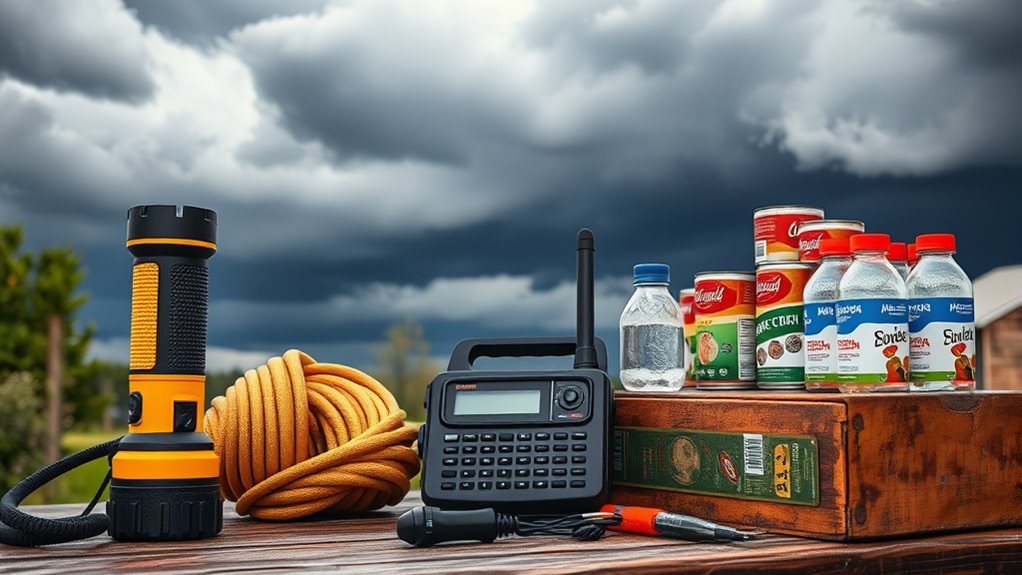
As storm season approaches, now is the critical time to prepare your home and family for potential emergencies. One of the most important steps you can take is assembling comprehensive emergency kits. These kits should include essentials like non-perishable food, bottled water, first aid supplies, flashlights, batteries, and necessary medications. Keep these kits in easily accessible locations, such as your basement or garage, so you can grab them quickly if a storm hits unexpectedly. Remember to check and update your emergency kits regularly, replacing expired items and replenishing supplies as needed. Having a well-stocked kit ensures you and your family can stay safe and comfortable, even if power goes out or roads become impassable. Proper storage and organization of supplies are also key to quick access during emergencies.
Alongside assembling emergency kits, developing clear safety plans is crucial. Your safety plan should outline the steps everyone in your household needs to follow during a storm or emergency. This includes identifying safe rooms in your home, such as interior closets or basement areas, where you can take shelter. Make sure each family member knows how to reach these safe zones quickly and understands the importance of avoiding windows and exterior walls during high winds. Your safety plan should also include communication strategies—knowing how to contact loved ones, emergency services, and neighbors if needed. Establish a meeting point outside your home in case you’re separated, and practice these plans regularly so everyone knows what to do when seconds count.
Develop a clear safety plan with designated safe rooms, communication strategies, and regular drills to ensure family preparedness during storms.
Preparing for spring storms also means staying informed. Sign up for local weather alerts, and keep a battery-powered radio on hand to receive updates if your power goes out. This way, you can stay ahead of severe weather warnings and act proactively rather than reactively. Make sure your home is secure by trimming trees near your house, securing loose outdoor items, and inspecting your roof for vulnerabilities. These quick repairs can prevent damage and keep everyone safe during strong winds or hail.
Finally, involve your family in the preparation process. Children should understand the importance of safety plans and know where emergency kits are stored. Practice drills together so everyone feels confident in their roles. By taking these proactive steps, you reduce panic and confusion during actual storms, ensuring your household remains safe and prepared. Storm season can be unpredictable, but with a solid plan and the right tools in place, you can face it with confidence and resilience. Being aware of Free Floating hazards and how to mitigate them can significantly enhance your safety during severe weather events.
Frequently Asked Questions
How Can I Protect My Electronic Devices During Storms?
To protect your electronic devices during storms, plug them into surge protectors to prevent power surges. Unplug devices when storms are imminent, especially if you notice flickering lights. Make device backups regularly to safeguard important data in case of damage. Keep a flashlight and batteries nearby, and consider unplugging sensitive electronics during severe weather. Taking these steps helps guarantee your devices stay safe and your data remains secure.
What Are the Signs of an Approaching Severe Storm?
You’ll notice signs of an approaching severe storm through changing cloud formations, like dark, towering cumulonimbus clouds signaling thunderstorms. Watch for shifting wind patterns, especially sudden gusts or a noticeable drop in wind speed, which can indicate an oncoming storm. You might also see a rapid drop in temperature or an increase in humidity. Staying alert to these signs helps you prepare and stay safe before the storm hits.
How Do I Create a Family Emergency Communication Plan?
Have you thought about how you’ll stay connected during an emergency? To create a family emergency communication plan, hold a family meeting to discuss the plan and designate emergency contacts. Make sure everyone knows how to reach each other and where to meet if separated. Keep a written list of emergency contacts and share it with all family members. Regularly review and practice your plan to guarantee everyone stays safe.
Are There Specific Insurance Policies Recommended for Storm Damage?
You should consider getting a flood insurance policy, as standard homeowners policies often exclude flood damage. Look for coverage that specifically includes flood damage, since many policies have exclusions for certain storm-related damages. Review your policy carefully to guarantee it covers storm damage, including flooding, wind, and hail. Having the right coverage now can save you from costly repairs later, especially when storms strike unexpectedly.
How Often Should I Review and Update My Storm Preparedness Kit?
You should review and update your storm preparedness kit at least once a year, ideally before the storm season begins. Conduct a storm drill to ensure everyone knows what to do, and check your kit for expired supplies or missing items. Regular kit maintenance keeps your supplies fresh and functional, so you’re ready when a storm hits. Staying proactive helps protect your family and minimizes storm-related disruptions.
Conclusion
As spring storms roll in like unpredictable tempests, having your emergency tools ready is your shield against chaos. Think of your preparedness kit as a trusty anchor, grounding you when the skies darken. With flashlights, batteries, and a plan in place, you’re steering your ship through the storm with confidence. Remember, a little preparation today keeps the chaos at bay tomorrow—turning a potential hurricane into just a passing breeze.