For a DIY workbench, set the height around your waist level to guarantee comfort and reduce strain. This typically means about 34-36 inches for most people, but it can vary based on your height. Adjust the height slightly higher if you’re taller, or lower if shorter, to keep your arms at a comfortable 90-degree angle. Proper height prevents shoulder and back pain, helping you work more efficiently. Keep exploring for tips to customize your perfect setup.
Key Takeaways
- Set the work surface at waist level for most tasks, aligning with a 90-degree arm bend when standing.
- Adjust height based on user height to prevent shoulder strain and promote comfortable working posture.
- Use heavy, stable materials like hardwood or steel for durability and safety at the chosen height.
- Ensure the workbench height accommodates specific project needs and minimizes back and neck discomfort.
- Fine-tune the height by measuring personal ergonomics for optimal comfort and long-term productivity.
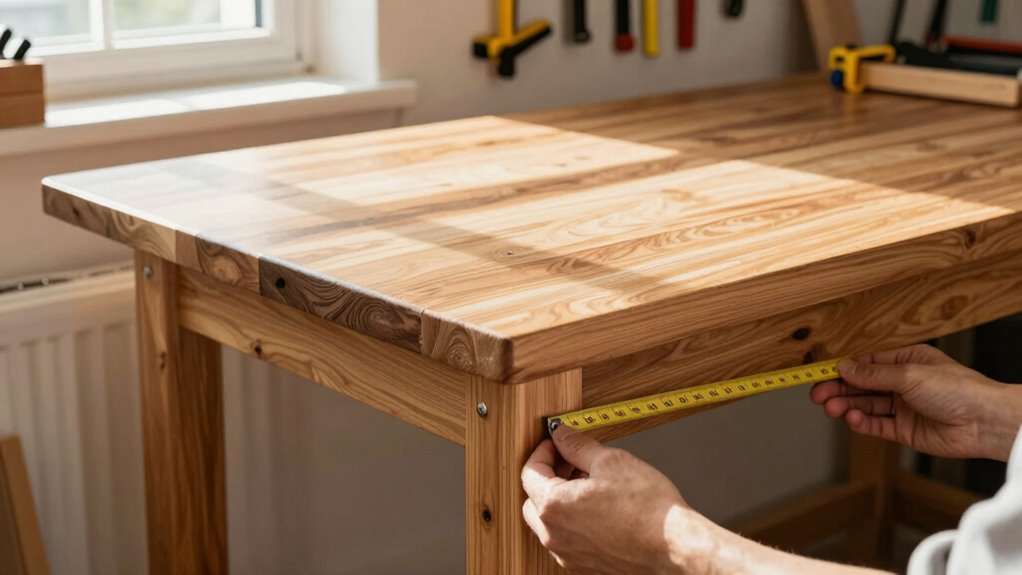
Your ideal workbench height depends largely on your own height. For general tasks, a good rule of thumb is to set the work surface at about waist level, which allows your arms to rest comfortably at a 90-degree angle. If you’re taller, you might prefer a slightly higher surface to prevent bending forward, while shorter users might opt for a lower height to avoid raising their shoulders or hunching over. When you prioritize ergonomic comfort, you reduce the risk of back pain, shoulder strain, and repetitive stress injuries. Remember, a workbench that’s too high can cause you to lift your shoulders and strain your neck, while one that’s too low can lead to uncomfortable bending and poor posture.
Material selection also influences the overall height decision. Heavier, denser materials like hardwood or steel provide stability but can add weight, making the bench less portable. Lighter materials like plywood or composite boards are easier to move but might require additional bracing or reinforcement to maintain stability at the desired height. When choosing materials, think about the type of work you’ll be doing. Heavy-duty tasks like woodworking or metalworking demand a sturdy, stable surface that won’t wobble or sag under pressure. This stability not only enhances safety but also improves ergonomic comfort, as you can apply force confidently without worrying about the surface shifting. Considering material properties is essential to ensure your workbench remains durable and supportive over time.
Ultimately, your perfect DIY workbench height is a balance between ergonomic comfort and material suitability. Take the time to measure your height, *deliberate* your typical work posture, and select materials that will support your projects without compromising stability. Additionally, considering workspace ergonomics can help you fine-tune the height for optimal comfort and productivity. Adjusting the height slightly based on your specific needs can make all the difference, turning a good workbench into a great one tailored precisely for you. Being mindful of workbench design principles ensures that your workspace remains comfortable and efficient over time. Proper understanding of ergonomic considerations can further enhance your comfort and reduce fatigue during long projects.
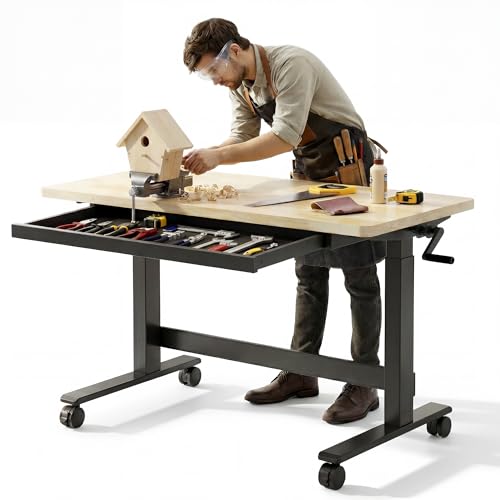
FLEXISPOT Adjustable Height Workbench 47.2" x 23.6" Garage Work Table with Hand Crank, Drawer & Lockable Casters – Heavy-Duty Steel & Rubber Wood Top for Workshop, DIY Craft Table
- Precise Height Adjustment: Achieve optimal comfort with the…
- Built-in Storage Drawer: Keep your tools, screws, nuts,…
- Lockable 360° Casters: Move this heavy-duty garage workbench…
As an affiliate, we earn on qualifying purchases.
As an affiliate, we earn on qualifying purchases.
Frequently Asked Questions
How Do I Measure My Ideal Workbench Height Accurately?
To measure your ideal workbench height, stand straight with your arms relaxed at your sides, then measure from the floor to your wrist. This height guarantees comfort during work. Consider your workbench materials—like sturdy wood or metal—and storage options, as they may influence the final height for stability and convenience. Adjust the measurement slightly if you’ll use specialized tools or need specific ergonomic comfort, making certain your workspace suits your needs.
Should I Consider Adjustable Height Benches for Versatility?
Yes, you should consider adjustable height benches for versatility. They let you customize the work surface to match different tasks or users, unlike fixed height benches, which are set for a specific height. Adjustable height benches are especially helpful if multiple people use the same workspace or if you work on varied projects, ensuring comfort and reducing fatigue. This flexibility makes your workspace more functional and adaptable.
What’s the Impact of Workbench Height on Ergonomics?
Imagine standing at your workbench, your back straight and shoulders relaxed—this is the impact of proper height on ergonomics. When your workbench is at the right level, posture correction becomes easier, reducing strain and fatigue. It also improves tool accessibility, allowing you to work efficiently without bending or stretching excessively. A well-chosen height supports comfort and precision, making your projects safer and more enjoyable.
Can a Workbench Height Affect My Productivity?
Yes, your workbench height can considerably impact your productivity. When it’s the right height, you work comfortably, reducing fatigue and improving your focus. A well-chosen height also enhances workbench aesthetics, making your workspace more inviting. Plus, consider material selection; sturdy, durable materials support your projects and maintain their appearance over time. Ultimately, an optimized height paired with attractive, high-quality materials helps you work more efficiently and enjoy your DIY projects more.
How Does Workbench Height Differ for Various Woodworking Projects?
Ever noticed how your workbench height changes depending on your project? For delicate woodworking, you prefer a lower height for precision, while larger projects demand a higher stance for comfort. Your choice of workbench materials influences stability, and storage options can impact height adjustments. Customizing your workbench height guarantees comfort and efficiency across various woodworking projects, making each task easier and more enjoyable.

CAMMOO 48×24 Inch Garage Work Bench with Storage, Pegboard & Power Strip
- Easy Assembly: Pre-installed, no drilling required, includes instructions and video
- Adjustable Storage: Metal shelf under tabletop, customizable space
- No-Wall Pegboard: Movable pegboard for flexible storage
As an affiliate, we earn on qualifying purchases.
As an affiliate, we earn on qualifying purchases.
Conclusion
So, it turns out finding the perfect DIY workbench height isn’t just about measurements—you might stumble upon it when you least expect, like during a quick project or a late-night fix. Just remember, your ideal height should feel natural and comfortable, almost like it was meant for you. Sometimes, the best ideas come when you’re least looking for them, proving that the perfect workbench height is just a coincidence waiting to happen.

wolfcraft Master 650 Ergo Clamping and Working Table I 6870000 I Height-Adjustable Clamping and Working Table – Ergonomic Adjustable Workbench for DIY Projects – Made in Europe
- Height Adjustment Range: 780-950 mm for ergonomic work height
- Swivel Function: Swivels 65° for versatility
- Clamping Width: 110 mm between tabletop boards
As an affiliate, we earn on qualifying purchases.
As an affiliate, we earn on qualifying purchases.

VekMax 48" Heavy Duty Workbench, 2500 LBS Load Capacity Work Bench with 1.2" Laminated Oak Wood Top & Reinforced Steel Frame, Adjustable Height Work Table for Garage, Workshop, Office, Home (Feet)
- Heavy-Duty Steel Frame: Reinforced for stability and durability
- Dual-Crossbeam Structure: Reduces wobble under heavy pressure
- Laminated Oak Work Surface: 1.2-inch thick, wear-resistant, supports 2500 lbs
As an affiliate, we earn on qualifying purchases.
As an affiliate, we earn on qualifying purchases.