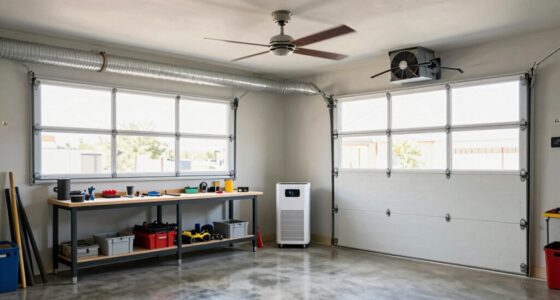
When planning your home workshop around generator use, prioritize proper placement on a stable, sheltered, and level surface away from windows and living spaces to contain noise and exhaust fumes. Use soundproof enclosures or barriers to reduce noise and guarantee good ventilation for safe exhaust dissipation. Maintain regular upkeep for fuel efficiency and avoid unnecessary idle time. Thoughtful planning helps keep your workshop safe, efficient, and neighbor-friendly—discover more tips to optimize your setup effectively.
Key Takeaways
- Choose a stable, sheltered location away from living spaces to ensure safety and reduce noise disturbance.
- Incorporate soundproof enclosures or barriers to minimize noise impact during operation.
- Ensure proper ventilation and exhaust management to prevent harmful gas buildup and maintain safety.
- Match generator capacity to your workshop’s power needs to optimize fuel efficiency and prevent overload.
- Plan for easy access to fuel, maintenance, and safe operation areas to streamline workflow and safety.

When running a home workshop with a generator, careful planning is essential to avoid disruptions and guarantee safety. One of your primary considerations should be noise management. Generators can be loud, and if you’re working early in the morning or late at night, the noise might disturb neighbors or family members. To minimize this, choose a generator with a built-in muffler or consider adding soundproof enclosures. Position the generator on a stable, non-flammable surface, away from windows and living spaces, to contain the noise and prevent it from echoing into your home. Using barriers or acoustic shields around the unit can further dampen sound levels, making your workshop more neighbor-friendly. Being mindful of noise not only fosters good relations but also guarantees you can operate without feeling like you’re disturbing everyone around you. Proper placement also contributes to fuel efficiency, which is essential for cost and environmental considerations. fuel efficiency is another crucial aspect of planning your generator use. Running a generator consumes fuel, so you want to optimize its efficiency to save money and reduce emissions. Start by selecting a generator that matches your power needs—oversized units waste fuel, while undersized ones may strain and run inefficiently. Regular maintenance, like changing oil, cleaning air filters, and inspecting spark plugs, can keep your generator running smoothly and efficiently. Additionally, plan your work sessions to minimize unnecessary idle time; turn off the generator when not actively using power tools or equipment. Using energy-efficient tools and appliances also reduces the load on your generator, helping it run longer on the same amount of fuel. If you’re concerned about fuel consumption, consider investing in a generator with a fuel gauge and automatic shutoff features to prevent overuse or accidental running dry. Proper placement of your generator is essential for both noise management and fuel efficiency. Position it on a level surface, sheltered from wind, and as far from your work area as possible. This setup not only muffles sound but also helps maintain ideal airflow, which is crucial for engine cooling and fuel combustion. Proper ventilation is vital to ensure safe operation, especially when operating in enclosed or semi-enclosed spaces. It is also important to regularly check for exhaust leaks and ensure that exhaust gases are being effectively expelled, reducing the risk of dangerous buildup. Proper ventilation helps dissipate exhaust gases and reduce the risk of dangerous buildup, which can be exacerbated by inadequate airflow or poor exhaust management. This enhances safety during extended use. With these considerations, you’ll create a safer, more efficient environment for your home workshop, allowing you to focus on your projects without unnecessary interruptions or expense.

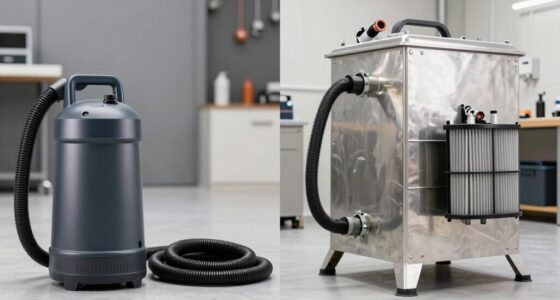
Hudson Generator Box, SD Aluminum Generator Enclosure with Ventilation, Heat Dissipation & Reduce Noise, Accommodates The Maximum Size of 39.4"x32"x31.7", White
- Efficient Ventilation: Louvered vents and airflow openings for cooling
- Active Cooling System: High-speed fan enhances airflow and temperature control
- Quiet Operation: Phenolic foam lining reduces noise levels
As an affiliate, we earn on qualifying purchases.
As an affiliate, we earn on qualifying purchases.
Frequently Asked Questions
How Loud Are Home Workshop Generators During Operation?
Home workshop generators are typically quite loud, ranging from 60 to 80 decibels, similar to a vacuum cleaner or loud conversation. To manage noise, you can use noise reduction techniques like sound insulation and barriers around the generator. These measures help minimize sound transmission, making your workspace more comfortable. Proper placement and noise reduction methods guarantee your generator operates efficiently without disturbing your peace or nearby neighbors.
What Safety Precautions Are Necessary When Using a Generator?
Think of your generator as a trusted but loud companion; safety begins with proper placement and handling. Always keep it outdoors to prevent carbon monoxide poisoning, ensure good ventilation, and avoid overloading it for fuel efficiency. Use noise reduction barriers if noise is a concern, and regularly inspect cords and connections. Wearing protective gear and keeping a fire extinguisher nearby adds extra safety layers, protecting you and your workshop.
Can a Generator Handle All Workshop Tools Simultaneously?
No, a generator can’t usually handle all workshop tools simultaneously because of its limited power capacity. You need to account for fuel efficiency and total power draw to prevent overloads. Prioritize essential tools and run them one at a time to conserve fuel and ensure your generator doesn’t trip or shut down. Always check your generator’s wattage rating and match it to your tools’ combined power needs for safe operation.
How Often Should I Perform Maintenance on My Generator?
You should perform maintenance on your generator every 50 to 100 hours of use or at least once a year, whichever comes first. Regular maintenance guarantees peak fuel efficiency and helps prevent breakdowns. Stick to a maintenance schedule that includes checking oil levels, inspecting filters, and testing the system. Doing so keeps your generator running smoothly, saving you time and money in the long run.
What Is the Typical Lifespan of a Home Workshop Generator?
A home workshop generator typically lasts 10 to 15 years, depending on maintenance and usage. You might worry about noise and fuel efficiency, but modern models offer noise reduction features and better fuel efficiency, extending their lifespan. Regular maintenance, like oil changes and cleaning, helps maximize your generator’s longevity. With proper care, you’ll enjoy reliable power, reduced noise levels, and efficient fuel use for many years in your workshop.

Oxseryn Power Equipment 4400 Watts Inverter Generator Gas Powered, Portable Open Frame Generator, Low Noise with ECO Mode, RV Ready, Emergency Home Backup
- High Power Output: 4400 peak and 3400 running watts
- Multiple Output Ports: 2 AC, 1 DC, RV port
- Long Runtime: Up to 14 hours at 25% load
As an affiliate, we earn on qualifying purchases.
As an affiliate, we earn on qualifying purchases.
Conclusion
As you plan around your generator, remember that sometimes, the best projects come from unexpected moments. Just like that spare part you found tucked away, a well-thought-out schedule can turn potential disruptions into opportunities for creativity. Embrace the rhythm of your workshop, knowing that with a little foresight, your projects will flow smoothly—even when the power’s out. In the end, it’s the unexpected coincidences that often inspire your greatest work.

Generator Fuel Gauge for Generac 0H9005 GP5500 GP6500 RS5500 RS7000E GP7500E RS8000E XT8000E XT8500EFI, 5500w 6500 6500w 7500 389cc OHV Portable Generator
- Compatible with Generac models: Supports 5-8kW generators including GP5500 to RS8000E
- High-quality durable construction: Made from thickened, long-lasting materials
- Proper size for easy installation: Rubber side: 1.10in, Surface side: 1.25in, Length: 6.14in
As an affiliate, we earn on qualifying purchases.
As an affiliate, we earn on qualifying purchases.

Focusound 50 Pack Acoustic Foam Panels 1" x 12" x 12" Sound Proof Foam Panles Soundproofing Noise Cancelling Wedge Panels for Home Office Recoding Studio with 300PCS Double-Side Adhesive
- Soundproofing Design: Triangular grooves for noise absorption
- Includes Adhesive Tape: 300pcs double-sided adhesive for easy installation
- Easy Shape Recovery: Soak in water to restore shape within 48 hours
As an affiliate, we earn on qualifying purchases.
As an affiliate, we earn on qualifying purchases.